

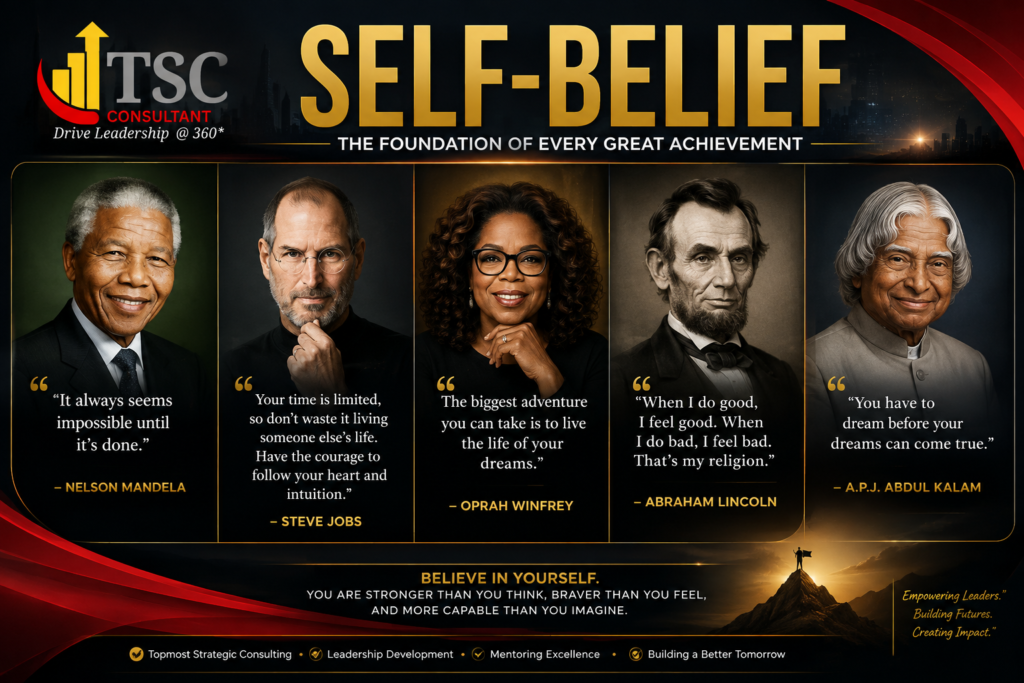
SELF-BELIEF: The Invisible Force That Determines Your Success Before the World Does
Why Self-Belief Is the Ultimate Human Superpower in the AI Era
“Whether you think you can or you think you can’t, you’re right.” — Henry Ford
Imagine two individuals possessing the same education, similar intelligence, identical opportunities, and equal resources. One consistently succeeds while the other repeatedly hesitates, procrastinates, and underperforms.
What creates this difference?
The answer is Self-Belief.
Self-belief is not merely positive thinking. It is the internal operating system that influences every decision, every action, every relationship, every opportunity, and every achievement. Before the world believes in you, you must believe in yourself.
In today’s AI-driven world, technical skills are becoming increasingly accessible. What distinguishes exceptional leaders, entrepreneurs, innovators, and high performers is not only what they know—but what they believe about themselves.
This article explores self-belief from every strategic angle—its definition, psychology, neuroscience, leadership implications, practical applications, and mastery strategies.
What Is Self-Belief?
Self-belief is the unwavering confidence that you possess the ability to learn, adapt, overcome challenges, and achieve meaningful goals despite uncertainty, setbacks, or criticism.
It is not believing you already know everything.
It is believing that you can figure things out.
Self-belief combines:
- Confidence
- Self-efficacy
- Inner trust
- Courage
- Optimism
- Personal responsibility
- Growth mindset
- Emotional resilience
It becomes the foundation upon which every other success skill is built.
The Psychology of Self-Belief
Modern psychology explains self-belief through several scientific concepts.
1. Self-Efficacy
Psychologist Albert Bandura introduced the concept of self-efficacy—the belief that one can successfully perform actions required to achieve desired outcomes.
People with high self-efficacy:
- Attempt difficult tasks
- Persist longer
- Recover faster
- Learn from failure
- Achieve more
2. Growth Mindset
Research by psychologist Carol Dweck demonstrates that individuals who believe abilities can be developed embrace challenges instead of avoiding them.
Instead of saying:
“I am not good enough.”
They say:
“I am not good enough yet.”
3. Neuroplasticity
Neuroscience confirms that the human brain changes throughout life.
Repeated actions create stronger neural pathways.
Repeated beliefs create repeated behaviors.
Repeated behaviors create repeated results.
Therefore,
Beliefs → Thoughts → Emotions → Actions → Habits → Identity → Destiny
Why Is Self-Belief So Important?
Self-belief affects every major area of life.
Personal Growth
It enables people to:
- Overcome fear
- Take initiative
- Learn continuously
- Build resilience
- Improve emotional health
Professional Success
Organizations value professionals who:
- Solve problems
- Make decisions
- Lead confidently
- Innovate
- Take ownership
Every one of these begins with self-belief.
Leadership
People rarely follow titles.
They follow confidence combined with competence.
A leader lacking self-belief creates uncertainty throughout the organization.
Entrepreneurship
Every successful entrepreneur started with one invisible asset before money:
Belief.
Investors invest in ideas.
Customers invest in value.
Employees invest in vision.
All begin with the entrepreneur’s self-belief.
The Cost of Low Self-Belief
Low self-belief silently destroys potential.
Common symptoms include:
- Procrastination
- Fear of failure
- Fear of success
- Self-doubt
- Perfectionism
- Overthinking
- Imposter syndrome
- Comparison with others
- Seeking constant validation
- Avoiding responsibility
The tragedy is not lack of talent.
The tragedy is unrealized talent.
What Creates Strong Self-Belief?
Self-belief develops from multiple sources.
Competence
Confidence follows competence.
Learn continuously.
Practice deliberately.
Improve consistently.
Preparation
Preparation reduces uncertainty.
Preparation builds confidence.
Confidence increases performance.
Experience
Every small success strengthens belief.
Small wins create momentum.
Momentum creates mastery.
Positive Environment
Surround yourself with:
- Mentors
- Coaches
- Growth-oriented friends
- Supportive family
- Learning communities
Environment influences belief.
Self-Talk
Your internal dialogue becomes your external reality.
Replace:
“I can’t.”
With:
“I can learn.”
Where Is Self-Belief Applied?
The answer is simple:
Everywhere.
Career
- Interviews
- Presentations
- Promotions
- Negotiations
Business
- Selling
- Leadership
- Hiring
- Innovation
- Decision-making
Education
- Learning
- Examinations
- Research
- Public speaking
Relationships
- Communication
- Boundaries
- Trust
- Emotional intelligence
Health
Believing you can improve health increases adherence to healthy habits.
Financial Growth
People who believe they can create wealth learn investing, entrepreneurship, negotiation, and financial planning.
When Is Self-Belief Needed Most?
Ironically,
Not when life is easy.
Self-belief matters most during:
- Failure
- Criticism
- Job loss
- Business setbacks
- Rejection
- Career transition
- Financial uncertainty
- Health recovery
- Public speaking
- Major life decisions
These moments reveal—not create—your level of self-belief.
The Science Behind Self-Belief
Brain imaging studies indicate that confidence influences attention, persistence, and decision quality. When people expect success, they engage more deeply with tasks, recover more effectively from setbacks, and regulate stress better.
This does not mean belief alone guarantees success. Rather, belief changes behavior, and behavior changes outcomes. In other words, self-belief is powerful because it increases the likelihood of sustained effort, better learning, and wiser adaptation.
The Seven Pillars of Self-Belief
1. Self-Awareness
Know your strengths.
Accept your weaknesses.
Develop both.
2. Self-Acceptance
Perfection is unnecessary.
Progress is essential.
3. Continuous Learning
Every new skill increases confidence.
Learning is confidence in action.
4. Courage
Fear disappears after action.
Not before it.
5. Discipline
Consistency strengthens identity.
Identity strengthens belief.
6. Emotional Resilience
Failures become lessons instead of labels.
7. Purpose
A meaningful purpose creates extraordinary persistence.
People who know their “why” rarely surrender to temporary setbacks.
Practical Strategies to Build Self-Belief
Strategy 1: Keep Promises to Yourself
Start with tiny commitments.
Complete them daily.
Trust in yourself grows through consistency.
Strategy 2: Celebrate Small Wins
The brain remembers success.
Recognize daily progress.
Strategy 3: Master One Skill Every Quarter
Competence creates confidence.
Confidence strengthens self-belief.
Strategy 4: Replace Negative Questions
Instead of asking:
“Why am I failing?”
Ask:
“What is this teaching me?”
Strategy 5: Use Visualization
Mentally rehearse success.
Elite athletes and performers use visualization to improve preparation and confidence. Visualization works best when paired with deliberate practice, not as a substitute for it.
Strategy 6: Build Evidence
Maintain a “Success Journal.”
Record:
- Achievements
- Compliments
- Lessons learned
- Problems solved
- Goals completed
Your past success becomes evidence for future confidence.
Strategy 7: Develop Physical Energy
Exercise.
Sleep adequately.
Eat nutritious food.
Healthy physiology supports healthy psychology.
Self-Belief in Personal Life
A person with strong self-belief:
- Makes healthier decisions
- Builds meaningful relationships
- Handles criticism constructively
- Communicates assertively
- Learns from mistakes
- Inspires family members
- Creates emotional stability
Self-belief becomes the emotional anchor for a fulfilling life.
Self-Belief in Professional Life
Professionals with healthy self-belief:
- Volunteer for challenging assignments
- Think strategically
- Present ideas confidently
- Lead change
- Build trust
- Mentor others
- Solve complex problems
- Continue learning throughout their careers
Organizations increasingly reward adaptability, ownership, and resilience—all of which are strengthened by self-belief.
Common Myths About Self-Belief
Myth: Confident people never experience fear.
Reality: They act despite fear.
Myth: Self-belief means never failing.
Reality: It means continuing after failure.
Myth: Self-belief is arrogance.
Reality: Healthy self-belief is grounded in humility, learning, and respect for others.
Myth: You either have it or you don’t.
Reality: Self-belief can be developed through experience, deliberate practice, and supportive environments.
A 30-Day Self-Belief Practice Plan
Every day:
- Read one inspiring page from a quality book.
- Write three strengths you demonstrated.
- Complete one important task before checking distractions.
- Learn one new concept or skill.
- Spend ten minutes reflecting on lessons from the day.
- Express gratitude for one success, however small.
- End the day by identifying one action to improve tomorrow.
Repeated consistently, these habits create a stronger identity—and stronger self-belief.
The Leadership Perspective
Leaders shape belief before they shape results.
The most influential leaders communicate confidence without denying reality. They acknowledge challenges, prepare rigorously, empower others, and demonstrate integrity through action.
When leaders believe in themselves responsibly, they make it easier for teams to believe in shared goals.
Final Thoughts
Self-belief is not a gift reserved for a fortunate few. It is a capability that grows through preparation, action, reflection, and perseverance.
In a rapidly changing world where technology evolves faster than ever, your greatest competitive advantage is not merely what you know—it is your confidence that you can continue learning, adapting, and contributing.
Every remarkable achievement in history began as an idea someone believed was worth pursuing.
Believe in your ability to grow. Build competence through disciplined practice. Let every small victory become evidence of what is possible.
Your future is shaped not only by your talents, but by the beliefs that determine whether those talents are ever fully expressed.
Remember: The world may not recognize your potential immediately, but consistent self-belief—supported by learning, action, and resilience—can transform potential into lasting impact. Success begins the moment your inner conviction becomes stronger than your outer doubts.
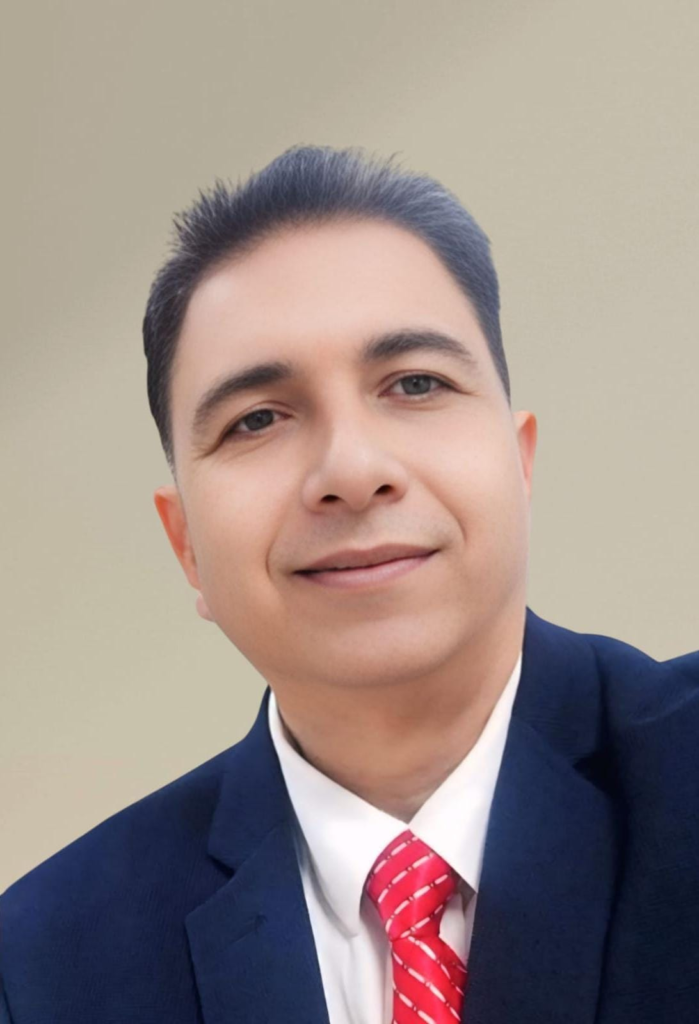
ANUPAM SHARMA
PSYCHOTECH™ STRATEGIST
COACH I MENTOR I TRAINER
COUNSELLOR I CONSULTANT