

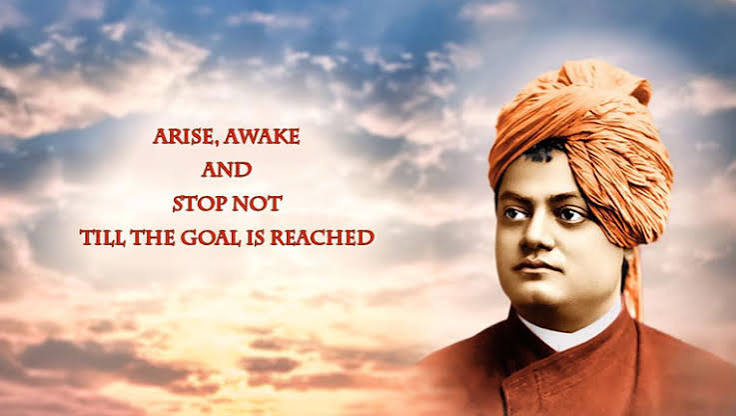
SELF-MANAGEMENT: FROM SELF-CONTROL TO SELF-LEADERSHIP
The ability to manage yourself before trying to manage situations, relationships, teams or results is one of the most valuable human competencies.
Self-management means taking ownership of your thoughts, emotions, time, behaviour, commitments, energy and decisions—without needing constant external direction.
A self-managed person does not ask, “Who will push me?”
They ask, “What needs to be done, why does it matter, and what will I do next?”
That is the foundation of self-leadership.
1. WHY SELF-MANAGEMENT MATTERS
In personal and professional life, we continuously manage:
- Thoughts
- Emotions
- Time
- Attention
- Habits
- Energy
- Priorities
- Commitments
- Relationships
- Decisions
- Responses to pressure
- Learning and improvement
The central principle is:
You cannot always control what happens to you, but you can develop greater control over how you think, respond and act.
Poor self-management creates:
- Procrastination
- Emotional reactions
- Missed commitments
- Stress and confusion
- Dependency on others
- Poor decisions
- Inconsistent performance
- Relationship problems
- Loss of credibility
Strong self-management creates:
- Reliability
- Focus
- Confidence
- Emotional stability
- Productivity
- Better decisions
- Greater independence
- Trust
- Consistent performance
- Leadership readiness
Self-management converts potential into performance.
2. SELF-MANAGEMENT @ 360°
Think of self-management as managing 8 dimensions of yourself:
| Dimension | Key Question |
|---|---|
| Self-Awareness | What is happening inside me? |
| Self-Control | Can I pause before reacting? |
| Time | Am I spending time on what matters? |
| Attention | What deserves my concentration now? |
| Emotion | Am I managing emotions rather than being controlled by them? |
| Behaviour | Are my actions aligned with my goals? |
| Responsibility | Am I owning my choices and consequences? |
| Growth | What am I learning and improving? |
Master these eight areas and you gradually move from self-management → self-leadership.
3. THE SELF-MANAGEMENT EQUATION
A practical model is:
Awareness → Choice → Action → Discipline → Feedback → Improvement
Example
You receive criticism at work.
Awareness:
“I am becoming defensive.”
Choice:
“I don’t need to respond immediately.”
Action:
“I will listen and identify what is useful.”
Discipline:
“I will correct what genuinely needs correction.”
Feedback:
“Did my response improve the situation?”
Improvement:
“What will I do differently next time?”
This is self-management in action.
4. THE PAUSE–THINK–CHOOSE–ACT FRAMEWORK
One of the simplest ways to strengthen self-control:
1. PAUSE
Don’t automatically react.
2. THINK
Ask:
- What is actually happening?
- What am I feeling?
- What matters most?
- What are the facts?
- What assumption am I making?
3. CHOOSE
Select the response that supports your desired outcome.
4. ACT
Take the smallest intelligent action.
Reaction is automatic. Response is chosen.
The stronger your ability to create that gap between stimulus and response, the stronger your self-management.
5. SELF-MANAGEMENT IN REAL-LIFE SITUATIONS
| Situation | Weak Response | Self-Managed Response |
|---|---|---|
| Angry colleague | Attack or withdraw | Pause, understand, respond |
| Heavy workload | Panic | Prioritise and sequence |
| Failure | Blame others | Analyse and learn |
| Procrastination | “I’ll do it later” | Start for 10 minutes |
| Criticism | Become defensive | Extract useful feedback |
| Unclear task | Wait for instructions | Clarify objective and take initiative |
| Conflict | Win the argument | Solve the problem |
| Distraction | Follow every interruption | Protect important work |
| Mistake | Hide it | Own, correct and learn |
| Change | Resist automatically | Understand, adapt and act |
The situation may remain the same; the quality of your response changes the outcome.
6. FIVE CORE SELF-MANAGEMENT FRAMEWORKS
A. CONTROL CIRCLE
Divide every problem into:
Control → Influence → Accept
Control
Your effort, attitude, preparation, choices and response.
Influence
People, processes, communication and relationships.
Accept
Past events, other people’s choices and things genuinely outside your control.
Rule:
Spend less mental energy on what you cannot control and more action on what you can.
B. 80/20 PRIORITY RULE
Ask:
“Which 20% of my activities create 80% of my meaningful results?”
Every morning identify:
1 Most Important Task + 2 Important Tasks
Complete the most valuable work before allowing low-value activities to consume your attention.
C. OODA LOOP
For uncertain or rapidly changing situations:
Observe → Orient → Decide → Act
Don’t wait for perfect information.
Observe reality → understand the situation → make the best available decision → act → learn → repeat.
This develops adaptive self-management.
D. PDCA FOR PERSONAL IMPROVEMENT
Plan → Do → Check → Adjust
Use it for:
- Productivity
- Communication
- Fitness routines
- Learning
- Leadership
- Habits
- Career development
Don’t ask:
“Am I perfect?”
Ask:
“Am I improving?”
E. IF–THEN PLANNING
Convert intention into a predetermined response.
Examples:
- If I feel like procrastinating, then I will work for 10 minutes.
- If I become angry, then I will pause before responding.
- If an unexpected task arrives, then I will check its priority before accepting it.
- If I make a mistake, then I will acknowledge it and identify the lesson.
This reduces dependence on willpower.
7. SELF-DISCIPLINE: DOING WHAT MATTERS
Self-discipline is not punishment.
It is:
The ability to do what needs to be done even when you don’t feel like doing it.
Build it through small promises.
Instead of saying:
“I will completely transform my life.”
Start with:
- 20 minutes of focused work
- One important task completed
- One difficult conversation handled constructively
- One distraction removed
- One commitment honoured
- One lesson learned
Small repeated actions create behavioural reliability.
8. MANAGE ENERGY, NOT ONLY TIME
Two people may have the same 24 hours but produce completely different results.
Manage:
Physical energy
Sleep, movement, nutrition and recovery.
Mental energy
Reduce unnecessary decisions and distractions.
Emotional energy
Don’t repeatedly replay situations you cannot change.
Social energy
Spend more time with people and environments that support constructive behaviour.
Purpose energy
Know why the work matters.
Time is fixed. Energy and attention can be managed.
9. THE SELF-LEADERSHIP SHIFT
Self-management asks:
“How do I manage myself effectively?”
Self-leadership asks:
“How do I direct myself toward meaningful outcomes?”
That shift changes everything.
From:
- Waiting → Initiating
- Reaction → Response
- Excuses → Ownership
- Comfort → Growth
- Instructions → Initiative
- Blame → Responsibility
- Short-term pleasure → Long-term value
- Being managed → Managing yourself
- Managing yourself → Influencing others
The highest form of self-management is becoming someone you can trust to lead yourself.
10. THE STRATEGIC SELF-MANAGER’S DAILY QUESTIONS
Ask yourself every morning:
- What matters most today?
- What is within my control?
- What must I not allow to distract me?
- What is my highest-value task?
- What difficult action am I avoiding?
- Which emotion could interfere with my judgment?
- Where do I need to take ownership?
- What decision needs to be made?
- What one behaviour will make today successful?
At night ask:
- What did I accomplish?
- Where did I lose control?
- What triggered me?
- What did I learn?
- What will I do differently tomorrow?
This creates a daily improvement loop.
11. THE SELF-MANAGEMENT MATURITY MODEL
Level 1 — DEPENDENT
“Tell me what to do.”
Level 2 — REACTIVE
“I act when something happens.”
Level 3 — RESPONSIBLE
“I take ownership of my work.”
Level 4 — PROACTIVE
“I anticipate problems and opportunities.”
Level 5 — STRATEGIC
“I decide what matters, allocate my resources and act deliberately.”
Level 6 — SELF-LEADER
“I continuously direct, develop and improve myself—and positively influence others.”
The objective is not merely to become self-disciplined. It is to become self-directed.
12. THE 7-DAY SELF-MANAGEMENT PRACTICE
For the next seven days:
Day 1: Observe your habits.
Day 2: Identify your biggest distractions.
Day 3: Practise the Pause–Think–Choose–Act method.
Day 4: Identify your highest-value activities.
Day 5: Take ownership of one neglected responsibility.
Day 6: Replace one unhelpful habit with a better behaviour.
Day 7: Review, learn and redesign the next week.
Don’t try to change everything simultaneously.
Change one important behaviour, repeat it, measure it and strengthen it.
FINAL PRINCIPLE
Self-management is not about controlling every event.
It is about becoming increasingly capable of managing yourself within every event.
When you manage your thoughts, you improve your decisions.
When you manage your emotions, you improve your responses.
When you manage your time, you improve your productivity.
When you manage your attention, you improve your focus.
When you manage your behaviour, you improve your consistency.
When you manage your commitments, you build trust.
When you manage your learning, you build capability.
And when you consistently manage yourself toward meaningful outcomes, you stop merely being an employee, professional, parent, partner or team member who needs direction.
You become a self-leader.
Remember:
“Self-management is controlling your response. Self-discipline is controlling your behaviour. Self-leadership is directing both toward a purposeful outcome.”
Master yourself → Manage yourself → Lead yourself → Influence others → Multiply results.
That is the journey from Self-Management to Self-Leadership.

ANUPAM SHARMA
PSYCHOTECH™ PRO STRATEGIST
COACH I MENTOR I TRAINER
COUNSELLOR I CONSULTANT