

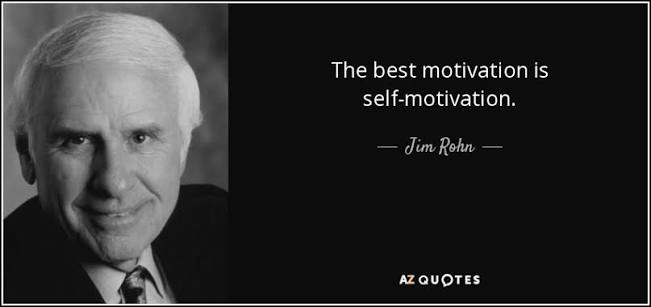
SELF-MOTIVATION @ 360°: The Strategic Mind’s Engine for Purposeful Action
Self-motivation is the ability to generate your own energy, direction and commitment to act—without waiting for praise, pressure, reminders or external push.
It is not about feeling excited every day. It is about knowing what matters, managing what you feel, choosing what you do, and continuing when motivation naturally rises and falls.
A self-motivated person does not ask, “Who will push me?”
The strategic mind asks, “What matters, what is my next move, and how do I make myself act?”
1. WHY SELF-MOTIVATION MATTERS
External motivation can start behaviour. Self-motivation sustains it.
| Without self-motivation | With self-motivation |
|---|---|
| Waits for instructions | Takes initiative |
| Needs constant encouragement | Creates internal drive |
| Starts enthusiastically, stops quickly | Sustains purposeful action |
| Blames circumstances | Looks for options |
| Emotion controls behaviour | Emotion informs behaviour |
| Avoids difficult tasks | Moves toward meaningful challenges |
| Needs supervision | Creates self-direction |
| Reacts to life | Deliberately shapes life |
Whether you are building a career, business, relationship, skill, body, leadership capability or personal identity, your results eventually depend on your ability to move yourself.
2. THE REAL SOURCE: EMOTION → MEANING → ACTION
Motivation is not created by positive thinking alone.
A powerful internal sequence is:
Emotion → Meaning → Decision → Action → Progress → Confidence → More Motivation
For example:
“I am afraid of public speaking.”
can become:
“This fear tells me this skill matters.”
Then:
“I will practise for 10 minutes today.”
Action creates evidence.
Evidence creates confidence.
Confidence makes the next action easier.
The key principle
Do not wait to feel motivated before acting. Act intelligently to create motivation.
3. THE FIVE ENGINES OF SELF-MOTIVATION
1. PURPOSE — Why does it matter?
A meaningful reason creates stronger energy than a superficial reward.
Ask:
- Why do I want this?
- Who benefits if I achieve it?
- What happens if I don’t?
- What kind of person will I become through this journey?
2. DIRECTION — What exactly am I pursuing?
Vague goals produce vague action.
Instead of:
“I want to become successful.”
Define:
“I will acquire one high-value skill and apply it consistently for the next 90 days.”
3. EMOTION — What am I feeling?
Don’t fight emotions blindly.
Ask:
“What is this emotion trying to tell me?”
Fear may indicate uncertainty.
Anger may indicate violated boundaries.
Boredom may indicate lack of challenge.
Frustration may indicate a blocked goal.
Emotion becomes useful when interpreted rather than obeyed.
4. ACTION — What can I do now?
Motivation becomes real only through behaviour.
Use the Next-Move Rule:
Never end a thinking session without identifying the smallest useful action you can take next.
5. PROGRESS — What evidence shows I am moving?
The brain responds strongly to visible progress.
Track:
- Actions completed
- Skills improved
- Problems solved
- Commitments kept
- Small wins achieved
Progress is psychological fuel.
4. THE SELF-MOTIVATION BLUEPRINT: P.U.S.H.
A practical framework:
| Element | Question | Application |
|---|---|---|
| P — Purpose | Why does this matter? | Connect goal with meaning |
| U — Understand | What am I feeling and thinking? | Decode emotional resistance |
| S — Strategy | What is the smartest next move? | Convert intention into action |
| H — Habit | How will I repeat it? | Build consistency |
This transforms motivation from an emotion into a repeatable personal system.
5. HOW TO EMPOWER EMOTIONS INSTEAD OF BEING CONTROLLED BY THEM
Your emotions can either become fuel or friction.
Use the E.A.R. method:
E — Examine
“What exactly am I feeling?”
A — Ask
“What triggered it?”
R — Redirect
“What useful action can I take from here?”
Example:
Situation: You receive criticism.
Automatic response:
“They don’t appreciate me.”
Strategic response:
“What part is useful? What can I improve? What should I ignore?”
The emotion remains—but you regain control of the response.
6. SITUATION → STRATEGIC RESPONSE
| Situation | Unproductive response | Self-motivated response |
|---|---|---|
| Difficult task | Avoid it | Break it into smaller actions |
| Failure | “I am incapable.” | “What did this teach me?” |
| Rejection | Give up | Improve, adapt or redirect |
| Criticism | Defend immediately | Extract useful information |
| Boredom | Stop | Reconnect with purpose or redesign the task |
| Fear | Wait until confident | Take a controlled first step |
| Procrastination | “Tomorrow.” | Start for five minutes |
| Slow progress | Quit | Measure improvement |
| Success | Become complacent | Raise the next meaningful challenge |
7. THE 1–5–20 RULE FOR BEATING PROCRASTINATION
When resistance appears:
1 minute: Decide exactly what needs to be done.
5 minutes: Commit only to starting.
20 minutes: Work without interruption.
Why does this work?
Because the psychological barrier to starting is often greater than the difficulty of continuing.
Your objective is not:
“Finish everything.”
It is:
“Begin intelligently.”
8. BUILD YOUR PERSONAL MOTIVATION SYSTEM
Create five daily anchors:
Morning — Direction
Ask:
“What is the one action that would make today meaningful?”
Before important work — Intention
“What outcome am I trying to create?”
During resistance — Reframe
“Is this genuinely impossible, or merely uncomfortable?”
Evening — Evidence
Record:
- What did I accomplish?
- What did I learn?
- Where did I show discipline?
- What is tomorrow’s first move?
Weekly — Reset
Review:
Continue → Stop → Start → Improve
This prevents motivation from becoming dependent on mood.
9. THE 90-DAY MASTER ROADMAP
PHASE 1 — SELF-AWARENESS | Days 1–15
Discover your motivational patterns.
Identify:
- What energises you?
- What drains you?
- What repeatedly makes you procrastinate?
- What goals genuinely matter?
- Which people or environments influence your behaviour?
- What excuses do you repeatedly use?
Output: Your Personal Motivation Map.
PHASE 2 — PURPOSE & GOALS | Days 16–30
Choose 1–3 meaningful goals.
For each goal define:
Why → Outcome → Deadline → Behaviour → Measurement
Don’t merely define what you want.
Define who you must become to achieve it.
PHASE 3 — EMOTIONAL MASTERY | Days 31–45
Develop the ability to pause between emotion and action.
Practise:
Notice → Name → Understand → Choose → Act
Your goal is not emotional suppression.
Your goal is emotional direction.
PHASE 4 — ACTION SYSTEM | Days 46–60
Create:
- Daily priorities
- Time blocks
- Environmental cues
- Small starting rituals
- Distraction controls
- Progress tracking
- Accountability mechanisms
Make the desired behaviour easy to start and difficult to avoid.
PHASE 5 — RESILIENCE | Days 61–75
Train yourself to continue when:
- Results are slow
- Nobody notices
- You make mistakes
- You lose enthusiasm
- Circumstances change
Adopt:
“Temporary difficulty is not permanent defeat.”
PHASE 6 — IDENTITY | Days 76–90
Move from:
“I am trying to become disciplined.”
to:
“I am a person who keeps meaningful commitments.”
This is the deepest level.
When behaviour becomes part of identity, motivation requires less conscious effort.
10. THE STRATEGIC THINKER’S MOTIVATION QUESTIONS
When stuck, ask:
- What matters most here?
- What is within my control?
- What emotion is influencing me?
- What assumption may be wrong?
- What is the smallest intelligent action?
- What happens if I do nothing?
- What happens if I act?
- What can I learn from this situation?
- What would my stronger future self do?
- What is my next move?
These questions shift the mind from reaction to strategy.
11. THE SELF-MOTIVATION EQUATION
A useful practical model is:
Motivation = Meaning × Clarity × Belief × Progress ÷ Friction
If meaning is low, motivation falls.
If the goal is unclear, motivation falls.
If you don’t believe action can make a difference, motivation falls.
If there is no visible progress, motivation falls.
If friction is excessive, action becomes difficult.
Therefore, instead of simply saying:
“I need more motivation.”
ask:
“Which part of my motivation system is weak?”
That is strategic thinking.
12. BENEFITS OF MASTERING SELF-MOTIVATION
Strong self-motivation produces:
- Greater initiative
- Better discipline
- Higher resilience
- Faster learning
- Improved decision-making
- Greater emotional control
- Reduced dependence on external validation
- Stronger leadership
- Better productivity
- Greater confidence
- Consistent execution
- Stronger personal responsibility
- Greater adaptability
- More purposeful living
Most importantly:
You become less dependent on circumstances to determine your behaviour.
13. THE ULTIMATE SELF-MOTIVATION PRINCIPLE
Do not build your life around:
“I will act when I feel motivated.”
Build it around:
“I will act because it matters—and action will generate the motivation to continue.”
The mature mind understands something powerful:
You cannot control every emotion.
You can influence how you interpret it.
You cannot control every circumstance.
You can control your response.
You cannot guarantee results.
You can control your preparation and effort.
That is the foundation of self-motivation.
THE A–Z SELF-MOTIVATION MASTERY MAP
A — Awareness of your internal patterns
B — Belief in your ability to influence outcomes
C — Clarity about what matters
D — Direction toward meaningful goals
E — Emotional intelligence
F — Focus on priorities
G — Goals converted into behaviours
H — Habits that reduce dependence on willpower
I — Initiative without waiting for permission
J — Judgement before reacting
K — Knowledge applied through action
L — Learning from setbacks
M — Meaning behind your effort
N — Next move instead of endless thinking
O — Ownership of your response
P — Persistence through difficulty
Q — Questions that sharpen thinking
R — Resilience after setbacks
S — Self-discipline when enthusiasm disappears
T — Tracking visible progress
U — Urgency without panic
V — Vision of the person you want to become
W — Willingness to experience discomfort
X — eXecution over excessive planning
Y — Your standards for yourself
Z — Zeal for purposeful living
FINAL THOUGHT
Self-motivation is not the ability to feel energetic all the time.
It is the deeper competence of creating direction when confused, courage when afraid, discipline when uninterested, resilience when disappointed, and action when nobody is pushing you.
The truly self-motivated person does not wait for life to create the right conditions.
They create the internal conditions to move forward.
And that is when emotion stops being a master—and becomes a source of strategic energy.

ANUPAM SHARMA
PSYCHOTECH™ STRATEGIST
COACH I MENTOR I TRAINER
COUNSELLOR I CONSULTANT