
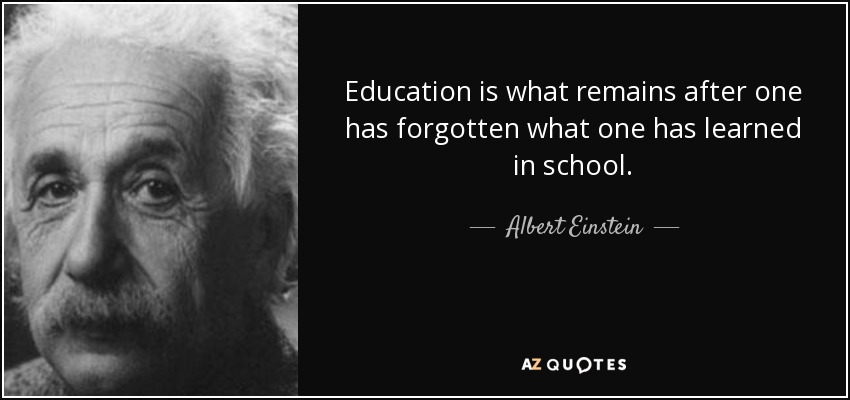
“Education actually starts when qualification comes to an end.”– Vehicle of fast changing environment.
At first glance, this sounds paradoxical—almost rebellious against the conventional system. But if you examine the lives of extraordinary individuals and decode the psychology of excellence, this statement reveals a profound truth: formal education gives you a foundation; real education builds your destiny.
Let’s unpack this deeply through a strategic, psychological, and real-world lens.
1. Qualification vs. Education: The Critical Distinction
A qualification is a milestone.
An education is a movement.
Degrees, certifications, and academic achievements are structured validations of knowledge. They are essential—but limited. They prepare you to enter the game, not necessarily to win it.
Real education begins when:
- You face uncertainty without a syllabus
- You make decisions without answer keys
- You learn from failure without grading systems
This is where life becomes your university.
Even icons like Steve Jobs emphasized this when he dropped out of college but continued attending classes that fascinated him—eventually shaping Apple’s design philosophy. His qualification ended, but his education intensified.
2. Why Great Achievers Believe in This Principle
Across domains—business, politics, spirituality, sports—the highest performers share a common discipline: continuous learning with application.
(a) Learning Beyond Systems
Elon Musk didn’t rely on formal degrees to build rockets or electric cars. He learned by:
- Reading extensively
- Applying first-principles thinking
- Experimenting relentlessly
(b) Reinvention Through Learning
Narendra Modi evolved from a grassroots worker to a global leader—not because of academic degrees, but because of constant learning, observation, and adaptation.
(c) Spiritual Intelligence as Ultimate Education
Swami Vivekananda highlighted that true education is the manifestation of perfection already in man. That requires:
- Inner inquiry
- Reflection
- Conscious action
These examples reinforce a powerful insight:
👉 Greatness is not degree-driven; it is learning-driven.
3. The Psychology Behind Lifelong Learning
From a psychotech perspective (your core domain), lifelong education is not just intellectual—it is neurological and behavioral.
(a) Neuroplasticity
Your brain evolves with new learning. When you continuously:
- Learn
- Apply
- Re-learn
You literally rewire your brain for higher intelligence and adaptability.
(b) Identity Evolution
People who stop learning become rigid.
People who keep learning become fluid identities—capable of transformation.
(c) Growth vs. Fixed Mindset
As explained in Mindset: The New Psychology of Success:
- Fixed mindset = Qualification mindset
- Growth mindset = Education mindset
4. Why Learning + Application + Re-learning Is the Ultimate Success Formula
Let’s break the success loop:
Step 1: Learn
Acquire knowledge, frameworks, concepts.
Step 2: Apply
Test it in real-world situations.
Step 3: Fail / Feedback
Reality gives you correction.
Step 4: Re-learn
Refine your understanding.
Step 5: Mastery
You build wisdom, not just knowledge.
This cycle is what separates:
- Amateurs from experts
- Employees from leaders
- Dreamers from achievers
Even Sachin Tendulkar practiced relentlessly despite being at the top—constantly refining technique after every match.
5. Situational Evidence: Where Qualification Fails but Education Wins
Scenario 1: Corporate Reality
A top MBA graduate enters a company but struggles with:
- Team dynamics
- Leadership challenges
- Decision-making under pressure
Why? Because real education—emotional intelligence, strategic thinking, execution—was not practiced.
Scenario 2: Entrepreneurship
A person with no formal business degree builds a successful startup by:
- Learning from failures
- Adapting to market changes
- Understanding customer psychology
Scenario 3: Life Crisis
Degrees cannot teach:
- How to handle loss
- How to rebuild after failure
- How to find purpose
This is where true education begins.
6. The Hidden Danger of Qualification Dependency
If one becomes too dependent on qualifications:
- Learning stops after exams
- Curiosity dies
- Risk-taking reduces
This creates what I call:
“Intellectual Stagnation Syndrome”
Where people:
- Know a lot
- But grow very little
7. The Art & Science of Lifelong Learning (Your Strategic Framework)
Let’s design a Psychotech Learning Mastery System aligned with your frameworks.
Framework 1: Identity Mapping Matrix
Ask:
- Who am I becoming through learning?
- What skills define my future identity?
Framework 2: Curiosity Engine Activation
Daily habit:
- Ask 5 powerful questions
- Challenge assumptions
Framework 3: 80/20 Learning Rule
Focus on:
- 20% knowledge → 80% results
Framework 4: Application Loop System
Every learning must answer:
- Where will I apply this today?
Framework 5: Feedback Intelligence System
- Seek criticism
- Analyze failures
- Convert into insights
Framework 6: Re-learning & Unlearning Cycle
- Remove outdated beliefs
- Upgrade mental models
Framework 7: Energy & Discipline Alignment
Learning is sustained by:
- Physical energy
- Emotional commitment
- Spiritual clarity
Framework 8: Purpose Extraction Protocol
Learning must align with:
- Life purpose
- Long-term vision
Otherwise, it becomes noise.
8. How to Build This as a Habit (Practical Strategy)
Daily Ritual (30–60 Minutes)
- 20 min: Learn (books, videos, mentors)
- 20 min: Apply (practice, execution)
- 10 min: Reflect (journal insights)
Weekly System
- 1 experiment
- 1 failure analysis
- 1 skill upgrade
Monthly Growth Audit
Evaluate:
- What did I learn?
- What did I apply?
- What changed in me?
9. Observations from High Performers
Across all domains, successful people:
- Read more than they watch
- Practice more than they plan
- Reflect more than they react
They treat learning as:
👉 A lifestyle, not a phase
10. Turning This Into Your Strength in a Dynamic World
In today’s rapidly changing environment:
- Skills become obsolete quickly
- Knowledge has a short shelf life
So your competitive advantage is:
“Learning Agility”
Those who learn faster:
- Adapt faster
- Grow faster
- Lead faster
This is the ultimate currency of the future.
11. The Deeper Spiritual Insight
In Indian wisdom traditions:
- Education is not information
- It is transformation
The journey is:
- From ignorance → awareness
- From knowledge → wisdom
- From ego → purpose
12. Final Thought: The Real Meaning of the Statement
“Education actually starts when qualification comes to an end” means:
👉 When external validation stops, internal evolution begins.
👉 When structured learning ends, self-directed mastery starts.
👉 When degrees finish, destiny-building begins.
Your Strategic Reflection
Ask yourself:
- Am I qualified… or truly educated?
- Do I consume knowledge… or create value from it?
- Am I learning to pass exams… or to transform my life?
Closing Insight
The world doesn’t reward degrees.
It rewards:
- Problem solvers
- Thinkers
- Doers
- Learners
So make this your core philosophy:
👉 “Learn. Apply. Evolve. Repeat.”
That is the real education system of life.
ANUPAM SHARMA
PSYCHOTECH™ STRATEGIST
COACH I MENTOR I TRAINER
COUNSELLOR I CONSULTANT