
ATTITUDE CHANGE Empowers PROGRESSIVE OPPORTUNITIES- Power of Ripple Effect
How Leaders Design the Future by Rewiring Inner Posture and Outer Possibility
Introduction: The Invisible Lever of Leadership
Opportunities rarely announce themselves loudly. They do not always arrive labeled as “growth,” “breakthrough,” or “success.” More often, they appear disguised as uncertainty, disruption, resistance, or discomfort. What separates leaders who progress from those who merely persist is not intelligence, resources, or even experience—it is ATTITUDE.
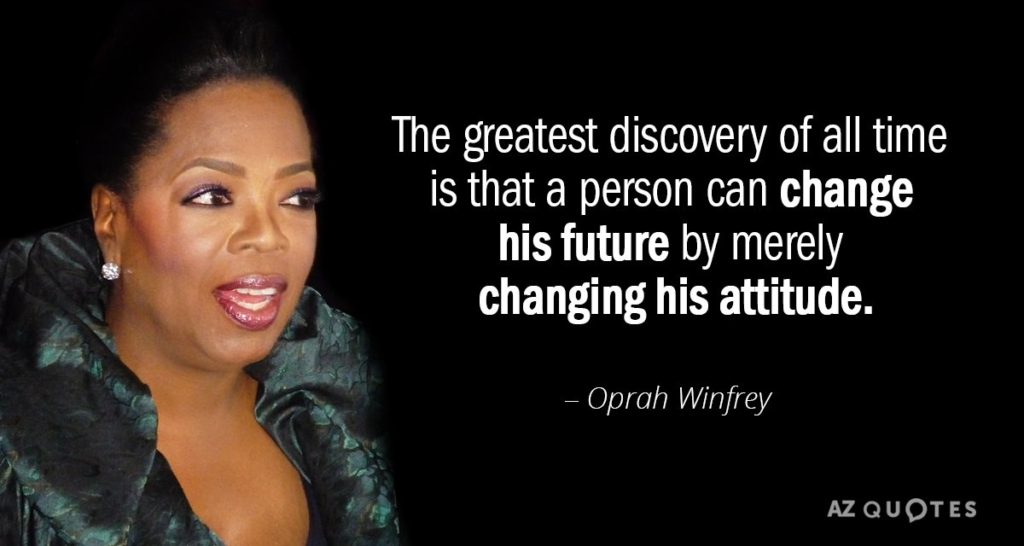
ATTITUDE CHANGE empowers PROGRESSIVE OPPORTUNITIES.
This is not motivational rhetoric. It is a strategic law of leadership, validated by ancient wisdom, behavioral science, and consulting practice alike. Attitude is the lens through which leaders interpret reality, and interpretation determines action. Action, sustained over time, creates outcomes. Outcomes compound into destiny.
Leadership, therefore, is not first about changing the world.
It is about changing the internal posture from which the world is engaged.
This blog explores how attitude becomes the bridge between inner potential and outer opportunity, how action and adaptability form the core leadership muscle, and how leaders decisively convert challenges into progressive opportunities using a 5W–1H strategic lens.
1. Understanding the Statement: What Does It Really Mean?
ATTITUDE
Attitude is not mood. It is not optimism. It is not positivity alone.
Attitude is a deeply ingrained mental, emotional, and interpretive stance—how a leader habitually responds to reality.
It answers questions such as:
- Is this situation a threat or a test?
- Is change a loss or leverage?
- Is failure feedback or finality?
In Vedantic terms, attitude is Bhāva—the inner state that shapes karma (action) and phala (results).
CHANGE
Change here is not cosmetic. It is transformational.
Attitude change means:
- From reaction → response
- From entitlement → responsibility
- From certainty-seeking → learning-orientation
- From control → influence
- From fear-based defense → value-based courage
EMPOWERS
Empowerment means unlocking capacity—energy, creativity, decisiveness, resilience.
A changed attitude:
- Releases trapped potential
- Expands perception bandwidth
- Enhances risk intelligence
- Strengthens execution confidence
PROGRESSIVE OPPORTUNITIES
Progressive opportunities are not immediate wins. They are forward-moving possibilities that compound over time—new markets, new leadership roles, new identities, new futures.
They demand growth-compatible attitude.
2. The Immense Leadership Impact of Attitude Change
Leadership Is an Interpretive Role
Leaders do not just manage systems.
They interpret reality for others.
Teams borrow:
- Their courage from a leader’s attitude
- Their calm from a leader’s composure
- Their ambition from a leader’s outlook
When a leader changes attitude, the organizational weather changes.
Big Four consulting repeatedly confirms this:
Strategy fails less because of poor planning and more because of behavioral resistance rooted in attitude.
Attitude Drives the Leadership Value Chain
| Inner Dimension | Leadership Outcome |
|---|---|
| Attitude | Perception |
| Perception | Decision |
| Decision | Action |
| Action | Execution |
| Execution | Results |
| Results | Credibility |
| Credibility | Influence |
| Influence | Opportunity |
Change the first variable—attitude—and the entire chain transforms.
3. Why Action & Adaptability Are the Core Leadership Traits
Attitude Without Action Is Philosophy
Action Without Adaptability Is Arrogance
Great leaders master both.
Action Mindset
Action is the expression of belief.
- Leaders act before clarity is complete
- They move with informed courage
- They learn by doing, not waiting
Bhagavad Gita reminds us:
“Karmanye vadhikaraste…”
You are entitled to action, not to paralysis by overthinking.
Adaptability Mindset
Adaptability is strategic humility.
- Reality changes
- Data evolves
- Assumptions expire
Adaptive leaders:
- Update beliefs fast
- Detach ego from methods
- Stay loyal to purpose, not process
Attitude change fuels both action and adaptability.
A rigid attitude fears action.
A fragile attitude resists adaptation.
A mature attitude welcomes both.
4. The Deep Strategic Connection: Attitude & Growth
Growth is not external expansion.
Growth is internal capacity meeting external complexity.
Fixed Attitude vs Growth Attitude (Strategic Lens)
| Fixed Attitude | Growth Attitude |
|---|---|
| “This is risky” | “What is the calculated upside?” |
| “I don’t know” | “I can learn” |
| “This won’t work” | “What will make it work?” |
| “I failed” | “I received feedback” |
| “This is not my role” | “This is my responsibility” |
McKinsey’s transformation studies show:
Organizations with leadership teams that adopt a learning-oriented attitude outperform peers in long-term value creation.
Growth does not demand perfection. It demands participation.
5. Using 5W–1H to Decide: Opportunity or Challenge?
Attitude decides whether you see a wall or a door.
WHY – Why is this happening?
- Victim attitude: “Why me?”
- Leader attitude: “Why now—and what is it preparing me for?”
WHAT – What exactly is this?
- Noise or signal?
- Temporary discomfort or structural shift?
WHEN – When is action required?
- Immediate response?
- Strategic patience?
WHERE – Where is leverage hidden?
- Skill gaps?
- Network?
- Technology?
- Mindset shift?
WHO – Who must I become?
- A learner?
- A builder?
- A decision-maker?
- A stabilizer?
HOW – How can this be converted into progress?
- Pilot action
- Rapid feedback
- Course correction
- Scale or stop decisively
This framework transforms emotional reactions into strategic clarity.
6. Developing, Sustaining & Productivizing Attitude in Leadership
1. Awareness: Catch the Default Attitude
Leaders must audit:
- Their self-talk
- Their stress responses
- Their decision delays
What you tolerate internally, you replicate externally.
2. Reframing: Shift Meaning, Not Facts
Events don’t change immediately—meaning does.
Ancient wisdom teaches:
“Manasa eva idam aptavyam”
The mind is the gateway to mastery.
3. Conditioning Through Action
Attitude strengthens through evidence.
- Small wins
- Consistent action
- Visible progress
Confidence is not a feeling—it is a byproduct of kept promises to self.
4. Environment Design
Remember:
- Inside is individual potential
- Outside is environment with opportunities
Leaders must:
- Curate inputs (people, content, context)
- Minimize negativity loops
- Maximize growth triggers
5. Rituals & Rhythms
Sustainable attitude is built through:
- Reflection rituals
- Learning rhythms
- Strategic pauses
- Physical discipline
Peak performance is a lifestyle, not an event.
7. Ancient Wisdom Meets Modern Strategy
From Indian Wisdom
- Gita: Detached action fuels fearless progress
- Upanishads: Inner mastery precedes outer conquest
- Chanakya: Attitude of preparedness beats luck
From Strategic Consulting
- Growth mindset enables transformation
- Adaptive leadership outperforms predictive planning
- Psychological safety drives innovation
From Peak Performance Science
- Neuroplasticity proves attitude can be trained
- Belief shapes perception
- Perception guides execution
Across eras, the truth is consistent:
Change the inner posture, and reality reorganizes itself around you.
8. Other Similar Concepts That Work Powerfully
- Decision precedes resourcefulness
- Perception creates possibility
- Responsibility unlocks authority
- Focus fuels force
- Energy follows intention
- Clarity invites opportunity
- Consistency compounds confidence
All point to the same law:
Inner shift → Outer lift
Conclusion: Leadership as Future-Building Through Attitude
Leadership is not about reacting to the future.
It is about creating the internal conditions that invite the future.
When attitude changes:
- Challenges reveal opportunity
- Fear converts into fuel
- Complexity becomes canvas
- Uncertainty becomes invitation
Progressive opportunities do not belong to the most powerful.
They belong to the most prepared—internally.
Change your attitude, and you don’t chase opportunities.
You become the leader opportunities look for.

ANUPAM SHARMA
PSYCHOTECH STRATEGIST
COACH I MENTOR I TRAINER
COUNCELLOR I CONSULTANT