
Team Building & Team Leadership @ 360°
From Self-Leadership to Collective Leadership — The Psychotech Leader’s Weapon
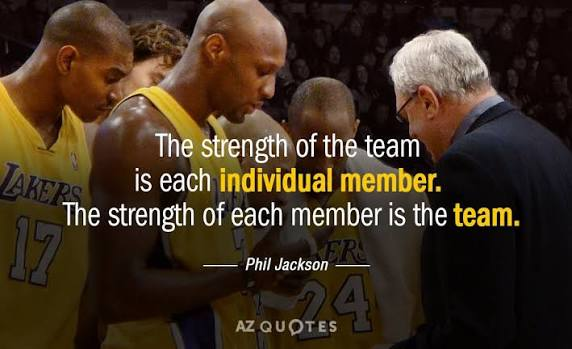
Team building is not an activity. Team leadership is not a position.
Both are capabilities of the mind that determine how effectively you can convert individual potential into collective performance.
A team may contain talented people and still fail. Why? Because talent is individual; performance is relational and systemic.
So the strategic question is not:
“How do I get people to work together?”
It is:
“How do I create the conditions in which people willingly combine their strengths, challenge each other intelligently, take ownership and achieve together what they could not achieve alone?”
1. WHAT IS TEAM BUILDING?
Team Building = deliberately creating the conditions for people to trust, understand, coordinate, contribute and grow together.
It involves:
- Knowing people beyond their job titles.
- Understanding strengths and differences.
- Creating trust.
- Clarifying expectations.
- Establishing team norms.
- Encouraging contribution.
- Developing collaboration.
- Resolving friction.
- Creating shared ownership.
Team bonding ≠ Team building
A dinner can create familiarity.
A game can create laughter.
But team building changes how people work together after the activity ends.
2. WHAT IS TEAM LEADERSHIP?
Team Leadership = influencing people toward a shared purpose while creating the conditions for collective excellence.
A team leader must simultaneously:
Set direction + create trust + clarify roles + develop people + manage conflict + make decisions + build accountability + enable learning.
Therefore:
Leadership is not controlling people; it is influencing conditions, choices and behavior.
This is why influence is the spark.
Your authority may make someone comply.
Your influence makes someone want to contribute.
3. WHY TEAM BUILDING & TEAM LEADERSHIP BEGIN WITH SELF-LEADERSHIP
Before leading a team, ask:
| Self-leadership question | Why it matters |
|---|---|
| Can I manage my emotions? | Your emotional state affects others. |
| Can I listen without immediately judging? | Listening builds understanding. |
| Can I admit mistakes? | Vulnerability encourages honesty. |
| Can I handle disagreement? | Your conflict style becomes the team’s model. |
| Can I control my ego? | Ego destroys collaboration. |
| Can I keep commitments? | Reliability builds trust. |
| Can I give credit? | Recognition strengthens contribution. |
| Can I hold standards? | Trust without standards becomes comfort. |
| Can I empower others? | Micromanagement creates dependency. |
| Can I learn? | A leader who stops learning stops developing the team. |
The fundamental principle:
Your team rarely becomes consistently better than the behavior you consistently demonstrate.
4. THE PSYCHOTECH TEAM PERFORMANCE EQUATION™
A practical model:
TEAM PERFORMANCE = Purpose × Trust × Clarity × Collaboration × Accountability × Learning
Why multiplication?
Because weakness in one critical area can damage the whole system.
Purpose without clarity → confusion.
Clarity without trust → compliance.
Trust without accountability → comfort zone.
Accountability without trust → fear.
Collaboration without competence → collective inefficiency.
Performance without learning → eventual decline.
The strongest teams therefore combine:
High Trust + High Standards + High Accountability + High Learning
5. THE 7C FRAMEWORK FOR TEAM MASTERY
Use the 7C Team Leadership Framework™ as a practical Psychotech tool.
1. CLARITY
Where are we going?
Create clarity around:
- Purpose
- Goals
- Priorities
- Roles
- Expectations
- Success measures
2. CONNECTION
Do we know and value each other?
Build:
- Respect
- Rapport
- Empathy
- Belonging
3. CONFIDENCE
Do we believe we can succeed together?
Build collective confidence through small wins, competence and evidence.
4. CANDOUR
Can we speak honestly?
Encourage people to:
- Question
- Challenge
- Disagree
- Admit mistakes
- Ask for help
- Raise risks
5. COLLABORATION
How do our strengths combine?
Move from:
Cooperation → Coordination → Collaboration → Co-creation
6. COMMITMENT
Who owns what?
Convert:
Expectation → Responsibility → Ownership → Action → Result
7. CONTINUOUS LEARNING
What can we do better next time?
After every major project ask:
What worked?
What failed?
What surprised us?
What did we learn?
What will we change?
6. TRUST: THE TEAM’S INVISIBLE CURRENCY
Trust is not:
“I like you.”
Trust is:
“I believe you will act reliably and responsibly even when I cannot see everything you are doing.”
Build trust through:
- Competence
- Consistency
- Honesty
- Reliability
- Transparency
- Respect
- Follow-through
Trust-building behavior
Say what you mean.
Do what you say.
Admit what you don’t know.
Give credit publicly.
Correct privately.
Keep confidential matters confidential.
Never punish honest disagreement.
7. PSYCHOLOGICAL SAFETY + ACCOUNTABILITY
This is one of the most important leadership distinctions.
Psychological safety means:
“I can speak without fearing humiliation or punishment for taking a reasonable interpersonal risk.”
It does not mean:
- No criticism
- No standards
- No consequences
- Everyone is always right
The ideal environment is:
| Low Accountability | High Accountability | |
|---|---|---|
| Low Safety | Apathy | Fear |
| High Safety | Comfort | High Performance |
Strategic rule:
Make it safe to speak—and make it necessary to perform.
8. CONFLICT: DON’T ELIMINATE IT—EMPOWER IT
A mature leader doesn’t ask:
“How can I stop conflict?”
Ask:
“How can I turn disagreement into better thinking?”
When conflict appears, use:
FACT → INTERPRETATION → INTEREST → OPTION → AGREEMENT
Example:
Fact: “The deadline was missed.”
Interpretation: “You don’t care.”
Stop there.
Instead ask:
Interest: “What prevented delivery?”
Option: “What can we change?”
Agreement: “Who will do what, by when?”
You have converted blame into problem-solving.
9. TEAM INTELLIGENCE: THE SECRET WEAPON
A team doesn’t become intelligent simply because intelligent people are present.
It becomes intelligent when people can:
- Share information.
- Understand one another’s expertise.
- Build a common understanding.
- Challenge assumptions.
- Combine different perspectives.
- Coordinate decisions.
Therefore:
Your goal isn’t to create people who think alike. It is to create people who understand the shared mission well enough to think together.
10. SITUATION → ANALYSIS → ACTION FRAMEWORK
Whenever a team problem appears, use this simple strategic sequence:
S — SITUATION
What is actually happening?
Separate facts from assumptions.
A — ANALYSIS
Why is it happening?
Look at:
- Person
- Relationship
- Role
- Process
- Leadership
- Culture
- System
A — ACTION
What is the smallest intelligent intervention?
F — FEEDBACK
What changed?
E — EVOLVE
What should the team learn?
This prevents leaders from reacting emotionally to symptoms.
11. THE OODA LOOP FOR TEAM LEADERS
When circumstances change:
OBSERVE → ORIENT → DECIDE → ACT
Don’t immediately react.
Observe
What is happening?
Orient
What does it mean?
Decide
What matters most?
Act
What is the next intelligent move?
Then repeat.
This develops a strategic rather than reactive mind.
12. THE 80/20 TEAM LEADERSHIP RULE
The highest-leverage behaviors are usually simple:
The 20% that can create disproportionate impact:
- Clarify priorities.
- Build trust.
- Listen deeply.
- Give useful feedback.
- Address conflict early.
- Recognize contribution.
- Delegate intelligently.
- Hold people accountable.
- Ask powerful questions.
- Model the standard.
Don’t spend 80% of your leadership energy managing minor issues.
Find the few behaviors creating most of the team’s results or problems.
13. WHERE & WHEN TO APPLY IT
Team leadership isn’t restricted to offices.
Apply it:
Workplace
Projects, departments, meetings, change, crisis.
Family
Shared responsibilities, communication and decisions.
Community
Volunteers, social initiatives and collective goals.
Entrepreneurship
Founders, partners and startup teams.
Personal relationships
Influence, cooperation and conflict.
Digital/AI environment
Remote teams, hybrid teams and human-AI collaboration.
Whenever two or more people depend upon one another, team leadership exists.
14. THE PSYCHOTECH LEADER’S INFLUENCE FLYWHEEL™
SELF-AWARENESS
↓
SELF-MASTERY
↓
CREDIBILITY
↓
TRUST
↓
INFLUENCE
↓
ALIGNMENT
↓
COLLABORATION
↓
COLLECTIVE ACTION
↓
RESULTS
↓
LEARNING
↓
GREATER INFLUENCE
This is why influence is the spark.
But influence without character becomes manipulation.
Therefore:
Influence + Integrity = Leadership
15. THE GREAT TEAM LEADER’S DAILY QUESTIONS
Ask yourself every day:
- What does my team need most from me today?
- Where is there ambiguity?
- Who is not being heard?
- What conversation am I avoiding?
- Where am I micromanaging?
- Who deserves recognition?
- What capability needs development?
- What conflict could become learning?
- What should I delegate?
- What behavior am I modelling?
And every week:
“Is my team becoming more dependent on me—or more capable without me?”
That single question can transform leadership.
16. THE FINAL PSYCHOTECH MASTER MODEL™
BUILD WITHIN
Self-awareness → Self-management → Emotional intelligence → Strategic thinking
BUILD BETWEEN
Trust → Respect → Communication → Empathy → Conflict capability
BUILD WITHIN THE TEAM
Purpose → Clarity → Collaboration → Accountability → Learning
BUILD AROUND THE TEAM
Resources → Systems → Processes → Culture → Technology
BUILD TOWARD THE FUTURE
Adaptability → Innovation → AI collaboration → Resilience
And ultimately:
INDIVIDUAL POTENTIAL → COLLECTIVE INTELLIGENCE → COLLECTIVE ACTION → COLLECTIVE RESULTS
The deepest lesson
Team Building creates the environment.
Team Leadership creates direction.
Self-Leadership creates the leader capable of doing both.
A truly strategic leader therefore doesn’t merely ask:
“How can I motivate my team?”
The better question is:
“What conditions can I create so that people discover their own reasons to contribute, trust one another enough to collaborate, challenge one another enough to improve, and take enough ownership to create extraordinary results together?”
That is where Team Building becomes Self-Leadership in action—and Leadership becomes the art of turning human potential into collective excellence.

ANUPAM SHARMA
PSYCHOTECH™ PRO STRATEGIST
COACH I MENTOR I TRAINER
COUNSELLOR I CONSULTANT