

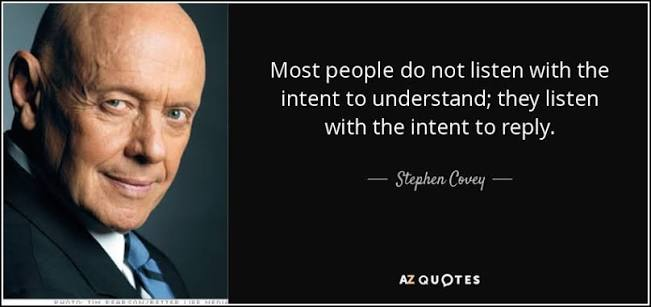
ACTIVE LISTENING MASTERY
The Executive Communication & Behavioral Psychology Manual
The Science, Psychology & Leadership System for Becoming an Elite Listener
Core Principle
“People do not remember the words you spoke. They remember how deeply you made them feel understood.”
Active Listening is not hearing words.
It is accurately decoding information + emotion + intention + meaning + context + future implication.
THE ACTIVE LISTENING PYRAMID
              WISDOM
       (Meaning & Insight)

          UNDERSTANDING
      (Emotion + Perspective)

          INTERPRETATION
   (Patterns + Intentions)

            LISTENING
      (Attention + Presence)

             HEARING
       (Sound Reception)
Most people remain at Level 1 (Hearing).
Elite leaders operate at Level 5 (Wisdom Listening).
PART 1
THE WHAT
360° ANATOMY OF ACTIVE LISTENING
Definition
Active Listening
A deliberate psychological process of fully attending, understanding, validating, remembering and responding to another person’s verbal and emotional communication.
It requires
- Presence
- Curiosity
- Emotional regulation
- Cognitive empathy
- Strategic questioning
- Feedback verification
It is not waiting to speak.
It is
understanding before influencing.
Active vs Passive vs Critical Listening
| Active Listening | Passive Listening | Critical Listening |
|---|---|---|
| Fully engaged | Physically present mentally absent | Evaluates accuracy |
| Clarifies | Assumes | Judges |
| Understands emotions | Ignores emotions | Tests evidence |
| Builds trust | Weakens relationships | Improves decisions |
| Uses empathy | Uses silence | Uses analysis |
| Collaborative | Reactive | Evaluative |
THE 360° ACTIVE LISTENING FRAMEWORK
                 UPWARD
          (Boss • Mentor • Client)

LEFT ------------------------------- RIGHT

PEERS                           CROSS FUNCTIONAL

LEFT ------------------------------- RIGHT

            DOWNWARD
(Employee • Team • Children)

                PERSONAL
A. Listening Upward
Purpose
Understand
- expectations
- priorities
- vision
- political dynamics
- decision rationale
Elite Questions
“What matters most here?”
“What concern am I missing?”
“What would success look like?”
Benefits
✔ Better promotions
✔ Better executive trust
✔ Less rework
✔ Strategic alignment
B. Listening Downward
Leadership Listening
People below you need
- safety
- fairness
- respect
- coaching
instead of authority.
Manager asks
“What happened?”
Leader asks
“What made this difficult?”
Hidden objective
Discover
- fears
- frustrations
- motivation
- capability gaps
before giving advice.
C. Peer-to-Peer Listening
Purpose
Alignment
Collaboration
Innovation
Conflict reduction
Peer Listening Formula
Listen
↓
Clarify
↓
Confirm
↓
Collaborate
↓
Commit
D. Personal Listening
Highest emotional stakes.
Family rarely wants
solutions first.
They want
validation first.
Advice later.
Example
Bad
“You’re overreacting.”
Elite
“I understand why this upset you.”
THE THREE LAYERS OF EVERY CONVERSATION
Layer 1
Words

Layer 2
Emotions

Layer 3
Needs
Most conflicts occur because people only hear Layer 1.
VERBAL CUES
Observe
Vocabulary
Speed
Tone
Volume
Pauses
Repeated words
Hesitation
Contradictions
Example
“I’m fine.”
Fast speech
Low voice
Avoiding eye contact
Translation
They’re not fine.
NON-VERBAL CUES
Research consistently suggests that body language and vocal tone strongly influence how messages are interpreted, although there is no single fixed percentage that applies to all communication contexts.
Observe
Eye movement
Shoulder tension
Crossed arms
Leaning
Facial muscles
Breathing
Micro expressions
Hand movement
SUBTEXTUAL CUES
The elite listener asks
“What is not being said?”
Examples
“I’ll manage.”
Translation
“I need help.”
“I’m okay.”
Translation
“I don’t feel safe.”
Emotional Vocabulary Decoder
| Statement | Hidden Meaning |
|---|---|
| Fine | Hurt |
| Busy | Overloaded |
| Maybe | No |
| Whatever | Frustrated |
| We’ll see | Skeptical |
| No problem | Problem exists |
PART 2
THE WHY
THE PSYCHOLOGY OF BEING HEARD
Human Need
Every brain asks
Am I safe?

Am I respected?

Am I understood?

Am I important?
Active listening answers
YES.
Psychological Effects
When someone feels heard
Brain releases
Reduced stress response
↓
Greater psychological safety
↓
Higher trust
↓
Better openness
↓
Higher creativity
↓
Greater cooperation
THE “TRAMPOLINE EFFECT”
When emotions are acknowledged rather than dismissed, people often recover more quickly and become more capable of problem-solving. Feeling heard can help them “bounce back” instead of remaining stuck in defensiveness.
Validation
↓
Reduced emotional intensity
↓
Improved cognitive flexibility
↓
Better decisions
ROI OF ACTIVE LISTENING
Professional
| Outcome | Impact |
|---|---|
| Trust | Very High |
| Engagement | High |
| Retention | High |
| Innovation | Higher idea sharing |
| Productivity | Less misunderstanding |
| Customer Loyalty | Higher |
| Leadership Credibility | Significant |
Personal
- Strong marriages
- Better parenting
- Reduced conflicts
- Emotional intimacy
- Faster forgiveness
- Deeper friendships
COST OF PASSIVE LISTENING
High-risk consequences include:
- Safety incidents from misunderstood instructions.
- Project delays due to unclear expectations.
- Escalating conflicts because concerns were never surfaced.
- Employee disengagement and avoidable turnover.
- Customer dissatisfaction and reputational damage.
- Poor strategic decisions based on incomplete information.
PART 3
THE HOW
THE CONVERSATION MAP
FIRST TEN SECONDS
Objective
Presence
Checklist
✓ Stop multitasking
✓ Eye contact
✓ Relax face
✓ Open posture
✓ Put phone away
NEXT THIRTY SECONDS
Do not interrupt.
Simply observe
Words
Emotion
Energy
Rhythm
MINUTE ONE
Clarify
“So if I’m understanding correctly…”
MIDDLE OF CONVERSATION
Identify
Facts
Feelings
Needs
Assumptions
Expectations
LAST TWO MINUTES
Summarize
Confirm
Commit
Example
“So here’s what I’m taking away…”
MICRO TACTICS
1 Paraphrasing
Speaker
“My workload has doubled.”
Listener
“So you’re saying your workload has become difficult to sustain.”
2 Mirroring
Speaker
“I feel ignored.”
Listener
“Ignored?”
This invites elaboration without inserting your own assumptions.
3 Reflecting Feelings
“I hear frustration.”
“I sense disappointment.”
“You sound uncertain.”
4 Power Questions
“What concerns you most?”
“What outcome are you hoping for?”
“What would make this successful?”
“What assumptions are we making?”
“What haven’t we discussed?”
THE FOUR INTERNAL BARRIERS
Barrier 1
The Rebuttal Mind
Problem
Preparing answers.
Solution
Rule
Understand
before responding.
Exercise
Wait
3 seconds.
Barrier 2
Information Overload
Problem
Working memory saturation.
Solution
Chunk
Summarize every few minutes.
Barrier 3
Confirmation Bias
Problem
Only hearing what confirms existing beliefs.
Exercise
Ask
“What evidence would change my view?”
Barrier 4
Emotional Hijacking
Problem
Triggered emotions reduce listening quality.
Exercise
Name the emotion silently (“I’m feeling defensive”), slow your breathing, and refocus on understanding before responding.
PART 4
360° SIMULATION SCENARIOS
Scenario A
Employee Burnout
Passive Version
Employee
“I’m exhausted.”
Manager
“Everyone is busy. Just finish the work.”
Employee
“Okay.”
Trust destroyed.
Active Version
Employee
“I’m exhausted.”
Manager
“Thank you for telling me. What has been creating the biggest pressure?”
Employee
“I’ve been covering two roles.”
Manager
“So the issue isn’t effort—it’s workload. Let’s prioritize what must happen this week and decide what can wait.”
Result
Trust
Retention
Solution
Scenario B
Relationship
Passive
Partner
“You never listen.”
Response
“I do listen.”
Conflict grows.
Active
Partner
“You never listen.”
Response
“It sounds like you’re feeling unheard. Can you tell me about the moment that made you feel that way?”
Partner opens emotionally.
Conflict reduces.
Scenario C
Cross Functional Teams
Passive
Marketing
“Sales isn’t cooperating.”
Sales
“Marketing sends poor leads.”
Meeting ends.
Nothing changes.
Active
Facilitator
“I’m hearing two concerns. Marketing wants faster follow-up. Sales wants higher lead quality. Let’s define success together before discussing solutions.”
Alignment begins.
PART 5
30-DAY MASTERY BLUEPRINT
| Week | Focus | Daily Micro-Habits | Self-Assessment |
|---|---|---|---|
| Week 1 | Presence | Eliminate distractions in every conversation, maintain eye contact, avoid interrupting | Did I interrupt? Was I fully present? |
| Week 2 | Understanding | Paraphrase once in every important conversation, identify one emotion and one underlying need | Did the speaker confirm I understood correctly? |
| Week 3 | Inquiry | Ask at least three open-ended questions before offering advice, summarize key points at the end | Did my questions deepen the conversation? |
| Week 4 | Integration | Practice active listening in work, family, and social settings; seek feedback from one trusted person | Did people appear more open, calmer, or more collaborative? What will I improve tomorrow? |
DAILY 5-MINUTE ACTIVE LISTENING DRILL
| Minute | Practice |
|---|---|
| 1 | Take three slow breaths and set the intention: “Understand before responding.” |
| 2 | Recall yesterday’s best and weakest listening moments. |
| 3 | Practice paraphrasing and reflecting feelings using a recent conversation. |
| 4 | Prepare two open-ended questions you can use today. |
| 5 | Review one improvement goal for your next conversation. |
THE L.I.S.T.E.N. EXECUTIVE FRAMEWORK
| Step | Meaning | Primary Skill |
|---|---|---|
| L | Look | Observe verbal, non-verbal, and emotional cues. |
| I | Inquire | Ask curious, open-ended questions without leading. |
| S | Summarize | Paraphrase and verify understanding. |
| T | Tune In | Notice emotions, values, and hidden needs beneath the words. |
| E | Empathize | Validate the person’s perspective without necessarily agreeing. |
| N | Navigate | Co-create next steps, commitments, or decisions. |
THE GOLDEN LAWS OF ELITE ACTIVE LISTENING
| Law | Leadership Insight |
|---|---|
| The Law of Presence | Attention is the highest form of respect. |
| The Law of Curiosity | Seek understanding before offering solutions. |
| The Law of Emotional Validation | People cooperate more readily after they feel understood. |
| The Law of Reflection | Accurate summaries reduce misunderstandings and increase trust. |
| The Law of Silence | Strategic pauses often reveal deeper truths than rapid questions. |
| The Law of Perspective | Every message contains facts, emotions, intentions, and assumptions. Listen for all four. |
| The Law of Reciprocity | When people feel heard, they are more willing to hear you. |
| The Law of Psychological Safety | Teams speak up when they believe they will be respected, not punished. |
| The Law of Confirmation | Never assume understanding—verify it explicitly. |
| The Law of Leadership Influence | Leaders earn influence less by speaking brilliantly than by listening exceptionally. |
The Executive Takeaway
Active listening is a strategic leadership capability—not merely a communication technique. Elite listeners continuously decode four dimensions simultaneously:
- What is being said (facts and information).
- How it is being said (emotion and intensity).
- Why it is being said (motivation, concerns, and goals).
- What should happen next (clarity, commitment, and action).
Organizations, teams, and families are transformed when listening shifts from passive reception to intentional understanding. In high-performing environments, the quality of decisions, relationships, innovation, and leadership influence is often determined by the quality of listening that precedes them.
ACTIVE LISTENING MASTERY
The Executive Communication & Behavioral Psychology Manual
The Science, Psychology & Leadership System for Becoming an Elite Listener
Core Principle
“People do not remember the words you spoke. They remember how deeply you made them feel understood.”
Active Listening is not hearing words.
It is accurately decoding information + emotion + intention + meaning + context + future implication.
THE ACTIVE LISTENING PYRAMID
              WISDOM
       (Meaning & Insight)

          UNDERSTANDING
      (Emotion + Perspective)

          INTERPRETATION
   (Patterns + Intentions)

            LISTENING
      (Attention + Presence)

             HEARING
       (Sound Reception)
Most people remain at Level 1 (Hearing).
Elite leaders operate at Level 5 (Wisdom Listening).
PART 1
THE WHAT
360° ANATOMY OF ACTIVE LISTENING
Definition
Active Listening
A deliberate psychological process of fully attending, understanding, validating, remembering and responding to another person’s verbal and emotional communication.
It requires
- Presence
- Curiosity
- Emotional regulation
- Cognitive empathy
- Strategic questioning
- Feedback verification
It is not waiting to speak.
It is
understanding before influencing.
Active vs Passive vs Critical Listening
| Active Listening | Passive Listening | Critical Listening |
|---|---|---|
| Fully engaged | Physically present mentally absent | Evaluates accuracy |
| Clarifies | Assumes | Judges |
| Understands emotions | Ignores emotions | Tests evidence |
| Builds trust | Weakens relationships | Improves decisions |
| Uses empathy | Uses silence | Uses analysis |
| Collaborative | Reactive | Evaluative |
THE 360° ACTIVE LISTENING FRAMEWORK
                 UPWARD
          (Boss • Mentor • Client)

LEFT ------------------------------- RIGHT

PEERS                           CROSS FUNCTIONAL

LEFT ------------------------------- RIGHT

            DOWNWARD
(Employee • Team • Children)

                PERSONAL
A. Listening Upward
Purpose
Understand
- expectations
- priorities
- vision
- political dynamics
- decision rationale
Elite Questions
“What matters most here?”
“What concern am I missing?”
“What would success look like?”
Benefits
✔ Better promotions
✔ Better executive trust
✔ Less rework
✔ Strategic alignment
B. Listening Downward
Leadership Listening
People below you need
- safety
- fairness
- respect
- coaching
instead of authority.
Manager asks
“What happened?”
Leader asks
“What made this difficult?”
Hidden objective
Discover
- fears
- frustrations
- motivation
- capability gaps
before giving advice.
C. Peer-to-Peer Listening
Purpose
Alignment
Collaboration
Innovation
Conflict reduction
Peer Listening Formula
Listen
↓
Clarify
↓
Confirm
↓
Collaborate
↓
Commit
D. Personal Listening
Highest emotional stakes.
Family rarely wants
solutions first.
They want
validation first.
Advice later.
Example
Bad
“You’re overreacting.”
Elite
“I understand why this upset you.”
THE THREE LAYERS OF EVERY CONVERSATION
Layer 1
Words

Layer 2
Emotions

Layer 3
Needs
Most conflicts occur because people only hear Layer 1.
VERBAL CUES
Observe
Vocabulary
Speed
Tone
Volume
Pauses
Repeated words
Hesitation
Contradictions
Example
“I’m fine.”
Fast speech
Low voice
Avoiding eye contact
Translation
They’re not fine.
NON-VERBAL CUES
Research consistently suggests that body language and vocal tone strongly influence how messages are interpreted, although there is no single fixed percentage that applies to all communication contexts.
Observe
Eye movement
Shoulder tension
Crossed arms
Leaning
Facial muscles
Breathing
Micro expressions
Hand movement
SUBTEXTUAL CUES
The elite listener asks
“What is not being said?”
Examples
“I’ll manage.”
Translation
“I need help.”
“I’m okay.”
Translation
“I don’t feel safe.”
Emotional Vocabulary Decoder
| Statement | Hidden Meaning |
|---|---|
| Fine | Hurt |
| Busy | Overloaded |
| Maybe | No |
| Whatever | Frustrated |
| We’ll see | Skeptical |
| No problem | Problem exists |
PART 2
THE WHY
THE PSYCHOLOGY OF BEING HEARD
Human Need
Every brain asks
Am I safe?

Am I respected?

Am I understood?

Am I important?
Active listening answers
YES.
Psychological Effects
When someone feels heard
Brain releases
Reduced stress response
↓
Greater psychological safety
↓
Higher trust
↓
Better openness
↓
Higher creativity
↓
Greater cooperation
THE “TRAMPOLINE EFFECT”
When emotions are acknowledged rather than dismissed, people often recover more quickly and become more capable of problem-solving. Feeling heard can help them “bounce back” instead of remaining stuck in defensiveness.
Validation
↓
Reduced emotional intensity
↓
Improved cognitive flexibility
↓
Better decisions
ROI OF ACTIVE LISTENING
Professional
| Outcome | Impact |
|---|---|
| Trust | Very High |
| Engagement | High |
| Retention | High |
| Innovation | Higher idea sharing |
| Productivity | Less misunderstanding |
| Customer Loyalty | Higher |
| Leadership Credibility | Significant |
Personal
- Strong marriages
- Better parenting
- Reduced conflicts
- Emotional intimacy
- Faster forgiveness
- Deeper friendships
COST OF PASSIVE LISTENING
High-risk consequences include:
- Safety incidents from misunderstood instructions.
- Project delays due to unclear expectations.
- Escalating conflicts because concerns were never surfaced.
- Employee disengagement and avoidable turnover.
- Customer dissatisfaction and reputational damage.
- Poor strategic decisions based on incomplete information.
PART 3
THE HOW
THE CONVERSATION MAP
FIRST TEN SECONDS
Objective
Presence
Checklist
✓ Stop multitasking
✓ Eye contact
✓ Relax face
✓ Open posture
✓ Put phone away
NEXT THIRTY SECONDS
Do not interrupt.
Simply observe
Words
Emotion
Energy
Rhythm
MINUTE ONE
Clarify
“So if I’m understanding correctly…”
MIDDLE OF CONVERSATION
Identify
Facts
Feelings
Needs
Assumptions
Expectations
LAST TWO MINUTES
Summarize
Confirm
Commit
Example
“So here’s what I’m taking away…”
MICRO TACTICS
1 Paraphrasing
Speaker
“My workload has doubled.”
Listener
“So you’re saying your workload has become difficult to sustain.”
2 Mirroring
Speaker
“I feel ignored.”
Listener
“Ignored?”
This invites elaboration without inserting your own assumptions.
3 Reflecting Feelings
“I hear frustration.”
“I sense disappointment.”
“You sound uncertain.”
4 Power Questions
“What concerns you most?”
“What outcome are you hoping for?”
“What would make this successful?”
“What assumptions are we making?”
“What haven’t we discussed?”
THE FOUR INTERNAL BARRIERS
Barrier 1
The Rebuttal Mind
Problem
Preparing answers.
Solution
Rule
Understand
before responding.
Exercise
Wait
3 seconds.
Barrier 2
Information Overload
Problem
Working memory saturation.
Solution
Chunk
Summarize every few minutes.
Barrier 3
Confirmation Bias
Problem
Only hearing what confirms existing beliefs.
Exercise
Ask
“What evidence would change my view?”
Barrier 4
Emotional Hijacking
Problem
Triggered emotions reduce listening quality.
Exercise
Name the emotion silently (“I’m feeling defensive”), slow your breathing, and refocus on understanding before responding.
PART 4
360° SIMULATION SCENARIOS
Scenario A
Employee Burnout
Passive Version
Employee
“I’m exhausted.”
Manager
“Everyone is busy. Just finish the work.”
Employee
“Okay.”
Trust destroyed.
Active Version
Employee
“I’m exhausted.”
Manager
“Thank you for telling me. What has been creating the biggest pressure?”
Employee
“I’ve been covering two roles.”
Manager
“So the issue isn’t effort—it’s workload. Let’s prioritize what must happen this week and decide what can wait.”
Result
Trust
Retention
Solution
Scenario B
Relationship
Passive
Partner
“You never listen.”
Response
“I do listen.”
Conflict grows.
Active
Partner
“You never listen.”
Response
“It sounds like you’re feeling unheard. Can you tell me about the moment that made you feel that way?”
Partner opens emotionally.
Conflict reduces.
Scenario C
Cross Functional Teams
Passive
Marketing
“Sales isn’t cooperating.”
Sales
“Marketing sends poor leads.”
Meeting ends.
Nothing changes.
Active
Facilitator
“I’m hearing two concerns. Marketing wants faster follow-up. Sales wants higher lead quality. Let’s define success together before discussing solutions.”
Alignment begins.
PART 5
30-DAY MASTERY BLUEPRINT
| Week | Focus | Daily Micro-Habits | Self-Assessment |
|---|---|---|---|
| Week 1 | Presence | Eliminate distractions in every conversation, maintain eye contact, avoid interrupting | Did I interrupt? Was I fully present? |
| Week 2 | Understanding | Paraphrase once in every important conversation, identify one emotion and one underlying need | Did the speaker confirm I understood correctly? |
| Week 3 | Inquiry | Ask at least three open-ended questions before offering advice, summarize key points at the end | Did my questions deepen the conversation? |
| Week 4 | Integration | Practice active listening in work, family, and social settings; seek feedback from one trusted person | Did people appear more open, calmer, or more collaborative? What will I improve tomorrow? |
DAILY 5-MINUTE ACTIVE LISTENING DRILL
| Minute | Practice |
|---|---|
| 1 | Take three slow breaths and set the intention: “Understand before responding.” |
| 2 | Recall yesterday’s best and weakest listening moments. |
| 3 | Practice paraphrasing and reflecting feelings using a recent conversation. |
| 4 | Prepare two open-ended questions you can use today. |
| 5 | Review one improvement goal for your next conversation. |
THE L.I.S.T.E.N. EXECUTIVE FRAMEWORK
| Step | Meaning | Primary Skill |
|---|---|---|
| L | Look | Observe verbal, non-verbal, and emotional cues. |
| I | Inquire | Ask curious, open-ended questions without leading. |
| S | Summarize | Paraphrase and verify understanding. |
| T | Tune In | Notice emotions, values, and hidden needs beneath the words. |
| E | Empathize | Validate the person’s perspective without necessarily agreeing. |
| N | Navigate | Co-create next steps, commitments, or decisions. |
THE GOLDEN LAWS OF ELITE ACTIVE LISTENING
| Law | Leadership Insight |
|---|---|
| The Law of Presence | Attention is the highest form of respect. |
| The Law of Curiosity | Seek understanding before offering solutions. |
| The Law of Emotional Validation | People cooperate more readily after they feel understood. |
| The Law of Reflection | Accurate summaries reduce misunderstandings and increase trust. |
| The Law of Silence | Strategic pauses often reveal deeper truths than rapid questions. |
| The Law of Perspective | Every message contains facts, emotions, intentions, and assumptions. Listen for all four. |
| The Law of Reciprocity | When people feel heard, they are more willing to hear you. |
| The Law of Psychological Safety | Teams speak up when they believe they will be respected, not punished. |
| The Law of Confirmation | Never assume understanding—verify it explicitly. |
| The Law of Leadership Influence | Leaders earn influence less by speaking brilliantly than by listening exceptionally. |
The Executive Takeaway
Active listening is a strategic leadership capability—not merely a communication technique. Elite listeners continuously decode four dimensions simultaneously:
- What is being said (facts and information).
- How it is being said (emotion and intensity).
- Why it is being said (motivation, concerns, and goals).
- What should happen next (clarity, commitment, and action).
Organizations, teams, and families are transformed when listening shifts from passive reception to intentional understanding. In high-performing environments, the quality of decisions, relationships, innovation, and leadership influence is often determined by the quality of listening that precedes them.

ANUPAM SHARMA
PSYCHOTECH™ STRATEGIST
COACH I MENTOR I TRAINER
COUNSELLOR I CONSULTANT