
When Emotions Lead, Intelligence Leaves: A Leadership Blueprint for Balancing Emotion with Logic
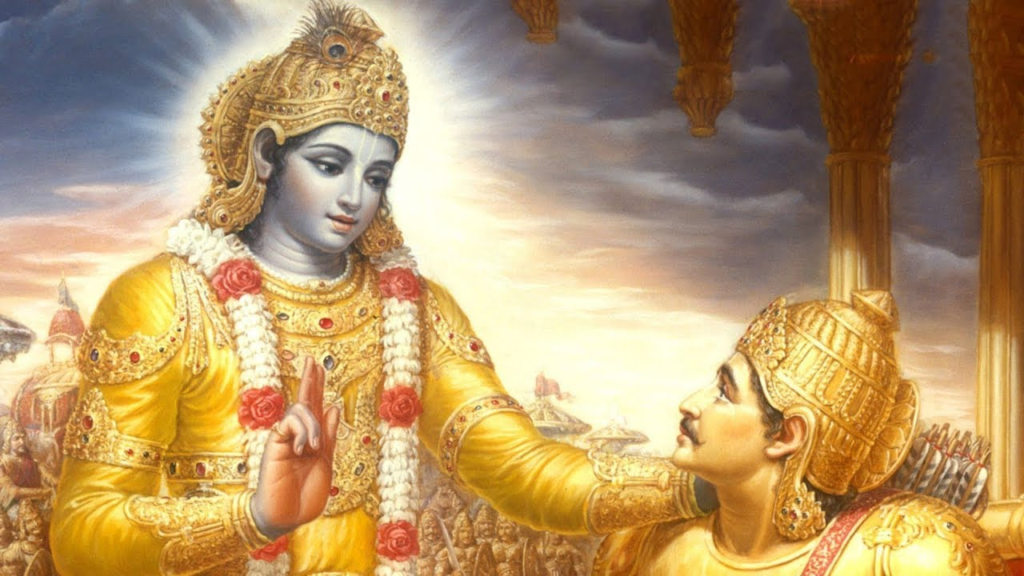
“Krodhād bhavati sammohah, sammohāt smṛti-vibhramah; Smṛti-bhraṁśād buddhi-nāśo, buddhi-nāśāt praṇaśyati.”
Bhagavad Gita – Chapter 2, Verse 63
Translation
“From anger arises delusion. From delusion comes confusion of memory. When memory is disturbed, intelligence is destroyed. When intelligence is destroyed, one perishes.”
Introduction: The Greatest Battlefield Is Within
History has repeatedly shown that kingdoms, organizations, careers, families, and even civilizations rarely collapse because of a lack of intelligence. They collapse because intelligent people make emotional decisions at critical moments.
The Bhagavad Gita identifies this psychological chain thousands of years before modern neuroscience explained the brain’s emotional circuitry. Lord Krishna presents one of humanity’s greatest leadership principles:
Emotional imbalance destroys rational judgment.
This is not merely spiritual wisdom. It is a universal law governing leadership, decision-making, relationships, business, warfare, finance, health, and personal growth.
Today’s world operates in a constant state of urgency—market crashes, political uncertainty, organizational pressure, digital overload, relationship conflicts, and personal expectations. In such an environment, emotional mastery has become one of the greatest competitive advantages.
True leadership is not about controlling others.
It is about controlling yourself before circumstances control you.
Understanding Krishna’s Psychological Chai
The verse presents an extraordinary sequence:
Anger → Delusion → Memory Distortion → Loss of Wisdom → Destruction
This progression happens surprisingly quickly.
Imagine a leader receiving criticism during an important meeting.
Initially, there is irritation.
That irritation becomes anger.
Anger narrows perception.
The individual forgets past lessons, long-term objectives, organizational values, and strategic priorities.
They react impulsively.
The damage often lasts much longer than the emotion itself.
Every emotional reaction initiates a chain reaction that affects thinking, behavior, relationships, and outcomes.
Emotion Is Not the Enemy
Many misunderstand emotional intelligence as emotional suppression.
Krishna never teaches suppression.
He teaches mastery.
Emotions serve important purposes.
Fear warns us.
Compassion connects us.
Love inspires sacrifice.
Excitement fuels innovation.
Passion drives excellence.
The danger begins when emotions become dictators instead of advisors.
A mature leader acknowledges emotions but allows logic to make the final decision.
Why Emotional Decisions Become Dangerous
Modern neuroscience confirms that during intense emotional states, the brain’s rational centers become less effective while survival responses dominate.
The consequences include:
- Poor judgment
- Tunnel vision
- Confirmation bias
- Overreaction
- Risky decisions
- Communication breakdown
- Relationship damage
- Loss of credibility
Emotion is energy.
Logic is direction.
Energy without direction creates destruction.
The 360-Degree Impact on Human Life
1. Leadership
People rarely follow the smartest leader.
They follow the most emotionally stable leader.
During crises, employees observe composure more than competence.
A calm leader creates confidence.
An emotional leader creates uncertainty.
Leadership is emotional contagion.
Your emotional state becomes your team’s emotional climate.
2. Decision Making
Great decisions emerge from clarity rather than urgency.
Emotion narrows available options.
Logic expands possibilities.
Strategic leaders delay irreversible decisions until emotional intensity decreases.
Every major decision should answer one question:
“Am I responding to reality or reacting to emotion?”
3. Business and Entrepreneurship
Businesses often fail because founders:
- panic during downturns,
- become arrogant during growth,
- fear calculated risks,
- overreact to competitors,
- make emotional investments.
Markets reward discipline.
Not drama.
The best investors separate feelings from facts.
4. Relationships
Most broken relationships begin with uncontrolled reactions rather than major disagreements.
One emotional sentence can destroy years of trust.
Listening requires emotional maturity.
Winning an argument is meaningless if the relationship is lost.
Strong relationships prioritize understanding over emotional victory.
5. Career Growth
Professionals lose promotions because of:
- anger,
- ego,
- defensiveness,
- impatience,
- emotional outbursts.
Organizations increasingly value emotional intelligence alongside technical expertise.
Promotion often depends more on emotional maturity than intellectual brilliance.
6. Health
Continuous anger activates stress hormones.
Long-term consequences include:
- hypertension,
- weakened immunity,
- sleep disorders,
- digestive issues,
- anxiety,
- burnout.
Peace is productive.
Calmness is biological strength.
7. Financial Decisions
Emotional investing creates:
- panic selling,
- impulsive buying,
- unnecessary debt,
- speculative risks.
Successful wealth builders follow systems rather than moods.
Money respects disciplined thinking.
8. Family Leadership
Children learn emotional regulation by observing adults.
Parents who remain calm during conflict create emotionally secure families.
Families inherit emotional patterns more than financial assets.
9. Innovation
Creativity requires an open mind.
Anger closes curiosity.
Fear discourages experimentation.
Calmness expands imagination.
Innovation grows where emotional safety exists.
10. Spiritual Growth
Spirituality begins with mastery over the mind.
Meditation without emotional awareness becomes ritual.
Real spirituality transforms reactions into conscious responses.
Inner peace becomes practical intelligence.
The Leadership Formula
The most successful leaders operate through a simple equation:
Situation → Pause → Observe → Think → Decide → Execute
Most people skip the pause.
That single pause determines success or failure.
Five Emotional Traps That Destroy Leaders
1. Ego
Ego converts feedback into insult.
Wisdom converts feedback into improvement.
2. Fear
Fear magnifies problems while shrinking possibilities.
Strategic leaders prepare instead of panic
3. Anger
Anger creates temporary power but permanent consequences.
Self-control is greater strength than domination.
4. Attachment
Attachment clouds objectivity.
Great leaders remain committed to purpose rather than attached to outcomes.
5. Impulsiveness
Immediate reactions often create long-term regret.
Thoughtful responses build lasting influence.
The Emotional Leadership Framework
Step 1: Notice
Identify the emotion.
Name it.
Awareness weakens emotional control.
Step 2: Pause
Avoid making important decisions during emotional peaks.
Silence is often strategic.
Step 3: Separate Facts from Feelings
Ask:
What actually happened?
What assumptions am I making?
What evidence supports my conclusion?
Step 4: Think Long-Term
Ask:
Will this decision matter after one year?
Does it align with my mission?
Will I respect this decision later?
Step 5: Respond
Respond with intention rather than impulse.
Response demonstrates leadership.
Reaction demonstrates conditioning.
Ancient Wisdom Meets Modern Psychology
Modern emotional intelligence research emphasizes:
- self-awareness,
- self-regulation,
- empathy,
- motivation,
- social intelligence.
Krishna summarized these principles thousands of years ago through one verse.
Ancient wisdom and modern science now converge on the same conclusion:
The greatest predictor of sustainable success is emotional regulation.
Daily Practices to Master Emotional Logic
Develop habits that strengthen emotional discipline:
- Begin each morning with ten minutes of silence or meditation.
- Reflect on your emotional state before beginning important work.
- Delay major decisions when angry or overwhelmed.
- Keep a journal to identify emotional triggers and recurring patterns.
- Practice active listening without interrupting.
- Reframe criticism as data for growth rather than a personal attack.
- Exercise regularly to reduce accumulated stress.
- Build moments of stillness into your daily schedule.
- Seek perspectives from trusted mentors before acting on emotionally charged issues.
- End each day by reviewing where emotion overruled logic and how you can improve tomorrow.
Mastery is not achieved by eliminating emotions but by training yourself to use them wisely.
The Strategic Lighthouse Principle
A lighthouse does not chase storms.
It remains steady.
Its stability guides others through uncertainty.
Leaders who master emotional balance become human lighthouses.
When markets panic, they create clarity.
When teams fear, they inspire confidence.
When conflict rises, they bring perspective.
When uncertainty spreads, they remain anchored in purpose.
The stronger the storm, the more valuable the lighthouse.
The Ultimate Leadership Lesson
The Bhagavad Gita teaches that external victory begins with internal mastery.
No strategy can compensate for an uncontrolled mind.
No organization can outperform the emotional maturity of its leaders.
No relationship can flourish without disciplined responses.
No vision can be sustained through impulsive reactions.
The most powerful leaders are not those who never experience anger, fear, or frustration.
They are those who refuse to let those emotions make their decisions.
Conclusion: Think Clearly Before You Act Powerfully
Every day presents countless opportunities to choose between reaction and response.
Every conversation, negotiation, investment, presentation, and crisis tests your emotional leadership.
When anger speaks first, wisdom becomes silent.
When clarity leads, courage follows.
The timeless message of the Bhagavad Gita reminds us that true strength is not measured by how loudly we react but by how wisely we respond.
Master your emotions before they master your destiny.
Because the greatest victories are never won on the battlefield alone.
They are first won within the mind.
Leadership Mantra
“Feel deeply. Think clearly. Decide wisely. Act courageously. Review humbly. Grow continuously.”
That is the pathway from emotional reaction to enlightened leadership—and from temporary success to lasting significance.

ANUPAM SHARMA
PSYCHOTECH™ STRATEGIST
COACH I MENTOR I TRAINER
COUNSELLOR I CONSULTANT