
Your Nearest Environment is Your Greatest Influencer– Energy flows where focus goes…
Why You Inevitably Become the Average of the 5 People You Invest Most of Your Time & Energy With
Most people believe they are self-made.
Independent.
Autonomous thinkers.
Yet psychology, neuroscience, sociology, and now psychotech tell a far more humbling—and empowering—truth:
You are not shaped primarily by your intentions.
You are shaped by your environment.
Your nearest environment silently programs your thinking, emotional patterns, belief systems, decision-making style, and even your identity trajectory. Long before motivation acts, environment reacts. Long before discipline kicks in, influence has already decided the direction.
This is why the statement—
“Your nearest environment is your greatest influencer”—
is not motivational rhetoric, but a strategic law of human evolution.
The Invisible Law: Why You Become the Average of the 5 People Around You
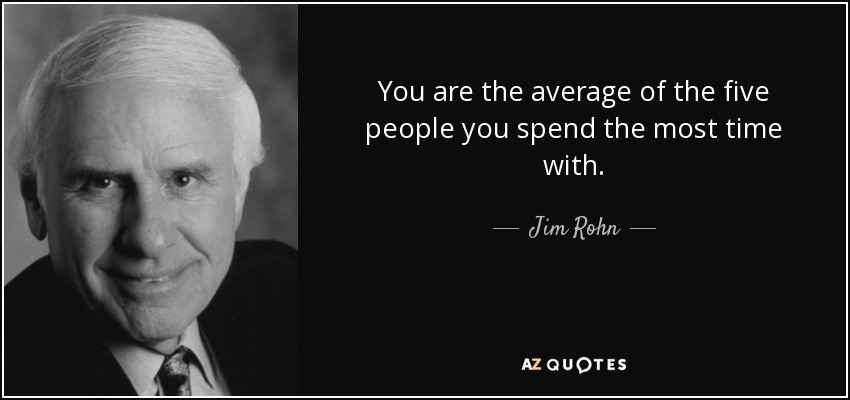
The idea that you become the average of the five people you spend the most time with is not a cliché. It is a convergence of multiple sciences:
- Social Psychology
- Behavioral Neuroscience
- Cognitive Conditioning
- Mirror Neuron Theory
- Emotional Contagion
- Trust & Belief Transfer Systems
- Digital Influence Algorithms (Psychotech layer)
Human beings are adaptive social organisms. Survival historically depended not on individual brilliance, but on group alignment. As a result, the brain evolved to synchronize with its immediate social environment.
You don’t merely learn from people around you.
You absorb them.
Psychotech Perspective: The Brain Is a Programmable Interface
From a psychotech lens, the human mind functions like an adaptive operating system:
- Inputs = Conversations, behaviors, emotional tones
- Processing = Interpretation, meaning-making, normalization
- Outputs = Habits, beliefs, decisions, actions
Your closest environment acts like a continuous background software update.
Even when you resist consciously, subconsciously the system adjusts to:
- What is considered normal
- What is considered possible
- What is considered acceptable
- What is considered risky
- What is considered worth striving for
This is why environment beats willpower.
Three Core Mechanisms of Influence
1. Learning Without Awareness (Passive Conditioning)
Most learning is non-deliberate.
You unconsciously pick up:
- Language patterns
- Emotional responses
- Attitudes toward success, failure, money, health, relationships
- Problem-solving styles
If your environment normalizes:
- Complaining → you complain
- Mediocrity → you settle
- Fear → you hesitate
- Growth → you stretch
This happens without permission.
The brain is always asking:
“What is safe here?”
“What is normal here?”
And then it adjusts behavior accordingly.
2. Belief Transfer Through Repetition
Beliefs are rarely formed by logic.
They are formed by repetition + social validation.
If five people you trust repeatedly express:
- “This won’t work”
- “It’s too risky”
- “People like us don’t do this”
- “That’s not practical”
Your mind slowly accepts these beliefs—not because they’re true, but because they’re familiar.
Conversely, if your environment repeatedly says:
- “Figure it out”
- “There’s always a way”
- “Growth is uncomfortable”
- “Think long-term”
Your belief system upgrades.
Beliefs are socially downloaded, not intellectually installed.
3. Emotional Contagion & Energy Synchronization
Emotions are infectious.
Neuroscience shows that mirror neurons cause us to:
- Feel what others feel
- Reflect their emotional states
- Adjust our mood baseline unconsciously
This means:
- An anxious environment creates anxious decisions
- A cynical environment kills optimism
- A disciplined environment breeds consistency
- A visionary environment expands thinking
You don’t just hear people—you tune into their frequency.
Trust: The Hidden Gateway of Influence
Influence does not require authority.
It requires trust.
You are influenced most by those:
- You emotionally feel safe with
- You interact with frequently
- You respect or fear losing approval from
Trust lowers psychological defenses.
Once trust is established:
- Beliefs enter without resistance
- Ideas bypass critical filters
- Behaviors feel “natural” to adopt
This is why:
- Family conditioning is deep
- Peer groups define identity
- Work cultures outlast job roles
Where trust flows, influence grows.
The Average Effect: Why 5 People Matter (Not 50)
Why not 50 people?
Why specifically the closest five?
Because influence follows intensity, not quantity.
Your closest five people typically share:
- Maximum emotional exposure
- Maximum conversational repetition
- Maximum shared experiences
- Maximum psychological impact
These five people collectively define:
- Your self-talk tone
- Your ambition ceiling
- Your risk tolerance
- Your self-esteem baseline
Even one negative dominant influence can drag the average down.
The Digital Extension: Psychotech in the Modern World
Today, environment is no longer only physical.
Your nearest environment now includes:
- Social media feeds
- WhatsApp groups
- YouTube mentors
- Podcasts you consume
- Content creators you trust
Algorithms are curating your psychological environment.
You are becoming the average of:
- The voices you hear daily
- The narratives you consume repeatedly
- The ideologies you emotionally engage with
Your digital diet is your mental destiny.
Leadership Insight: Environment Shapes Performance More Than Talent
High performers don’t rely on motivation.
They engineer environments.
Great leaders understand:
- Culture eats strategy
- Context drives behavior
- Systems outperform intentions
They design:
- Learning-rich environments
- Accountability ecosystems
- Psychological safety zones
- Growth-oriented peer circles
Because they know:
Change the environment, and behavior follows automatically.
The Dark Side: How Environment Silently Shrinks Potential
A toxic environment doesn’t always look abusive.
It can be:
- Comfortable but stagnant
- Loving but limiting
- Supportive but fearful
- Practical but uninspiring
Such environments:
- Reduce risk appetite
- Kill experimentation
- Normalize underachievement
- Punish deviation from the norm
The most dangerous influence is well-meaning limitation.
Strategic Self-Mastery: Becoming the Architect of Your Environment
The ultimate power move is not self-control.
It is environmental control.
1. Audit Your Inner Circle
Ask:
- Do these people expand or contract my thinking?
- Do I feel energized or drained after interactions?
- Do they challenge me or comfort me?
2. Curate Influence Intentionally
- Choose mentors (even virtual)
- Join growth-focused communities
- Limit exposure to toxic narratives
3. Design Micro-Environments
- Morning content rituals
- High-performance workspaces
- Growth-based conversations
4. Become the Upgrade in the Room
Sometimes, you outgrow environments.
Growth demands conscious separation.
Final Truth: You Don’t Rise by Desire, You Rise by Design
You don’t become extraordinary by trying harder.
You become extraordinary by placing yourself in extraordinary environments.
Your nearest environment is not neutral.
It is either:
- Building you, or
- Breaking you quietly
Choose your associations like you choose your future—
because they are the same thing.

Anupam Sharma
PSYCHOTECH™ STRATEGIST
Coach I Mentor I Trainer
Councelor I Consultant