
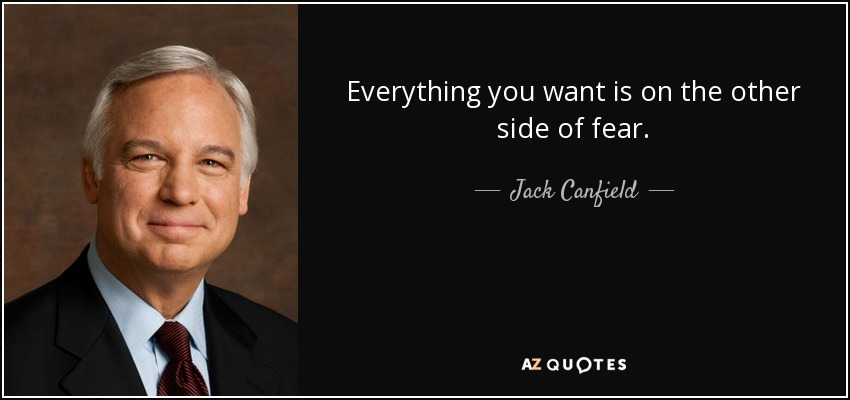
“Your FEAR is the FUEL to disrupt the CONSTRUCTIVE IDENTITY MIX…”-How to use fear as vehicle !
At first glance, this statement feels paradoxical. Fear is often seen as a weakness—something to avoid, suppress, or overcome. But at a deeper psychological and existential level, fear is not the enemy. It is raw energy. It is a signal. And when understood strategically, it becomes the very fuel that disrupts your outdated identity and reconstructs a more aligned, purposeful version of yourself.
This is not just philosophy—it is a practical blueprint for human evolution.
1. Decoding the Statement: Fear as a Disruptive Force
Fear emerges whenever you stand at the boundary of your current identity.
- Fear of failure → challenges your competence identity
- Fear of rejection → challenges your social identity
- Fear of uncertainty → challenges your control identity
- Fear of success → challenges your self-worth identity
Most people interpret fear as a stop sign. High performers interpret it as a directional signal.
Fear is essentially saying:
“Your current identity is insufficient for the next level of your life.”
This is where the concept of “Constructive Identity Mix” comes in.
Your identity is not fixed—it is a dynamic mix of:
- Beliefs
- Experiences
- Skills
- Emotional patterns
- Values
- Social conditioning
Over time, this identity becomes comfortable—but also limiting.
Fear enters as a disruptor.
It shakes this mix. It creates discomfort. It forces questioning. It pushes transformation.
Without fear, there is no evolution.
2. Why Life Purpose is of Immense Value
If fear is fuel, then purpose is direction.
Fuel without direction leads to chaos. Direction without fuel leads to stagnation.
Life purpose answers the most fundamental human questions:
- Why do I exist?
- What am I meant to contribute?
- What gives my actions meaning?
Purpose is not just a philosophical idea—it is a psychological stabilizer and performance multiplier.
Why Purpose Matters Deeply
1. It aligns your energy
Without purpose, your efforts scatter. With purpose, your actions converge.
2. It converts pain into power
Struggles stop feeling meaningless when they serve a larger mission.
3. It builds resilience
People with purpose endure more, recover faster, and persist longer.
4. It creates identity clarity
Instead of reacting to life, you start designing it.
5. It fuels intrinsic motivation
You don’t need external rewards constantly—your work itself becomes meaningful.
Purpose is the anchor that prevents fear from becoming anxiety and transforms it into action.
3. Why Purpose Varies From Individual to Individual
No two individuals share the same purpose because no two individuals share the same:
- Genetic wiring
- Life experiences
- Emotional triggers
- Cultural influences
- Skill combinations
- Spiritual inclinations
Your purpose is not something you copy—it is something you decode.
It emerges at the intersection of:
- What you are naturally good at (Strengths)
- What deeply moves you (Emotion)
- What the world needs (Impact)
- What sustains you (Economics)
This is why comparison is dangerous.
Someone else’s purpose may look successful externally, but internally it may feel empty for you.
Purpose is not about imitation.
It is about alignment.
4. How to Define and Design Your Life Purpose
Purpose is not found in a moment of inspiration—it is built through a structured process.
Step 1: Identity Audit
Ask:
- Who am I right now?
- What do I believe about myself?
- What fears dominate my decisions?
This is your Current Identity Map.
Step 2: Fear Mapping (The Hidden Goldmine)
List your top fears:
- Fear of failure
- Fear of judgment
- Fear of financial instability
- Fear of irrelevance
Now ask:
“What is this fear trying to protect?”
Fear always guards something valuable:
- Your potential
- Your ambition
- Your authenticity
Step 3: Strength–Passion Alignment
Identify:
- What you do effortlessly well
- What energizes you deeply
- What problems you naturally think about solving
This creates your Natural Inclination Zone.
Step 4: Problem–Impact Mapping
Purpose is not self-centric—it is contribution-centric.
Ask:
- What problem do I want to solve in the world?
- Who do I want to help?
- What transformation do I want to create?
Step 5: Vision Crafting
Convert everything into a clear statement:
“I exist to ______ by using my strengths in ______ to create ______ impact.”
Step 6: Strategic Execution System
Purpose without execution is illusion.
Design:
- Daily habits
- Skill-building roadmap
- Content/communication strategy
- Network ecosystem
- Financial model
Purpose becomes real only through consistent action.
5. How Success is Associated with Purpose
Success without purpose often leads to emptiness.
Purpose without success often leads to frustration.
True success lies in the integration of both.
Three Levels of Success
1. External Success
- Money
- Status
- Recognition
2. Internal Success
- Fulfillment
- Peace
- Confidence
3. Existential Success
- Meaning
- Contribution
- Legacy
When your purpose aligns with your actions:
- Success becomes sustainable
- Growth becomes meaningful
- Achievement becomes fulfilling
6. Indicators That You Are Moving Towards Your Purpose
How do you know you are on the right path?
Not by comfort—but by alignment and growth signals.
1. Productive Discomfort
You feel stretched, not stuck.
Fear exists—but it pushes action, not paralysis.
2. Increasing Clarity
Your decisions become sharper.
You waste less time on distractions.
3. Energy Expansion
Even after long work hours, you feel energized instead of drained.
4. Resilience Growth
Failures hurt—but they don’t stop you.
You recover faster.
5. Meaningful Progress
You start seeing:
- Skill improvement
- Impact on others
- Recognition aligned with your work
6. Identity Shift
You stop saying:
“I am trying to become…”
And start saying:
“I am becoming…”
7. Symbolic Representations of Purpose-Driven Success
Success aligned with purpose expresses itself in powerful symbolic ways:
- Consistency over intensity
- Depth over distraction
- Creation over consumption
- Impact over impression
- Clarity over confusion
Your life becomes a system—not a series of random events.
8. The Role of Fear in Sustaining Growth
Even after defining purpose, fear does not disappear.
It evolves.
- At one level, you fear failure
- At another, you fear responsibility
- At higher levels, you fear your own potential
This is where mastery lies.
You don’t eliminate fear—you upgrade your relationship with it.
Fear becomes:
- A signal for growth
- A trigger for preparation
- A guide for direction
9. The Psychotech Leadership Perspective
From a Psychotech Leadership lens:
- Psychology gives awareness (fear, belief, identity)
- Technology gives leverage (tools, systems, scale)
When combined:
- You don’t just understand yourself—you optimize yourself
- You don’t just act—you act strategically
- You don’t just grow—you scale your impact
This is where purpose becomes not just personal—but transformational.
10. Final Insight: From Fear to Fulfillment
Your fear is not your weakness.
It is your unexpressed potential in disguise.
When you ignore fear:
- It becomes anxiety
- It creates avoidance
- It limits growth
When you understand fear:
- It becomes awareness
- It creates direction
- It fuels transformation
When you use fear:
- It becomes power
- It drives action
- It builds purpose
Conclusion: The Identity Evolution Cycle
Your life is a continuous cycle:
Comfort → Fear → Disruption → Identity Shift → Growth → New Comfort
And then again.
The goal is not to eliminate this cycle—but to master it consciously.
So the next time fear appears, don’t ask:
“Why is this happening to me?”
Ask:
“What new identity is this fear trying to build within me?”
Because in that moment lies your next level of success, purpose, and transformation.
And that is where true human evolution begins.

ANUPAM SHARMA
PSYCHOTECH™ STRATEGIST
COACH I MENTOR I TRAINER
COUNSELLOR I CONSULTANT