

INNOVATION IS TO THINK, DO, ACT & RESPOND DIFFERENTLY
A 360° Strategic Blueprint for Breakthrough Growth in the Modern Era
Introduction: Redefining Innovation Beyond Buzzwords
“Innovation” is often misunderstood as invention, disruption, or technological advancement. But at its core, innovation is far more human, far more behavioral, and far more accessible.
Innovation is not just what you create. It is how you think, how you act, how you execute, and how you respond to life.
The statement — “Innovation is to think, do, act & respond differently” — captures the essence of sustainable transformation. It shifts innovation from an external outcome to an internal capability.
This perspective is especially powerful in today’s world driven by rapid AI evolution, uncertainty, competition, and constant change. The real differentiator is no longer access to resources—but the quality of your thinking and response system.
Let’s break this down into a powerful, practical, and strategic framework.
1. THINK DIFFERENTLY: The Birthplace of Innovation
Everything begins with thinking. But not all thinking leads to innovation.
What does it mean to think differently?
- Challenging assumptions
- Questioning the “normal”
- Seeing patterns others ignore
- Connecting unrelated ideas
- Thinking in possibilities instead of limitations
The Problem
Most people operate on:
- Conditioned beliefs
- Social programming
- Fear-based decision-making
This leads to predictable thinking → predictable actions → predictable results
The Shift
To innovate, you must move from:
- Linear thinking → Exponential thinking
- Problem focus → Opportunity focus
- Scarcity mindset → Abundance mindset
Strategic Tools
- First Principles Thinking (Break everything to fundamentals)
- Lateral Thinking (Creative, non-linear ideas)
- Systems Thinking (See the whole ecosystem)
- Psychotech Reflection (Observe your internal patterns)
Key Insight
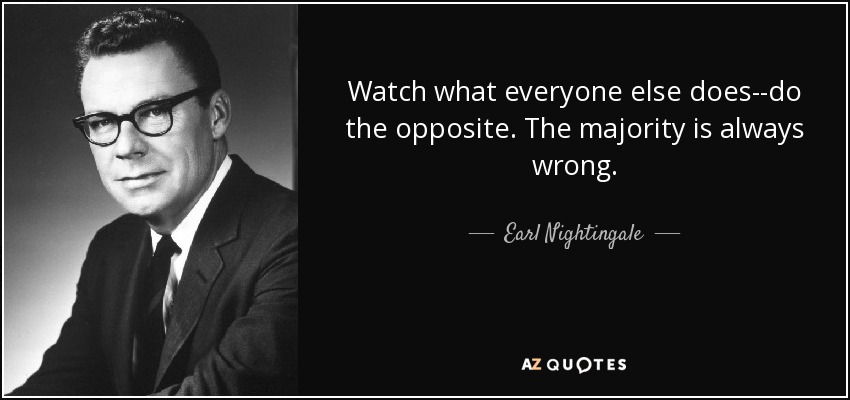
Innovation begins the moment you stop thinking like the majority and start thinking with awareness, curiosity, and courage.
2. DO DIFFERENTLY: Execution Creates Reality
Thinking differently is powerful—but incomplete.
Innovation becomes visible only when translated into action.
What does it mean to do differently?
- Experiment instead of over-planning
- Take unconventional steps
- Implement faster than others
- Iterate continuously
The Problem
Many people:
- Overthink but under-execute
- Wait for perfection
- Fear failure
This creates a gap between idea and impact
The Shift
Move from:
- Perfection → Progress
- Planning → Prototyping
- Fear → Learning through action
Strategic Practices
- Rapid Execution Model (REM)
→ Act fast, learn fast, adjust fast - 80/20 Rule (Pareto Principle)
→ Focus on actions that create maximum impact - Minimum Viable Action (MVA)
→ Start small but start now
Key Insight
Innovation is not about the best idea—it is about the best executed idea.
3. ACT DIFFERENTLY: Behavior Defines Identity
Doing is about tasks. Acting is about behavior.
Action is mechanical. Behavior is psychological.
What does it mean to act differently?
- Respond with intention, not impulse
- Maintain discipline in chaos
- Stay consistent even without motivation
- Align behavior with long-term vision
The Problem
Most individuals:
- React emotionally
- Follow habits unconsciously
- Lack behavioral consistency
This creates internal conflict and external inefficiency
The Shift
Move from:
- Reaction → Response
- Habitual behavior → Conscious behavior
- Short-term comfort → Long-term growth
Psychotech Integration
This is where your internal operating system (mind + emotions + beliefs) plays a critical role.
- Your identity shapes your behavior
- Your behavior shapes your outcomes
Framework: BE → DO → HAVE
- First become the innovator
- Then do innovative actions
- Finally have innovative results
Key Insight
Innovation is not an act; it is an identity expressed through consistent behavior.
4. RESPOND DIFFERENTLY: The Ultimate Differentiator
This is the most underrated yet most powerful dimension of innovation.
Your response to situations defines your growth trajectory.
What does it mean to respond differently?
- Stay calm under pressure
- See challenges as opportunities
- Adapt quickly to change
- Turn setbacks into learning
The Problem
Most people:
- React emotionally to problems
- Blame circumstances
- Resist change
This leads to stagnation.
The Shift
Move from:
- Resistance → Adaptability
- Blame → Ownership
- Fear → Curiosity
Strategic Response Model (SRM)
When faced with any situation:
- Pause (Create awareness)
- Perceive (Understand reality objectively)
- Process (Align with purpose)
- Perform (Respond effectively)
Example
Two people face failure:
- One sees it as the end
- The other sees it as feedback
Same situation, different response → completely different outcomes
Key Insight
Innovation is not avoiding problems—it is responding to them differently.
5. THE 4-D INNOVATION FRAMEWORK (Think–Do–Act–Respond)
Let’s integrate everything into a powerful system:
1. THINK
→ Generate new perspectives
→ Challenge assumptions
2. DO
→ Execute rapidly
→ Experiment continuously
3. ACT
→ Build disciplined behavior
→ Align actions with identity
4. RESPOND
→ Adapt intelligently
→ Convert obstacles into opportunities
6. COMMON CONCERNS & REALITY CHECK
Let’s address the real concerns people face when trying to innovate:
Concern 1: “I don’t have resources”
Reality: Innovation thrives under constraints.
→ Limited resources force creativity.
Concern 2: “What if I fail?”
Reality: Failure is data.
→ Every failure reduces uncertainty.
Concern 3: “I am not creative”
Reality: Creativity is a skill, not a talent.
→ It can be trained through practice.
Concern 4: “People will judge me”
Reality: People judge anyway.
→ Innovators are always misunderstood first.
Concern 5: “I don’t know where to start”
Reality: Start anywhere.
→ Clarity comes from action, not thinking.
7. INNOVATION IN DIFFERENT DIMENSIONS OF LIFE
1. Personal Life
- Think differently about happiness
- Act differently in relationships
- Respond differently to stress
2. Professional Life
- Challenge industry norms
- Execute faster than competitors
- Build unique value propositions
3. Leadership
- Lead with vision, not authority
- Empower people to think independently
- Respond to crises with clarity
4. Spiritual Growth
- Question deeper purpose
- Act with awareness
- Respond with detachment
8. THE PSYCHOTECH EDGE: INNOVATION FROM WITHIN
True innovation is not external—it is internal.
Your:
- Thoughts
- Beliefs
- Emotions
- Self-talk
…create your innovation capacity.
Psychotech Principle
“Inner transformation creates outer innovation.”
If your internal system is:
- Fear-based → You resist innovation
- Growth-based → You embrace innovation
9. DAILY PRACTICE TO BUILD INNOVATION MINDSET
1. Ask Better Questions
- “What is another way to do this?”
- “What if the opposite is true?”
2. Break Routine
- Do one thing differently every day
3. Reflect Daily
- What did I think, do, act, and respond today?
4. Learn Continuously
- Expose yourself to new ideas
5. Take Action
- Implement at least one new idea daily
10. CONCLUSION: INNOVATION AS A WAY OF LIFE
Innovation is not a one-time event. It is a continuous process.
It is:
- A mindset
- A behavior
- A strategy
- A way of living
The future belongs not to the most intelligent or the most resourceful—but to those who can:
✔ Think differently
✔ Do differently
✔ Act differently
✔ Respond differently
Final Thought
“When you change the way you think, act, do, and respond—you don’t just innovate your work… you innovate your life.”

ANUPAM SHARMA
PSYCHOTECH™ STRATEGIST
COACH I MENTOR I TRAINER
COUNSELLOR I CONSULTANT