
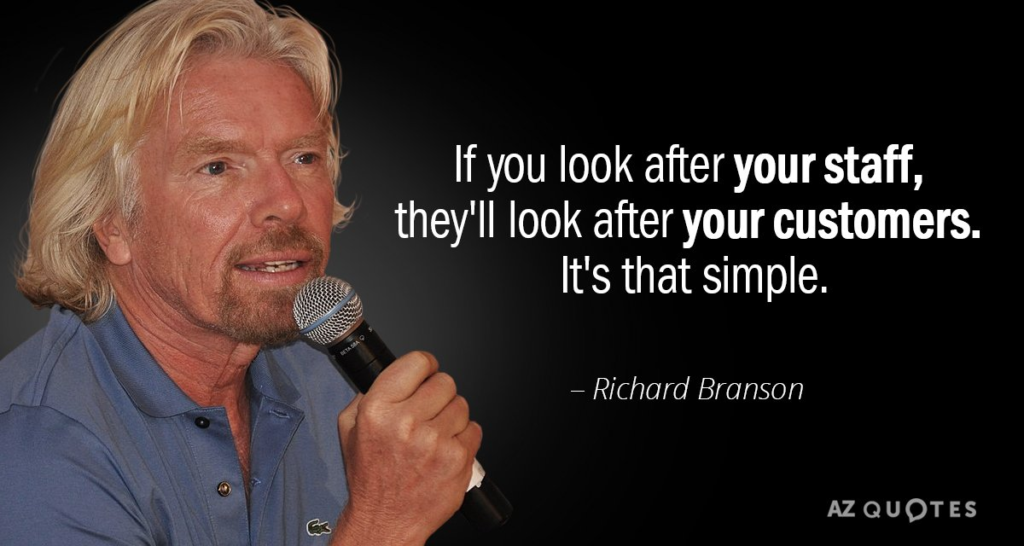
“Your Employees are your first CUSTOMER in PROMOTING & POSITIONING the BRAND.”
As a strategic leadership expert, I read this as a fundamental law of sustainable leadership, execution, and market dominance. It flips the traditional outside-in branding model and replaces it with an inside-out leadership doctrine.
Let’s unpack this deeply—philosophically, strategically, operationally, and metaphorically—so it becomes a lighthouse principle for leaders who want consistent, powerful outcomes where every challenge turns into an opportunity.
1. What This Statement Truly Means (Beyond HR & Engagement)
Most organizations treat employees as:
- Resources
- Cost centers
- Executors of someone else’s vision
Strategic leaders treat employees as:
- First customers of the brand
- First believers of the purpose
- First storytellers of the promise
- First market where positioning is tested
👉 If the brand doesn’t work internally, it will never work externally.
Metaphor: The Oxygen Chamber
A brand is like a flame.
- Customers see the fire
- Employees provide the oxygen
No oxygen → no fire
Weak oxygen → flickering fire
Pure oxygen → unstoppable blaze
That’s why this approach is oxygen to execution and action.
2. Why Employees as First Customers Is the Strongest Weapon
Because markets don’t buy brands—people do
And people believe people, not advertisements.
Your employees:
- Talk to customers
- Solve problems
- Handle breakdowns
- Represent your values under pressure
When employees are convinced, customers are converted.
Cause–Effect Chain
Employee Belief → Employee Behavior → Customer Experience → Brand Reputation → Market Advantage
Break the chain at employee belief—and everything downstream collapses.
3. Purpose Attainment: Where Strategy Meets Soul
Purpose is not achieved by:
- Vision statements
- Town halls
- Posters on walls
Purpose is achieved when employees experience it daily.
If employees don’t feel the purpose:
- They won’t promote it
- They won’t protect it
- They won’t sacrifice for it
👉 Employees are the first battlefield of purpose.
4. Blue Ocean Strategy (Inside First, Then Outside)
Most companies apply Blue Ocean externally:
- New markets
- New customers
- New value propositions
Strategic leaders apply Blue Ocean internally first.
Internal Blue Ocean Questions:
- What value do we create for employees that competitors don’t?
- What pain of employees do we eliminate?
- What growth opportunities do we unlock?
- What purpose do we elevate beyond salary?
Result:
You create a workforce that competitors cannot copy.
Strategy that competitors can’t imitate always starts from culture.
5. SWOT Analysis (Internal First)
Traditional SWOT focuses on markets.
Strategic leadership flips it:
Internal SWOT for Employees as Customers
Strengths
- Skills
- Institutional knowledge
- Cultural capital
- Trust reservoirs
Weaknesses
- Low engagement
- Fear-based culture
- Misaligned incentives
- Vision fatigue
Opportunities
- Internal innovation
- Employee advocacy
- Brand ambassadors
- Leadership pipelines
Threats
- Attrition
- Silent quitting
- Cultural decay
- Brand dilution
👉 Your biggest brand threat is disengaged talent.
6. AIDA Model Reimagined for Employees
Employees must pass through the same persuasion journey as customers.
AIDA for Internal Branding
A – Attention
- Clear purpose
- Inspiring leadership narratives
- Visible role modeling
I – Interest
- How does this brand serve me?
- How does my work matter?
D – Desire
- Pride of association
- Growth alignment
- Emotional ownership
A – Action
- Advocacy
- Extra effort
- Discretionary energy
No AIDA → No brand momentum.
7. Design Thinking: Employees as Users
Design Thinking asks:
“What problem are we solving for the user?”
Strategic leaders ask:
“What problem are we solving for our employees?”
Design Thinking Lens:
- Empathize: Understand employee frustrations
- Define: What blocks belief and execution?
- Ideate: How can work feel meaningful?
- Prototype: New roles, rituals, recognition
- Test: Engagement, ownership, initiative
Employees don’t resist change.
They resist poorly designed experiences.
8. PPF Analysis (Performance–Potential–Future)
Treating employees as customers requires seeing them as investments, not costs.
PPF Lens:
- Performance: What value do they create today?
- Potential: What can they become?
- Future Fit: Are they aligned with where the brand is going?
Strategic leaders:
- Don’t overuse performers
- Don’t ignore potential
- Don’t mismatch future direction
9. 5W1H: Strategic Clarity Engine
Why should employees believe in the brand?
What does the brand stand for internally?
Who owns brand behavior at each level?
When is belief reinforced (not just annually)?
Where is the brand lived daily?
How is alignment measured and corrected?
If leaders can’t answer these clearly, employees never will.
10. PLC Analysis: Employee Lifecycle as Brand Journey
Employees go through a Product Life Cycle:
- Introduction (Onboarding)
- First impressions
- Cultural induction
- Purpose clarity
- Growth
- Skill building
- Ownership
- Recognition
- Maturity
- Leadership roles
- Mentorship
- Innovation
- Decline or Renewal
- Reskilling
- Repositioning
- Graceful exits
Brands fail when they manage customers carefully but neglect employee lifecycle strategy.
11. Strategy Map: Aligning People to Purpose
A strategy map connects:
- Purpose
- People
- Processes
- Performance
Internal Strategy Map Flow:
Purpose → Culture → Capability → Behavior → Customer Value → Financial Results
Employees sit at the center, not the periphery.
12. Kaizen: Daily Internal Branding
Belief is not built in big speeches.
It’s built in small daily improvements.
Kaizen for internal branding means:
- Continuous feedback
- Continuous respect
- Continuous clarity
- Continuous learning
Small improvements compound into massive trust.
13. McKinsey 7-S: Total Alignment Engine
Internal brand positioning fails when systems are misaligned.
7-S Applied Internally:
- Strategy: Purpose-driven
- Structure: Empowering, not suffocating
- Systems: Fair, transparent
- Shared Values: Lived, not laminated
- Style: Leadership by example
- Staff: Right people, right roles
- Skills: Continuously upgraded
Misalignment here creates cynicism—the silent killer of brands.
14. OODA Loop: Winning Under Uncertainty
In chaos, employees watch leaders more than customers do.
OODA for Leadership:
- Observe: Employee sentiment
- Orient: Cultural context
- Decide: Transparent actions
- Act: Consistently and visibly
Fast internal OODA loops = resilient organizations.
15. Why This Becomes a Lighthouse Strategy
A lighthouse doesn’t chase ships.
It stands firm, clear, and visible.
When employees are your first customers:
- Decision-making becomes values-driven
- Execution becomes effortless
- Change becomes adaptive
- Crisis becomes credibility
Employees who believe:
- Solve problems proactively
- Protect brand reputation
- Convert customers naturally
- Create leaders around them
16. Strategic Action Plan (360°)
Step 1: Reposition Employees as Customers
- Map employee journeys
- Identify belief gaps
Step 2: Design Internal Value Proposition
- Growth
- Purpose
- Recognition
- Autonomy
Step 3: Build Belief Systems
- Stories
- Symbols
- Rituals
- Role models
Step 4: Measure What Matters
- Engagement
- Ownership
- Advocacy
- Innovation
Step 5: Create Leadership Multipliers
- Leaders build leaders
- Believers create believers
17. Final Metaphor: The Root System
Customers see the tree.
Markets admire the fruits.
Employees are the roots.
Weak roots → fallen tree
Strong roots → storms become nourishment
The Ultimate Strategic Truth
If your employees don’t buy your brand, your customers never will.
If employees believe deeply, markets follow effortlessly.
This is not HR.
This is leadership strategy at its highest altitude.

ANUPAM SHARMA
PSYCHOTECH™ STRATEGIST
COACH I MENTOR I TRAINER
COUNCELLOR I CONSULTANT