
You Are the BIGGEST & FINEST Resource to Achieve Your Goals – Power of self – focus & belief.
Making the Invisible Visible Through Leadership Focus & Strategic Action
In a world obsessed with external resources—capital, technology, networks, funding, infrastructure—one powerful truth remains invisible to most leaders:
You are the biggest and finest resource to achieve your goals.
Not your funding.
Not your team.
Not your market conditions.
Not even your strategy documents.
You.
Inside you lies the capacity to think, decide, adapt, create, endure, inspire, and execute. Outside you lies an environment filled with uncertainty, competition, risk—and opportunity.
Leadership is the bridge between inner potential and outer possibility.
When we truly understand this statement, we shift from dependency to mastery. From reaction to creation. From circumstances to conscious design.
Let us decode this deeply—strategically, psychologically, and philosophically.
1. The Invisible Power: Inner Resource vs External Environment
Every human life operates between two forces:
- Internal Resource (You) – mindset, attitude, courage, clarity, discipline, emotional intelligence, adaptability.
- External Environment (World) – opportunities, crises, markets, technologies, competitors, systems.
Most people try to control the outside first. True leaders master the inside first.
This is not a motivational slogan. It is a strategic principle validated across history.
In the battlefield of the Bhagavad Gita, Lord Krishna does not first change the war situation for Arjuna. He changes Arjuna’s consciousness. Once inner clarity is restored, outer action becomes decisive.
Similarly, in modern strategic practice, global consulting firms like McKinsey & Company, Boston Consulting Group, Bain & Company, and Deloitte emphasize leadership mindset as the primary driver of transformation. Strategy without leadership psychology collapses.
Invisible becomes visible when leadership focus aligns with disciplined action.
2. Leadership as Making the Invisible Visible
Leadership is not a position.
Leadership is a cognitive power.
It is the ability to:
- See opportunity in chaos
- See growth in resistance
- See systems where others see problems
- See future possibilities before they become obvious
The invisible elements are:
- Vision
- Conviction
- Emotional stability
- Courage to decide
- Commitment to execute
When leaders change attitude, they change perception.
When perception changes, choices change.
When choices change, destiny changes.
This is the ripple effect of inner resource activation.
3. Attitude: The Core Asset of Leadership
If you remove money, remove tools, remove network—what remains?
Attitude.
Attitude determines:
- Whether challenge becomes threat or training
- Whether failure becomes identity or information
- Whether delay becomes frustration or preparation
The growth of any individual or organization is directly proportional to the maturity of leadership attitude.
Ancient wisdom repeatedly emphasizes this inner mastery. The Upanishadic principle of “Tat Tvam Asi” (You are That) reminds us that the source of power is within.
Modern psychology confirms this through growth mindset theory. Strategic consulting confirms it through change management models. Performance science confirms it through resilience research.
Attitude is the multiplier of all other resources.
4. Action & Adaptability: The True DNA of Leadership
Vision without action is hallucination.
Action without adaptability is rigidity.
Leadership requires both.
Why Action is Core:
- Action converts strategy into value.
- Action builds credibility.
- Action reveals reality.
- Action generates feedback.
Why Adaptability is Core:
- Markets evolve.
- Technologies disrupt.
- Human behavior shifts.
- Policies change.
Rigid leaders collapse in dynamic environments.
In strategic frameworks like PDCA (Plan-Do-Check-Act), adaptability is embedded. In agile methodologies, iteration is central. In warfare strategy described in ancient texts, flexibility is survival.
Adaptability is not weakness.
It is intelligent responsiveness.
The fusion of action + adaptability creates sustainable progress.
5. Deep Strategic Connection Between Attitude & Growth
Growth is not accidental. It is psychological before it is financial.
There are three internal shifts that activate growth:
- From Blame to Ownership
- From Comfort to Challenge
- From Reaction to Strategy
When leaders see themselves as the primary resource, ownership intensifies.
Ownership triggers responsibility.
Responsibility triggers action.
Action triggers momentum.
Momentum triggers growth.
This is the internal growth engine.
In consulting practice, transformation begins with leadership alignment workshops—not operational change. Because if leadership mindset does not evolve, structural change fails.
Growth is an attitude-driven outcome.
6. Applying 5W1H for Decisive Leadership
To make invisible clarity visible, apply the 5W1H framework:
1. Why – Purpose
- Why does this goal matter?
- Why must it be pursued now?
- Why am I the right person to lead this?
Clarity of Why creates resilience.
2. What – Objective
- What exactly needs to be achieved?
- What measurable outcomes define success?
Precision prevents confusion.
3. Who – Stakeholders
- Who is impacted?
- Who must collaborate?
- Who may resist?
Leadership is relational intelligence.
4. Where – Environment
- Where is opportunity hidden?
- Where is risk concentrated?
Context awareness reduces blind spots.
5. When – Timing
- When to act?
- When to pivot?
- When to persist?
Timing is strategic leverage.
6. How – Execution Model
- How will resources be deployed?
- How will performance be tracked?
- How will learning be incorporated?
Execution separates leaders from dreamers.
Using 5W1H transforms emotional reaction into strategic decision-making.
7. Developing a Powerful Leadership Attitude
Attitude is not inherited. It is engineered.
A. Awareness Practice
Self-audit through SWOT:
- Strengths
- Weaknesses
- Opportunities
- Threats
Self-awareness is the foundation of control.
B. Daily Mental Conditioning
- Reflection journaling
- Meditation
- Strategic reading
- Scenario planning
Ancient sages trained consciousness daily. Modern leaders must do the same.
C. Exposure to High Standards
Surround yourself with:
- Strategic thinkers
- Ethical role models
- Performance-driven peers
Environment influences mindset.
D. Micro-Execution Discipline
Take daily decisive actions—even small ones.
Execution strengthens confidence.
Confidence strengthens attitude.
8. Sustaining Productive Leadership Mindset
Sustaining attitude requires:
- Clarity Renewal – Regularly revisit vision.
- Learning Culture – Convert mistakes into frameworks.
- Energy Management – Physical health supports mental sharpness.
- Feedback Loops – Honest reflection accelerates growth.
Peak performers understand that mindset maintenance is continuous work.
Just like muscles require training, leadership psychology requires conditioning.
9. Opportunity vs Challenge: Decisive Leadership Lens
Opportunity and challenge are interpretations.
A market disruption can destroy a rigid company or elevate an adaptive one.
A crisis can demoralize or mobilize.
The difference lies in leadership interpretation.
Strategic leaders ask:
- What advantage is hidden here?
- What capability must be built?
- What outdated belief must be discarded?
This reframing ability turns adversity into acceleration.
10. Similar Concepts That Reinforce This Truth
Several leadership philosophies echo the same message:
- Be the change you wish to see.
- Inside-out leadership.
- Personal mastery precedes organizational mastery.
- Conscious capitalism.
- Strategic self-leadership.
In each, the central thesis remains:
The primary resource is internal.
When internal clarity aligns with disciplined strategy, external results follow.
11. Human Personality & Peak Performance Integration
Human personality is a composite of:
- Cognitive patterns
- Emotional regulation
- Behavioral habits
- Belief systems
Peak performance occurs when:
- Beliefs support growth.
- Emotions are regulated.
- Habits are disciplined.
- Strategy is clear.
- Action is consistent.
This integration transforms ordinary professionals into transformational leaders.
Your personality becomes your strategic asset.
12. The Leadership Equation
Let us simplify the entire blog into a powerful equation:
Inner Clarity × Attitude × Decisive Action × Adaptability = Sustainable Achievement
Remove any one factor, and momentum weakens.
Enhance all four, and exponential growth becomes possible.
13. The Final Realization
Inside you lies:
- Creativity
- Courage
- Strategic intelligence
- Moral compass
- Decision power
Outside you lies:
- Market complexity
- Competition
- Risk
- Technology
- Uncertainty
Leadership is the conscious alignment between inner potential and outer opportunity.
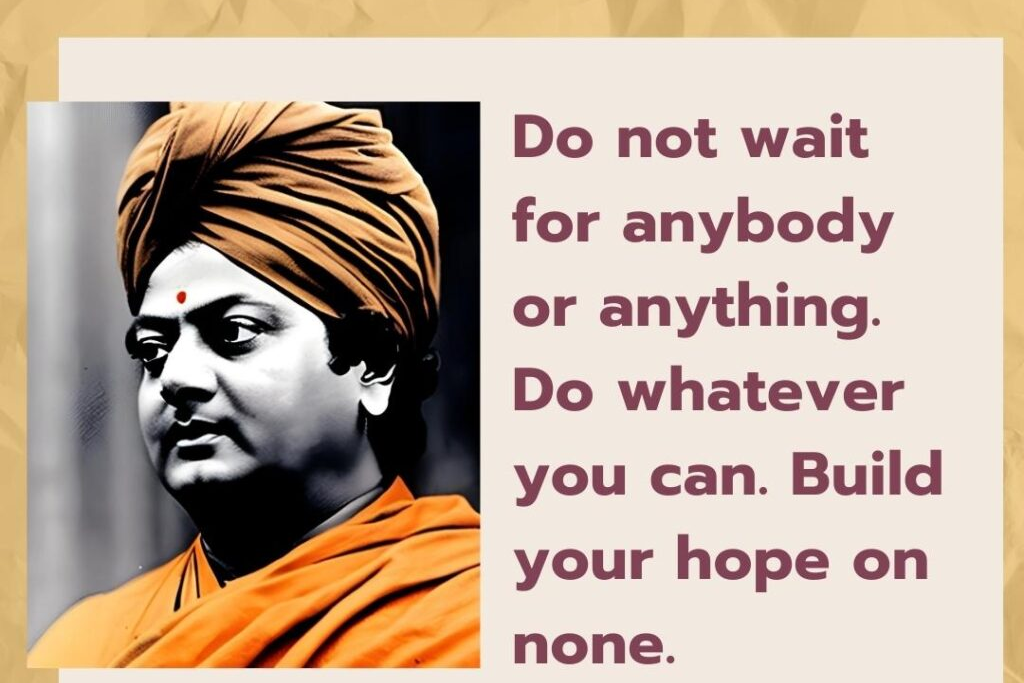
You are not waiting for the right time.
You are not waiting for the right resource.
You ARE the resource.
When you accept this truth, excuses dissolve.
Blame disappears.
Clarity strengthens.
Execution accelerates.
The invisible becomes visible.
And goals transform from distant dreams into structured realities.
Closing Reflection
Ask yourself today:
- Am I operating as a victim of environment or architect of destiny?
- Am I reacting to situations or designing responses?
- Am I waiting for resources or activating my own?
The moment you realize that you are the biggest and finest resource to achieve your goals, leadership begins—not as authority over others, but as mastery over self.
And from that mastery, you build futures.
Not by chance.
But by conscious, strategic, adaptable action.

ANUPAM SHARMA
PSYCHOTECH™ STRATEGIST
COACH I MENTOR I TRAINER
COUNCELLOR I CONSULTANT