
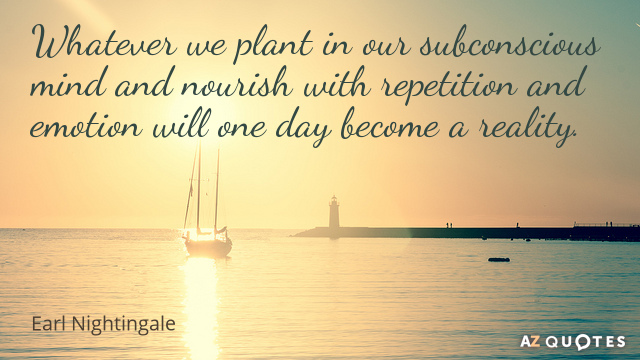
“Our SUB-CONSCIOUS MIND is our POWER-HOUSE”– Master your Sub-Conscious Mind
The Hidden Engine That Designs Destiny, Determines Success & Directs Life Purpose
Introduction: The Silent Force Behind Every Visible Outcome
Most people spend their entire lives trying to change results, upgrade habits, increase income, improve relationships, or achieve success—without ever addressing the real command center of their life.
That command center is not intelligence, not willpower, not talent.
It is the SUB-CONSCIOUS MIND.
The statement “Our subconscious mind is our powerhouse” is not motivational poetry—it is existential truth.
It is the engine room where beliefs are forged, emotions are wired, habits are automated, identity is stored, and destiny is quietly programmed.
Your conscious mind thinks.
Your subconscious mind executes.
Your life is the final output.
To master life, leadership, purpose, and success—you must first master your subconscious architecture.
1. Understanding the Subconscious Mind: The Operating System of Human Life
As experts of human existence, we understand that the mind is not singular—it is layered.
Three Functional Layers
- Conscious Mind (5–10%)
Logic, analysis, decision-making, awareness - Subconscious Mind (90–95%)
Beliefs, habits, emotional memory, identity, intuition - Superconscious (Potential State)
Creativity, insight, wisdom, transcendence
The subconscious mind is the default autopilot.
It:
- Controls 95% of daily behavior
- Stores all emotional memories
- Regulates habits, reactions, self-image
- Accepts information without logic or judgment
- Works on repetition, emotion, and imagery
That is why it is rightly called a POWER-HOUSE—
It runs continuously, tirelessly, silently.
2. Why the Subconscious Mind Is of Immense Value & Concern
Value: It Multiplies Whatever You Feed It
The subconscious mind is neutral.
It does not care whether a belief is empowering or destructive.
It only asks:
“Is this repeated?
Is this emotionally charged?
Is this accepted as identity?”
If yes—it becomes law.
That is why:
- Confident people attract opportunities
- Fearful people repeat failures
- Purpose-driven leaders show resilience
- Average thinkers remain stuck despite intelligence
Concern: It Can Be Your Greatest Ally or Silent Enemy
An untrained subconscious mind:
- Repeats childhood conditioning
- Operates on borrowed beliefs
- Sabotages success through fear
- Rejects growth beyond identity limits
You do not rise to your goals.
You fall to your subconscious programming.
3. Subconscious Mind & Life Purpose: The Hidden Connection
Life purpose is not found by thinking alone—it is felt, resonated, and aligned.
Your subconscious mind stores:
- What feels “safe”
- What feels “worthy”
- What feels “possible”
- What feels “meaningful”
That is why:
- Two people with same skills choose different paths
- One chases money, another chases impact
- One seeks power, another seeks peace
Purpose varies because subconscious conditioning varies
- Family values
- Cultural narratives
- Emotional experiences
- Early success/failure patterns
- Role models and identity imprints
Your life passion & purpose emerge when:
Conscious vision + Subconscious alignment = Inner congruence
Without subconscious alignment, purpose feels forced.
With alignment, purpose feels inevitable.
4. How Success Is Deeply Associated with Subconscious Programming
Using your success definition frameworks, success is:
- Sustainable
- Purpose-aligned
- Inner + Outer harmony
- Growth-oriented
- Impact-driven
Subconscious determines success through 5 mechanisms
- Self-Image – “Who I believe I am”
- Belief Ceiling – “What I believe I deserve”
- Emotional Threshold – “How much pressure I can handle”
- Habit Automation – “What I do without effort”
- Decision Bias – “What feels right vs risky”
High achievers are not more disciplined—
They are subconsciously conditioned to act in alignment.
5. Indicators That You Are Moving Towards Success & Purpose Alignment
Internal Indicators (Invisible but Powerful)
- Calm confidence instead of anxiety
- Clarity without overthinking
- Emotional resilience during chaos
- Reduced self-sabotage
- Inner motivation without force
External Indicators (Visible Outcomes)
- Consistent progress
- Right opportunities appearing
- Supportive people entering life
- Ease in execution
- Meaningful achievements
Symbolic Representations
- Repeated intuitive nudges
- Synchronicities
- Pattern-breaking results
- Alignment between thought, word, and action
When subconscious alignment happens, life stops resisting you.
6. Framework: Designing Life Through Subconscious Mastery
The PPF Model (Purpose–Programming–Performance)
Purpose (Why)
Define conscious vision and life mission
Programming (How)
Rewire subconscious beliefs, identity, emotional patterns
Performance (What)
Actions, habits, execution, results
Most people work on Performance.
Leaders work on Programming.
7. Tools, Techniques & Methodologies for Subconscious Conditioning
1. Identity Re-Coding
Shift from goal-based thinking to identity-based conditioning.
❌ “I want success”
✅ “I am a value creator”
Technique:
- Write identity affirmations
- Speak in present tense
- Attach emotion
2. Visualization with Emotional Charge
The subconscious mind understands images + feelings, not logic.
Method:
- Visualize desired future daily
- Add sensory detail
- Feel gratitude as if achieved
This activates the Reticular Activating System (RAS).
3. Autosuggestion & Affirmation Engineering
Affirmations must be:
- Emotional
- Believable
- Repetitive
- Identity-based
Example:
“I naturally attract meaningful opportunities aligned with my purpose.”
4. Habit Loop Reprogramming (Cue–Routine–Reward)
Replace habits by changing reward perception, not willpower.
5. Mental Diet & Information Hygiene
Your subconscious absorbs:
- Conversations
- Content
- Environment
- Self-talk
Leadership rule:
Guard your inputs to command your outputs.
6. Emotional Release & Reframing
Unresolved emotions block subconscious expansion.
Tools:
- Journaling
- Forgiveness practice
- Reframing failures as feedback
7. Night-Time Programming
Before sleep:
- Review wins
- Visualize goals
- Express gratitude
Sleep is the subconscious gateway.
8. Integration with SWOT, 80/20 & PDCA
SWOT (Inner Application)
- Strengths → Reinforce identity
- Weaknesses → Reframe limitations
- Opportunities → Expand belief horizon
- Threats → Build emotional immunity
80/20 Rule
20% beliefs create 80% results
Identify & reprogram keystone beliefs
PDCA Cycle
- Plan → Conscious intention
- Do → Subconscious-aligned action
- Check → Emotional feedback
- Act → Reinforced programming
9. Achievements as a By-Product, Not the Goal
True achievement is not accumulation—it is alignment.
When subconscious mastery is achieved:
- Effort reduces
- Impact increases
- Growth becomes natural
- Leadership becomes authentic
- Purpose becomes lived, not chased
Success becomes a side-effect of inner order.
Conclusion: From Power-House to Lighthouse
The subconscious mind is not just a powerhouse—it is a lighthouse.
It:
- Guides decisions in darkness
- Warns against misalignment
- Attracts what matches identity
- Repels what violates purpose
Mastering the subconscious mind is not self-help—it is self-leadership.
When the subconscious is programmed consciously,
Life stops being accidental and becomes intentional.
That is real success.
That is fulfilled leadership.
That is mastery of human existence.

ANUPAM SHARMA
PSYCHOTECH™ STRATEGIST
COACH I MENTOR I TRAINER
COUNCELLOR I CONSULTANT