

“OUR PERCEPTION DESIGNS CHALLENGE AS OPPORTUNITY”
A Strategic Leadership Manifesto for 360° Outcomes
1. The Core Meaning of the Statement
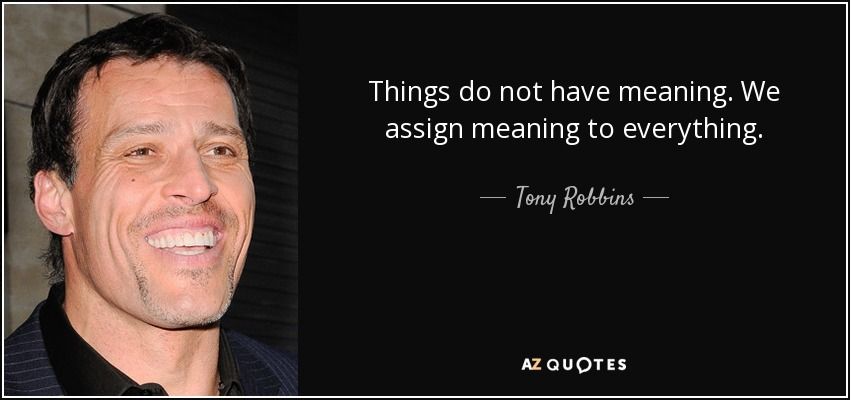
The statement “Our perception designs challenge as opportunity” reveals one of the most powerful truths of strategic leadership: events do not decide outcomes—interpretation does.
A challenge is not an objective reality with a fixed meaning. It is raw data. What converts that raw data into threat, failure, growth, or breakthrough is human perception. Leaders do not merely respond to situations; they frame them, and that framing designs the future.
In strategic terms:
- Event = Neutral
- Perception = Interpretation
- Interpretation = Decision
- Decision = Action
- Action = Outcome
Change the perception, and you redesign the entire chain.
A storm sinks one ship and propels another—not because the storm is different, but because the sailor’s mindset, preparation, and navigation are different.
2. Why the Same Event Means Different Things to Different People
No two individuals experience the same event identically because perception is filtered through multiple invisible lenses.
Key Bases of Perceptual Difference
- Belief Systems
- Scarcity vs abundance
- Fixed mindset vs growth mindset
A market downturn is “collapse” for one and “acquisition season” for another.
- Past Conditioning
- Trauma creates fear
- Experience creates confidence
The same rejection letter breaks one person and sharpens another.
- Identity & Role
- Employee sees risk
- Entrepreneur sees leverage
- Leader sees transformation
- Cognitive Frameworks
- Reactive minds see symptoms
- Strategic minds see systems
- Visionary minds see patterns and timing
- Emotional State
- Fear compresses perception
- Purpose expands perception
Emotion is the zoom lens of meaning.
Hence, reality is not what happens; reality is what the mind does with what happens.
3. Why This Is the Strongest Weapon to Win All Challenges
Weapons defeat enemies. Perception defeats limitations.
Every great leader—from Krishna, Chanakya, Lincoln, Churchill, Steve Jobs—won first in perception, then in execution.
- Krishna reframed war as dharma
- Chanakya reframed defeat as strategy incubation
- Steve Jobs reframed constraints as design elegance
When perception is mastered:
- Fear becomes data
- Failure becomes feedback
- Crisis becomes clarity
- Pressure becomes precision
This is why perception mastery is the mother skill of leadership.
4. Perception as a Lighthouse (Not a Mirror)
Most people use perception as a mirror—reflecting circumstances emotionally.
Leaders use perception as a lighthouse—guiding action regardless of storms.
- A mirror reacts
- A lighthouse directs
- A mirror asks “Why me?”
- A lighthouse asks “What now?”
Strategic perception is not optimism; it is orientation.
5. Strategic Frameworks Applied to “Perception → Opportunity”
Let us now translate philosophy into practical strategic execution.
A. 5W1H – Redesigning Meaning
When a challenge appears, immediately apply:
- What exactly is happening? (Facts, not emotions)
- Why is this happening now? (Timing insight)
- Who is impacted or empowered?
- Where is the leverage point?
- When is the inflection point?
- How can this be converted into value?
This converts chaos into clarity.
B. SWOT – Perception Reframing Tool
Most people misuse SWOT emotionally. Leaders use it strategically.
- Threats → Early-warning signals
- Weaknesses → Capability-building roadmap
- Opportunities → Market gaps others fear
- Strengths → Unfair advantage deployment
A threat perceived early becomes an opportunity exploited early.
C. Blue Ocean Strategy – Opportunity Creation Mindset
Challenges often signal crowded red oceans.
Perceptive leaders ask:
- What if this problem exists because the industry logic is broken?
- What value factors can be eliminated, reduced, raised, or created?
Crisis often pushes leaders to innovate uncontested space.
Example metaphor:
When rivers dry, only those who dig wells survive—and later control water.
D. Design Thinking – Human-Centered Reframing
Design Thinking transforms perception through stages:
- Empathize – Understand human pain
- Define – Redefine the problem
- Ideate – Generate alternatives
- Prototype – Test safely
- Test – Learn fast
Leaders don’t solve problems; they redesign problem definitions.
E. PPF Analysis (People–Process–Purpose)
Every challenge breaks down into:
- People gaps (skills, mindset, alignment)
- Process gaps (inefficiency, rigidity)
- Purpose gaps (meaning, direction)
Fix the right PPF lever, and the challenge collapses.
F. AIDA – From Challenge to Movement
Use AIDA internally and externally:
- Attention – Crisis captures focus
- Interest – Reframe as possibility
- Desire – Attach purpose and vision
- Action – Channel momentum
Great leaders mobilize meaning, not just resources.
G. OODA Loop – Perception Speed Advantage
In volatile conditions:
- Observe without panic
- Orient with wisdom
- Decide with courage
- Act with speed
Whoever reorients perception faster wins—often without fighting.
H. Strategy Map – Aligning Perception to Execution
Perception must cascade into:
- Financial outcomes
- Customer value
- Internal process excellence
- Learning & growth
If perception stays philosophical, it dies.
If it becomes systemic, it multiplies.
I. McKinsey 7-S – Total Organizational Alignment
A perception shift must realign:
- Strategy
- Structure
- Systems
- Skills
- Style
- Staff
- Shared Values
Otherwise, insight becomes frustration.
J. Kaizen – Compounding Opportunity
Opportunity is rarely one giant leap.
It is small perception upgrades daily.
- 1% mindset shift
- 1% process improvement
- 1% execution clarity
Over time, Kaizen turns survival into supremacy.
6. Why This Approach Is Oxygen to Execution
Execution suffocates without meaning.
- Fear-based execution burns out
- Purpose-based execution compounds
When challenges are perceived as opportunity:
- Energy increases
- Ownership deepens
- Creativity activates
- Persistence becomes natural
People don’t resist work—they resist work without meaning.
7. Mastering the Art & Science of Perception Design
Daily Practices for Strategic Leaders
- Reframing Ritual
- Ask daily: “What opportunity is hidden here?”
- Pattern Journaling
- Write insights from failures weekly
- Decision Delay
- Separate event from interpretation by time
- Multiple Lenses Thinking
- Ask: “How would a competitor, customer, monk, and futurist see this?”
- Vision Anchoring
- Tie every challenge to a long-term purpose
8. Metaphors for Deep Internalization
- Coal under pressure becomes diamond only when perception allows endurance.
- A locked door is useless unless you realize you are meant to build a window.
- Chess masters don’t fear losing pieces—they see positioning.
9. Strategic Outcome @360°
When perception mastery is embedded:
- Personal life → resilience & clarity
- Leadership → trust & influence
- Organization → adaptability & innovation
- Society → problem-solvers, not complainers
Every challenge becomes:
- A teacher
- A test
- A turning point
Final Strategic Truth
You don’t rise to the level of your ambition.
You fall to the level of your perception.
Master perception, and challenges lose their power to intimidate.
They become raw material for destiny design.

Anupam Sharma
Psychotech Strategist
Coach I Mentor I Trainer
Councelor I Consultant