
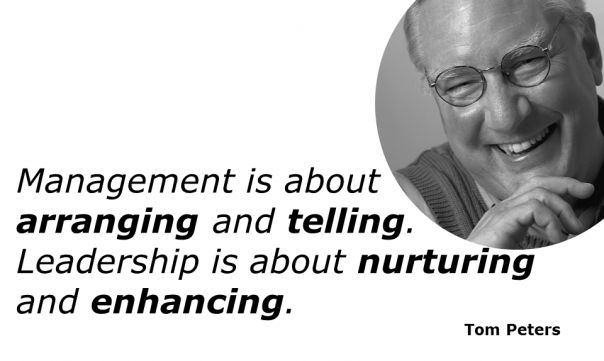
“MANAGEMENT is about the PRESENT.
LEADERSHIP is about the PAST, PRESENT & FUTURE.”– A manager is sub-set of leader.
This single statement quietly contains the entire philosophy of strategic leadership. It explains why many organizations are well-managed yet poorly led, why execution stalls despite resources, and why a few leaders consistently convert chaos into opportunity.
As a strategic leadership expert, I interpret this statement as the difference between operating a system and architecting destiny.
1. The Core Meaning of the Statement
Management = Present Control
Management deals with:
- Efficiency
- Stability
- Processes
- KPIs
- Budgets
- Daily operations
It answers:
“How do we perform today?”
Managers ensure:
- The machine runs
- Targets are met
- Variance is controlled
- Systems do not collapse
Management is the engine.
Leadership = Time Mastery (Past–Present–Future)
Leadership operates across three dimensions of time:
- PAST – Learning, meaning, wisdom
- PRESENT – Decision, alignment, energy
- FUTURE – Vision, possibility, transformation
Leadership asks:
“Why did we reach here?”
“What must we do now?”
“Where must we go next?”
Leadership is the compass, map, and lighthouse.
Metaphor
- Management is rowing the boat
- Leadership is choosing the ocean, direction, and destination
Without leadership:
- Perfect rowing leads nowhere
- Speed increases failure
- Efficiency accelerates irrelevance
2. Why This Understanding Is Critical to Purpose Achievement
Purpose Lives Across Time
Purpose is not a task.
Purpose is a continuum.
- Past gives identity
- Present gives responsibility
- Future gives direction
Only leadership integrates all three.
Example
An organization that ignores its past:
- Repeats mistakes
- Loses culture
- Breaks trust
One that ignores the future:
- Becomes obsolete
- Fights yesterday’s battles
- Dies slowly despite profits
3. Why Leadership Is the Strongest Weapon to Win All Challenges
Challenges Are Never Just Present Problems
Every challenge contains:
- A root cause (past)
- A decision point (present)
- A consequence curve (future)
Management treats symptoms.
Leadership transforms systems.
4. Leadership as a Lighthouse (The Central Metaphor)
A lighthouse:
- Does not move
- Sees far
- Warns early
- Guides silently
- Saves unseen lives
Strategic leadership functions exactly like this.
Lighthouse Leadership Does:
- Sense weak signals early
- Prevent disasters before they appear
- Align people during storms
- Provide direction when visibility is zero
5. Why This Approach Is Oxygen to Execution & Action
Execution fails not due to lack of effort, but due to:
- Lack of clarity
- Conflicting priorities
- Short-term thinking
- Fear-based decisions
Leadership supplies oxygen by:
- Creating meaning
- Providing certainty amid ambiguity
- Connecting effort to impact
Action without leadership is noise.
Leadership without action is illusion.
6. Strategic Framework Integration @360°
Now let us integrate classic + creative frameworks into a unified leadership operating system.
7. SWOT Analysis – Time-Based SWOT
Traditional SWOT is static.
Strategic leadership converts it into dynamic intelligence.
Past SWOT
- What strengths created success?
- What weaknesses caused failures?
Present SWOT
- What threats are emerging now?
- What opportunities are still invisible?
Future SWOT
- What strengths must we build?
- What threats will exist even if we succeed?
Leadership uses SWOT as radar, not report.
8. Blue Ocean Strategy – Leadership vs Competition
Management fights competition.
Leadership redefines the battlefield.
Leadership Question:
“What problem has nobody claimed ownership of yet?”
Blue Ocean Leadership Actions:
- Shift value curves
- Remove industry assumptions
- Create new demand
- Design uncontested relevance
Leaders create oceans. Managers fight waves.
9. Design Thinking – Human-Centered Leadership
Leadership today is incomplete without empathy.
Design Thinking stages:
- Empathize (listen deeply)
- Define (reframe the problem)
- Ideate (expand possibility)
- Prototype (small experiments)
- Test (fast feedback)
Leadership insight:
Most problems are misdiagnosed, not unsolved.
10. AIDA Concept – Leadership Communication Engine
Leadership fails if it cannot mobilize minds.
- Attention – Vision storytelling
- Interest – Strategic relevance
- Desire – Emotional ownership
- Action – Clear next steps
Leaders don’t push instructions.
They pull commitment.
11. 5W/1H – Strategic Clarity Framework
Leadership decisions collapse without clarity.
- WHY – Purpose (non-negotiable)
- WHAT – Strategic intent
- WHO – Ownership
- WHEN – Timing advantage
- WHERE – Battlefield selection
- HOW – Execution logic
Management starts with HOW.
Leadership starts with WHY.
12. PPF Analysis – Resource Trade-Off Intelligence
Production Possibility Frontier teaches leaders:
- Everything has a cost
- Focus beats expansion
- Trade-offs create power
Leadership question:
“What must we consciously NOT do?”
Great leaders choose constraints strategically.
13. PLC Analysis – Life-Cycle Leadership
Every product, strategy, or career follows:
- Introduction
- Growth
- Maturity
- Decline
Leadership excellence lies in:
- Preparing the next curve before decline
- Cannibalizing success intentionally
- Reinventing while winning
14. Strategy Map – Cause-to-Effect Thinking
Leadership sees systems, not silos.
Strategy Map aligns:
- Learning & Growth
- Internal Processes
- Customer Value
- Financial Outcomes
This ensures:
- Execution coherence
- Measurement alignment
- Purpose-driven performance
15. McKinsey 7-S – Organizational Alignment
Leadership failure often = misalignment.
7-S:
- Strategy
- Structure
- Systems
- Style
- Staff
- Skills
- Shared Values
Leadership ensures:
Soft elements drive hard results
16. Kaizen – Leadership Through Continuous Excellence
Leadership is not heroic bursts.
It is daily discipline.
Kaizen teaches:
- Small improvements
- Cultural ownership
- Process humility
Leadership builds systems that improve without supervision.
17. OODA Loop – Decision Superiority Framework
Observe → Orient → Decide → Act
Leadership mastery = faster & wiser loops.
- Observe deeply (data + intuition)
- Orient correctly (context + meaning)
- Decide boldly (80% clarity)
- Act swiftly (feedback-driven)
Whoever cycles OODA faster controls reality.
18. Mastering the Art & Science of Strategic Leadership
ART (Wisdom Side)
- Vision
- Storytelling
- Empathy
- Intuition
- Moral courage
SCIENCE (System Side)
- Frameworks
- Metrics
- Feedback loops
- Scenario planning
- Strategic analysis
Great leaders integrate head + heart + horizon.
19. Action Plan: Becoming a Lighthouse Leader
Daily (Micro)
- 15 min reflection (Past)
- 3 priorities (Present)
- 1 future signal scan (Future)
Weekly (Meso)
- SWOT update
- OODA review
- Kaizen improvement
Quarterly (Macro)
- Strategy Map review
- Blue Ocean exploration
- Skill reinvention
20. Final Synthesis – Every Challenge Becomes an Opportunity
When leadership integrates:
- Time mastery
- Strategic frameworks
- Human insight
- Execution discipline
Then:
- Crisis becomes catalyst
- Competition becomes classroom
- Failure becomes feedback
- Uncertainty becomes advantage
Final Metaphor
Management builds the ship.
Leadership reads the stars.
Strategy chooses the ocean.
Execution moves the vessel.
Without leadership, even the strongest ship sinks.
With leadership, even storms become shortcuts.

Anupam Sharma
Psychotech Strategist
Coach I Mentor I Trainer
Councelor I Consultant