
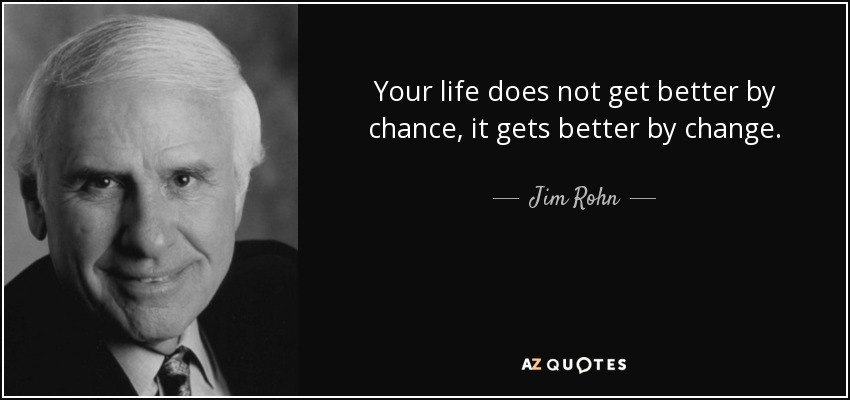
“LEADERSHIP is the competence for STRATEGIC CHANGE.” – Adaptability is the vehicle !
This statement is not a slogan; it is a law of human progress. It captures the deepest truth about leadership in turbulent times: leaders do not manage stability; they architect change. And strategic change is not accidental—it is a designed, intentional, system-driven transformation.
As a strategic leadership expert, I interpret this statement as follows:
Leadership is the applied intelligence that senses change early, interprets it wisely, designs direction deliberately, mobilizes people meaningfully, and converts uncertainty into sustainable advantage.
Let us unfold this truth comprehensively—philosophically, strategically, psychologically, and operationally—so that leadership becomes not just a role, but a lighthouse competence guiding all actions.
1. Leadership as the Engine of Strategic Change
Change is inevitable. Strategic change is optional—and leadership-driven.
- Change happens to everyone
- Strategic change happens through leaders
Leadership competence lies in shaping the future rather than surviving it.
Strategic Change Defined
Strategic change is:
- Purpose-led (WHY-driven)
- Systemic (not cosmetic)
- Long-term value creating
- Culture-shaping
- Execution-centered
Thus, leadership is not authority—it is the capability to redesign reality.
If management maintains systems, leadership transforms systems.
2. Why This is the Strongest Weapon to Win All Challenges
Every challenge—personal, organizational, societal—has three dimensions:
- Cognitive (How we perceive it)
- Strategic (How we position against it)
- Executional (How we act on it)
Leadership for strategic change integrates all three.
Metaphor: The Lighthouse
- Challenges are storms
- People are ships
- Data is radar
- Strategy is navigation
- Leadership is the lighthouse
A lighthouse does not fight the storm.
It gives direction, clarity, and confidence.
That is why leadership is the strongest weapon—it converts:
- Crisis → Clarity
- Chaos → Coherence
- Resistance → Responsibility
- Threat → Opportunity
3. Why This Approach Is Oxygen to Execution & Action
Execution dies not because of lack of effort, but because of:
- Lack of clarity
- Lack of alignment
- Lack of meaning
- Lack of ownership
Leadership for strategic change supplies oxygen to execution in five ways:
1. Purpose Oxygen (WHY)
People execute when they believe, not when they are ordered.
2. Direction Oxygen (WHAT)
Strategy clarifies priorities—what to do and what not to do.
3. Method Oxygen (HOW)
Frameworks, processes, and tools reduce friction.
4. Energy Oxygen (EMOTION)
Leadership emotionally enrolls people into the mission.
5. Feedback Oxygen (LEARNING)
Continuous learning sustains momentum.
Without leadership, execution suffocates.
4. Strategic Mindset: The Core Competence of Leadership
A strategic mindset is the ability to:
- See patterns before events
- Think in systems, not silos
- Balance short-term action with long-term intent
- Convert ambiguity into advantage
Strategic Leaders Ask:
- What is really changing?
- Why does it matter?
- Where should we play?
- How do we win?
- What must we stop doing?
This mindset is trained, not inherited.
5. Framework Integration for Strategic Leadership @360°
Let us now integrate the powerful frameworks into a unified Strategic Change Architecture.
6. 5W1H: The Strategic Foundation
Every strategic change begins with intelligent questioning.
- WHY – Purpose, vision, moral authority
- WHAT – Strategic intent, outcomes
- WHO – Stakeholders, capability owners
- WHERE – Markets, domains, leverage points
- WHEN – Timing, sequencing
- HOW – Models, execution logic
Leaders who ask better questions create better futures.
7. SWOT Analysis: Strategic Self-Awareness
Leadership begins with truth.
- Strengths → Leverage
- Weaknesses → Discipline
- Opportunities → Strategic bets
- Threats → Risk intelligence
Strategic leaders do not fear weaknesses; they design around them.
SWOT becomes powerful when:
- Strengths are converted into distinctive capabilities
- Opportunities are matched with core competence
- Threats are reframed as innovation triggers
8. Blue Ocean Strategy: Creating Strategic Change
Leadership is not about competing better—it is about competing differently.
Blue Ocean Strategy teaches leaders to:
- Eliminate what no longer creates value
- Reduce what is overdesigned
- Raise what truly matters
- Create what never existed
This is leadership as value innovation.
Strategic leaders don’t fight for market share; they redefine the market.
9. Design Thinking: Human-Centered Strategic Change
Strategy fails when it ignores human reality.
Design Thinking brings:
- Empathy before efficiency
- Experimentation before certainty
- Learning before scaling
Steps:
- Empathize (people & pain points)
- Define (real problem)
- Ideate (options)
- Prototype (small bets)
- Test (learning loop)
Leadership here becomes architect + empath + learner.
10. AIDA Model: Mobilizing People for Change
Strategy without buy-in is fantasy.
AIDA helps leaders:
- Attention – Break inertia
- Interest – Create relevance
- Desire – Build emotional ownership
- Action – Enable execution
Leadership communication is strategic persuasion, not instruction.
11. PPF Analysis: Resource Optimization
Strategic change requires trade-offs.
PPF (Production Possibility Frontier) reminds leaders:
- Resources are finite
- Focus creates power
- Every choice has opportunity cost
Great leaders say NO more often than YES.
12. PLC Analysis: Timing Strategic Change
All products, ideas, careers, and strategies follow a life cycle:
- Introduction
- Growth
- Maturity
- Decline
Leadership competence lies in:
- Innovating before decline
- Reinventing at maturity
- Scaling at growth
Strategic leaders move ahead of the curve.
13. Strategy Map: Aligning Vision to Action
A Strategy Map links:
- Financial outcomes
- Customer value
- Internal processes
- Learning & growth
Leadership ensures vertical and horizontal alignment.
Alignment is the hidden multiplier of execution.
14. McKinsey 7-S: Organizational Coherence
Strategic change collapses if systems don’t support it.
7-S ensures alignment of:
- Strategy
- Structure
- Systems
- Skills
- Staff
- Style
- Shared Values
Leadership here is system orchestration, not heroics.
15. OODA Loop: Speed as Strategic Advantage
In volatile environments, speed beats perfection.
OODA:
- Observe
- Orient
- Decide
- Act
Strategic leaders:
- Shorten decision cycles
- Learn faster than competitors
- Adapt continuously
The winner is not the strongest—but the fastest learner.
16. Kaizen: Leadership Through Continuous Improvement
Strategic change is not one big leap—it is disciplined daily progress.
Kaizen teaches:
- Small improvements compound
- Culture beats strategy
- Everyone is a change agent
Leadership sustains momentum through micro-excellence.
17. Mastering the Art & Science of Strategic Leadership
To master leadership as strategic change:
ART (Human Side)
- Emotional intelligence
- Storytelling
- Trust-building
- Vision casting
- Moral courage
SCIENCE (System Side)
- Data-driven decisions
- Framework thinking
- Process discipline
- Metrics & feedback
- Learning loops
True leaders integrate heart + head + hands.
18. When Every Challenge Becomes an Opportunity
Challenges become opportunities when leaders:
- Reframe problems strategically
- Mobilize collective intelligence
- Experiment intelligently
- Learn relentlessly
- Act courageously
A strategic leader does not ask, “Why is this happening to us?”
They ask, “What is this preparing us for?”
Conclusion: Leadership as the Lighthouse Competence
Leadership as the competence for strategic change is:
- The north star of purpose
- The navigation system of strategy
- The engine of execution
- The culture carrier of values
- The learning loop of evolution
In a world of uncertainty, volatility, and disruption:
Leadership is no longer about control—it is about conscious strategic change.
Those who master this competence do not merely survive challenges—they use challenges as raw material for greatness.
That is leadership @360°.

Anupam Sharma
Psychotech Strategist
Coach I Mentor I Trainer
Councelor I Consultant