
LEADERSHIP is S.M.A.R.T.E.S.T Goal Setting – The Strategic Vehicle of Purposeful Action
Leadership is not about positional authority; it is about directional clarity. A true leader is not remembered for mere vision statements but for their ability to set, pursue, and accomplish goals that move people, organizations, and societies toward a greater purpose. That is why “LEADERSHIP is S.M.A.R.T.E.S.T Goal Setting”—because in the absence of strategic, structured, and resilient goal-setting, leadership collapses into ambiguity.
Goal setting is the lighthouse of leadership. It provides direction amidst the storms of uncertainty, resilience during adversity, and clarity in the face of complexity. The S.M.A.R.T framework has long been regarded as a gold standard. However, in modern leadership consulting practices and with the infusion of ancient wisdom, the evolved version—S.M.A.R.T.E.S.T Goal Setting—emerges as the true strategic vehicle for sustainable impact.
Why Goal Setting is Leadership’s Lighthouse
Just as sailors once navigated seas by the stars and the lighthouse, leaders guide their teams by goals. Without goals, people drift into confusion, lose momentum, and waste energy. With goals:
- Massive actions align with purpose.
- Resilience becomes possible because obstacles are framed as steps, not roadblocks.
- Resources get optimized, since energy is channeled into strategic priorities.
- Leadership thrives as empowerment, because goals inspire collective contribution instead of chaotic accumulation.
From the Bhagavad Gita, Krishna reminds Arjuna: “Karmanye vadhikaraste ma phaleshu kadachana”—you have the right to action, not to the fruits. Yet, action without a purposeful goal is blind. Leaders set goals not just to chase outcomes but to channel energy into higher action.
The Evolution: From SMART to SMARTEST
The traditional SMART goal framework stood for:
- Specific
- Measurable
- Achievable
- Relevant
- Time-bound
But leadership in the 21st century requires more than efficiency. It requires excellence, resilience, and transformation. That’s why consulting groups and leadership strategists evolved the acronym to S.M.A.R.T.E.S.T:
- S – Specific: Clarity beats confusion. Leaders define “what exactly” needs to be achieved.
- M – Measurable: What gets measured gets managed. KPIs and metrics keep progress visible.
- A – Achievable: Stretch yet realistic. Leaders set goals that challenge but don’t crush spirit.
- R – Relevant: Goals align with vision, mission, and values. No relevance, no commitment.
- T – Time-bound: Deadlines drive discipline. Timelines transform intention into execution.
- E – Evaluated: Leaders build feedback loops. Every goal must be tracked, reviewed, and adapted.
- S – Strategic: Goals should create ripple effects across systems. Leaders set goals that strengthen organizational DNA.
- T – Transformational: The ultimate outcome is not the goal itself, but the transformation of people, culture, and society.
Thus, SMARTEST goals go beyond outcomes to create impact.
Frameworks Leaders Follow in SMARTEST Goal Setting
Leaders who practice SMARTEST goal setting draw upon multiple frameworks, both ancient and modern, to sustain their unique implications and impact. Let’s explore:
1. SWOT + SMARTEST Integration
- Strengths leveraged to make goals achievable.
- Weaknesses acknowledged to build resilience strategies.
- Opportunities mapped into relevance.
- Threats accounted for with strategic foresight.
This ensures goals are not designed in a vacuum but in reality.
2. PDCA Cycle (Plan–Do–Check–Act)
SMARTEST goals thrive on iteration. Leaders use PDCA to:
- Plan the specifics.
- Do with timelines.
- Check with measurable evaluation.
- Act for continuous improvement.
3. The 80/20 Principle
Pareto’s law ensures leaders focus on 20% of goals that deliver 80% of impact. This prevents dilution and maximizes transformation.
4. PPF Model (Past–Present–Future)
- Past: Learn from patterns of success/failure.
- Present: Focus on resource allocation now.
- Future: Envision transformation.
SMARTEST goals thus remain grounded yet visionary.
5. Ancient Wisdom Model
Chanakya in Arthashastra stressed Arthashakti (economic power), Mantrashakti (intellectual power), and Prabhushakti (organizational power). A leader’s goal must align these three forces. Bhagavad Gita emphasizes Nishkam Karma—detached yet disciplined pursuit. This allows SMARTEST goals to balance material outcomes with dharmic purpose.
Verticals of SMARTEST Goal Setting – Resourcefulness in Challenges
When leaders adopt the SMARTEST framework, each vertical becomes a pillar of resourcefulness:
- Clarity (Specific): Removes confusion and misalignment.
- Metrics (Measurable): Translates vision into actionable dashboards.
- Feasibility (Achievable): Prevents burnout and sustains morale.
- Alignment (Relevant): Creates cohesion across teams.
- Deadlines (Time-bound): Generates urgency without panic.
- Feedback (Evaluated): Learns and adapts from failures.
- Systemic Design (Strategic): Ensures long-term sustainability.
- Transformation (Transformational): Elevates leadership beyond profit to purpose.
These verticals empower leaders to navigate crises, build resilience, and turn limited resources into maximum impact.
Methodology for Setting SMARTEST Goals
- Vision Anchoring: Define the higher purpose—why does this goal matter?
- Stakeholder Engagement: Involve teams, mentors, and beneficiaries to ensure inclusiveness.
- Breakdown into Milestones: Use OKRs (Objectives and Key Results) for clarity.
- Design Dashboards: Adopt digital tools (Asana, Notion, Power BI) for tracking.
- Embed Feedback Loops: Weekly reviews, monthly recalibrations.
- Infuse Resilience: Prepare contingency strategies.
- Celebrate Small Wins: Sustain morale and momentum.
- Reflect & Reframe: At the end of cycles, leaders practice self-audit.
Consulting Practices & Data Insights
- McKinsey reports organizations that align goals with strategy are 3.5x more likely to outperform competitors.
- Gallup shows that only 20% of employees strongly feel their goals align with organizational mission; leaders practicing SMARTEST can fix this gap.
- Deloitte emphasizes that resilience and adaptability in goal-setting are the top predictors of long-term leadership success.
- In Indian tradition, Kautilya’s Arthashastra outlined that kingdoms flourished not by resources alone, but by strategic goals of prosperity, protection, and dharma.
The Leadership Implications
- Empathetic Empowerment: SMARTEST goals create ownership among teams (link to earlier prompt).
- Resilience + Hard Work: Goals teach persistence at pace (resilience blog connection).
- Contribution > Accumulation: Goals are designed to give, not hoard (contribution framework).
- Avoiding Analysis-Paralysis: Clear goals help leaders act decisively.
- Self-Investment ROI: Leaders grow with each cycle of evaluated and transformational goals.
Techniques & Tools Leaders Use
- Balanced Scorecard to align SMARTEST goals across finance, customers, processes, and learning.
- Mind Mapping for visual clarity.
- Gantt Charts / OKRs for execution.
- Resilience Journals (ancient + modern) to track purpose-driven consistency.
- Daily Reflection Rituals inspired by Indian yogic practices to sustain self-discipline.
Conclusion – Leadership’s Lighthouse
Leadership without goal-setting is like a ship without a compass. With SMARTEST goal-setting, leaders transform goal pursuit into a strategic vehicle for resilience, empowerment, and massive action. It allows them to align vision with execution, ancient wisdom with modern frameworks, and personal discipline with organizational success.
A leader’s true legacy is not in the goals achieved, but in the transformation sparked. And that is why:
“LEADERSHIP is S.M.A.R.T.E.S.T GOAL SETTING.”
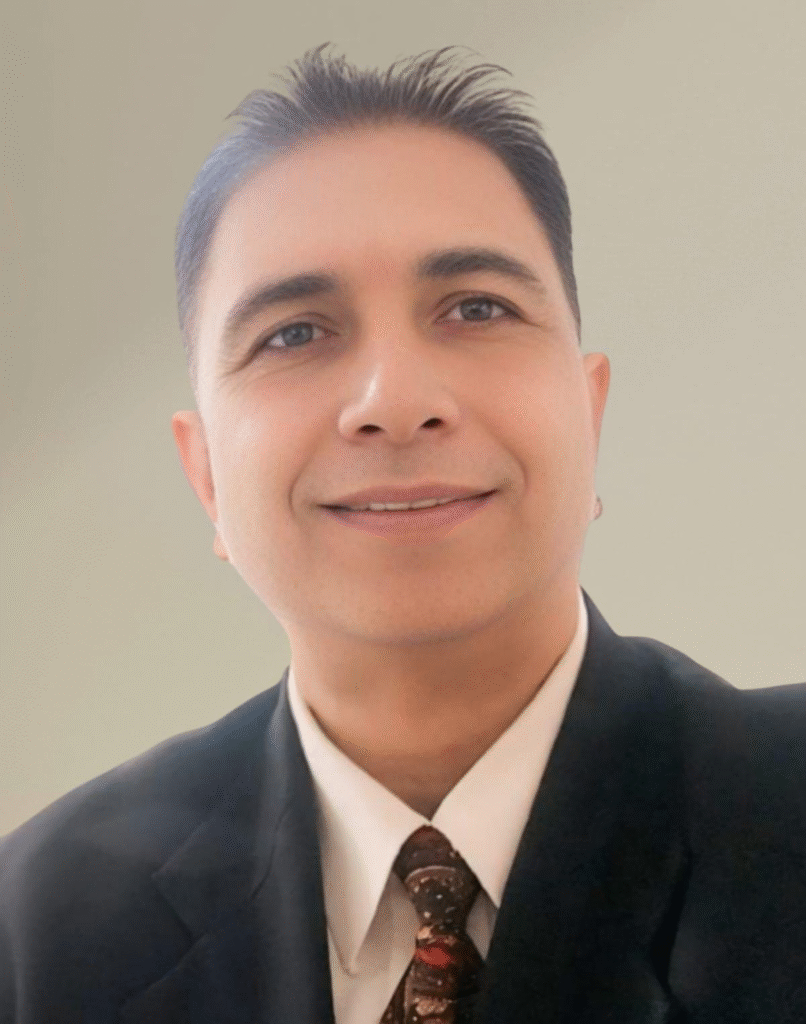
Anupam Sharma
Psychotech Evangelist
Coach I Mentor I Trainer
Councellor I Consultant