
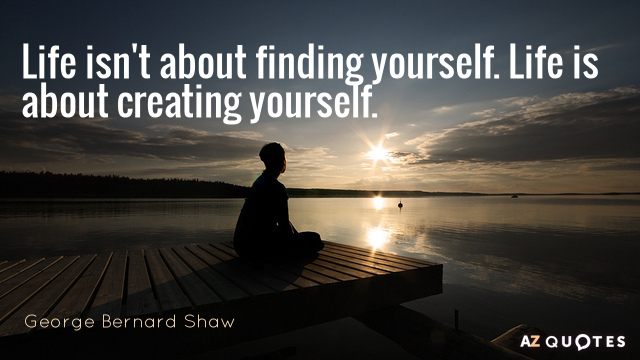
Leadership is Creating & Designing Yourself with Purpose – Life is connecting the right dots…
A 360° Strategic–Spiritual Blueprint for Human Empowerment
Leadership is not a position.
Leadership is not authority.
Leadership is not managing others.
Leadership is the conscious act of creating and designing yourself with purpose—again and again—so that others feel empowered to do the same.
This statement stands powerful in every situation of human life because it addresses the root cause of all leadership outcomes: who you are becoming, not what you are controlling.
In a world where people decode reality through their beliefs, emotions, conditioning, skills, learning, and experiences, leadership can no longer be transactional. It must be transformational, intentional, and self-designed.
Let us decode this truth at 360°—strategically, psychologically, socially, and spiritually.
1. Why This Statement Works in All Situations of Human Life
Every human challenge—personal, professional, social, or spiritual—ultimately asks one question:
“Who must I become to handle this situation consciously?”
When leadership is defined as self-creation with purpose, it becomes universally applicable:
- In crisis → leadership is inner stability
- In growth → leadership is clarity and direction
- In conflict → leadership is emotional maturity
- In uncertainty → leadership is meaning-making
- In abundance → leadership is responsibility
A leader who is self-designed does not react to situations—they respond from purpose.
This is why ancient wisdom always begins with Atma Jnana (self-knowledge) before Raja Dharma (governance).
“One who has conquered himself is greater than one who has conquered a thousand battles.”
— Bhagavad Gita (paraphrased)
2. Cause & Effect: How Self-Designed Leadership Empowers People Management
Cause (Inner Leadership)
- Clarity of purpose
- Emotional regulation
- Value alignment
- Ethical conviction
- Strategic self-awareness
Effect (Outer Leadership)
- Trust-based relationships
- Psychological safety
- Ownership mindset in teams
- Reduced dependency
- High engagement & accountability
People do not follow instructions.
They follow inner coherence.
When a leader has designed themselves consciously:
- People feel seen, not used
- Systems feel fair, not forced
- Feedback feels developmental, not threatening
This is the invisible mechanism behind empowered people management.
3. Diversity of Perspectives & the Ripple Effect of Leadership
Every human being interprets leadership through:
- Thought patterns
- Belief systems
- Emotional history
- Cultural conditioning
- Knowledge & skill exposure
A self-designed leader understands this diversity and does not demand sameness.
Instead, such a leader:
- Creates containers, not clones
- Encourages thinking, not obedience
- Designs contexts, not commands
Ripple Effect
When people experience leadership as self-authorship, they replicate it.
One self-led individual creates:
- 5 self-aware contributors
- 10 confident decision-makers
- 100 empowered ripple actions
This is how leaders create more leaders, not followers.
4. How This Attitude Makes People Resourceful & Convicted
People become resourceful when:
- They feel trusted
- They understand the why
- They are allowed to fail safely
- Their strengths are recognized
People become convicted when:
- Purpose is shared, not imposed
- Values are lived, not preached
- Contribution is meaningful
A self-designed leader operates from:
“I am responsible for the environment, not for controlling outcomes.”
This transforms teams from compliance-driven to conviction-driven systems.
5. Leadership Through Strategic Models (360° Integration)
A. SWOT – Self First, System Next
- Strengths: Purpose clarity, emotional intelligence
- Weaknesses: Biases, blind spots, ego patterns
- Opportunities: Talent leverage, collective intelligence
- Threats: Misalignment, fear culture, stagnation
A leader who applies SWOT internally becomes authentic externally.
B. 80/20 Principle – Purpose as the Vital Few
- 20% clarity creates 80% execution power
- 20% right conversations create 80% engagement
- 20% aligned people create 80% results
Self-designed leaders focus on high-leverage inner disciplines, not endless outer activity.
C. PDCA – Continuous Self-Leadership Loop
- Plan: Design self with purpose
- Do: Act in alignment
- Check: Reflect consciously
- Act: Upgrade identity
Leadership is not static—it is iterative evolution.
D. PPF (Purpose–Process–Performance Framework)
- Purpose: Why do we exist?
- Process: How do we work together?
- Performance: What outcomes matter?
Without purpose, performance becomes hollow.
E. NEED Analysis (Human-Centric Leadership)
- N: Now – current emotional state
- E: Expectations – conscious & unconscious
- E: Environment – social & cultural context
- D: Direction – growth pathway
Leadership that understands NEED builds trust faster than authority ever can.
F. Competence Analysis
True leadership recognizes four human zones:
- Skill competence
- Emotional competence
- Cognitive competence
- Ethical–spiritual competence
Ignoring any one creates imbalance.
G. Social Engineering (Positive Influence Architecture)
Leadership is designing systems where good behavior becomes natural:
- Rituals
- Language
- Feedback loops
- Recognition systems
- Role modeling
This is ethical social engineering—uplifting, not manipulating.
6. Ancient Wisdom & Spiritual Leadership
Sanatan leadership begins with Dharma (right action), not dominance.
Key principles:
- Lokasangraha – welfare of all
- Nishkama Karma – action without ego
- Sattva – clarity & balance
- Seva – leadership as service
A leader rooted in spirituality:
- Leads without fear
- Corrects without humiliation
- Guides without attachment
Such leadership naturally elevates human potential.
7. Types & Category Mix to Lift Human Potential
Effective leadership blends:
- Strategic + Emotional
- Firm + Compassionate
- Visionary + Practical
- Individual focus + Collective good
Leadership is not a style—it is a situational synthesis.
8. Final Truth: Strategic Leadership Is Inner Engineering
People decode everything through their internal filters.
So the greatest leadership advantage is self-mastery.
When you design yourself with purpose,
You no longer manage people—you activate humans.
Leadership then becomes:
- A lighthouse, not a loudspeaker
- A mirror, not a mask
- A movement, not a mandate
Closing Reflection
The world does not need more bosses.
It needs self-designed, purpose-driven human beings who make leadership a contagious awakening.
That is leadership at 360°.
That is leadership for the future.

ANUPAM SHARMA
PSYCHOTECH™ STRATEGIST
COACH I MENTOR I TRAINER
COUNCELLOR I CONSULTANT