
Why Leaders Acquire Skills & Take Massive Action—and Never Give Up
1. Overcoming Analysis Paralysis
Despite access to vast data and AI tools, too much analysis often breeds indecision—what Deloitte professor Michael Roberto calls “analysis paralysis.” Leaders may defer decisions fearing failure or implementation hurdles (“pain avoidance”), costing them agility and competitive advantage. In interviews, he found many executives later regretted delayed decisions that caused them to “lose ground or fall significantly behind.”(The Australian)
Action-oriented leaders consciously resist this paralysis by accepting some uncertainty and favoring speeded, iterative response over perfect certainty.
2. Cultivating a Growth and Action Mindset
It’s not just action but an internal growth mindset—the belief that abilities can be developed—that fuels perseverance. Psychological research (e.g., Carol Dweck) shows true progress stems from honest self‑assessment and continuous improvement, rather than fixed confidence.(Beaumont Enterprise)
In volatile environments, such mindset allows leaders to treat failures and obstacles as learning opportunities rather than terminal setbacks.
3. Action Leadership as Mindset, Not Just Outcomes
Action leadership often emphasizes mindset over outcomes. Complex, uncertain environments mean that outcomes cannot always be controlled, but a mindset oriented toward initiative, experimentation, and adaptive learning ensures consistent progress. In consulting frameworks, this is embedded via agile thinking, scientific-method experimentation, and feedback-driven cycles.
Analytical Execution: Strategy for Precision and Speed
What makes leaders both skilled and analytical?
1. Structured Decision Frameworks with Measurable Benefits
Tools like multi-criteria decision analysis, decision quality frameworks, and decision mapping significantly enhance decision quality—improving outcomes by 33–43% depending on method. Integration with implementation planning further improves execution success rates by up to 47%, while stakeholder analysis, risk mitigation, and feedback loops add 33–41% gains.(pinnaclewellbeing.co.uk)
2. BADIR: From Questions to Actions
The BADIR framework anchors decision-making in business impact:
- B – Define the Business Question
- A – Define an Analysis Plan
- D – Collect Quality Data
- I – Derive Insights
- R – Develop Recommendations and Implement
By focusing initially on the core business question, BADIR reduces guesswork and accelerates decision flow—claimed to optimize up to 80% of a leader’s workflow.(Wikipedia)
3. Scientific Method and Experimentation
Leaders are increasingly adopting scientific method principles in decision-making. The process involves forming testable hypotheses, conducting controlled experiments (e.g., A/B testing), analyzing objective data, iterating based on results, and scaling success or refining failures. This cycle builds a culture of rigorous learning and agility.(Forbes, LinkedIn)
4. Data Tools and Infrastructure
Modern leaders integrate analytics tools such as:
- Business Intelligence platforms (Tableau, Power BI, QlikView) for visibility
- Predictive analytics (via IBM Watson, SAS, etc.) for forecasting
- Real-time analytics (e.g., Google Analytics, Kafka) for swift responsiveness
- Data warehousing (Snowflake, Redshift) for integration and scalability
- Advanced analytics (machine learning, AI) to uncover hidden patterns(humansofglobe.com)
These tools help transform data into timely, actionable insight.
Mindset + Analytical Agility = True Action Leadership
1. Agile Leadership for Dynamic Contexts
In VUCA environments, Agile leadership—rooted in agile development—delivers both adaptability and speed. The “Align–Empower” model, for instance, encourages divergence (exploring multiple options) and convergence (aligning on goals). The agile leader fosters self-managing teams, promotes learning from failures, clarifies objectives, and shapes culture to stay ahead.(Wikipedia)
2. Emotional Intelligence Meets Data Fluency
Numbers alone don’t lead—leaders need empathy too. Research indicates leaders with high emotional intelligence (EQ) can outperform their peers by up to 25%. Data informs the “what” and “how,” while EQ helps understand the “why” and the human impact behind decisions.(LinkedIn)
3. Decision Support Systems (DSS)
Organizations deploy Decision Support Systems—tools combining models, data, and human judgment to aid managers in tackling poorly structured decisions. These systems are flexible, interactive, and non‑technical user-friendly.(Wikipedia)
4. Analytical Leadership Traits
Strong analytical leaders exhibit:
- Awareness: avoiding cognitive biases like inattentional blindness(LeBow College)
- Influence: guiding teams toward data-based conclusions through commitment and social proof(LeBow College)
- Collaboration: building psychological safety and encouraging diverse inputs(LeBow College)
5. Data Governance & Building Capability
Analytics effectiveness isn’t just tools—it is also about governance and literacy. Research shows that data governance boosts big data literacy, which then enhances analytical capability and ultimately improves decision‑making performance.(Emerald)
Who Becomes a Dynamic Action Leader?
Dynamic action leaders are those who:
- Possess a growth mindset that embraces challenge and learning.
- Are data literate and comfortable integrating analytics with intuition.
- Leverage frameworks like BADIR, structured decision models, and the scientific method for disciplined execution.
- Embrace Agile leadership practices, balancing clarity with freedom, experimentation with goal alignment.
- Combine high EQ with data-driven insights—ensuring decisions are both smart and human.
- Commit to continuous learning, evolving tools and methods as complexity grows.
Latest Executive Playbook: Tools & Frameworks at a Glance
| Purpose | Framework/Tool | Benefit |
|---|---|---|
| Structuring decisions | Multi-criteria decision analysis, decision mapping, implementation planning | +33–47% decision quality & execution effectiveness(pinnaclewellbeing.co.uk) |
| Anchoring decisions | BADIR | Optimizes workflow up to 80%(Wikipedia) |
| Learning & experimentation | Scientific method, hypothesis testing, iterative experiments | Agile decision‑making(Forbes, LinkedIn) |
| Data infrastructure | BI tools, predictive & real-time analytics, data warehousing, ML/AI | Insightful, timely decisions(humansofglobe.com) |
| Adaptive leadership | Agile leadership “Align–Empower” | Respond quickly, foster autonomy(Wikipedia) |
| Human-led decisions | Emotional intelligence integration with data literacy | Up to 25% higher effectiveness(LinkedIn) |
| Organizational readiness | Data governance, literacy, analytics capability | Enhanced decision performance(Emerald) |
In Summary
Leaders become skilled and action-focused not by chance, but by cultivating a mindset fused with analytical rigor. They train themselves through structured frameworks (BADIR), decision modeling, scientific experimentation, and adaptive (Agile) leadership—all supported by strong data infrastructure and emotional intelligence.
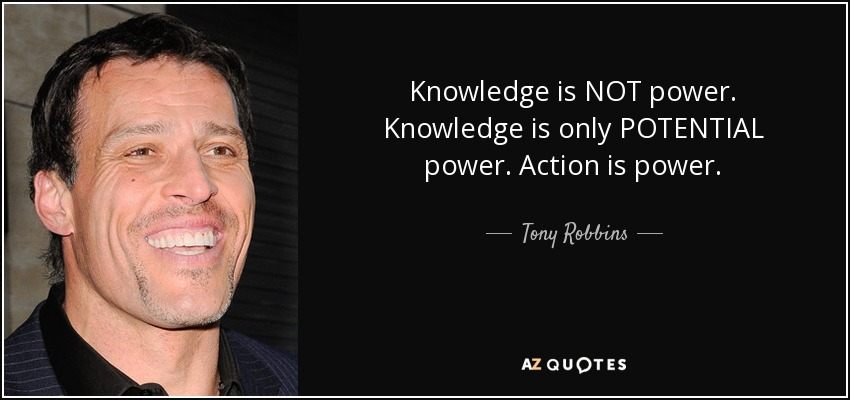
In today’s complex, high-speed corporate world, being a dynamic action leader means continuously learning, balancing evidence with empathy, and executing with precision given imperfect information. With the right mindset, tools, and culture, imperfect action trumps perfect inaction—and sustained execution becomes the path to winning advantage.

Anupam Sharma
Psychotech Evangelist
Coach I Mentor I Trainer
Counselor I Consultant