
“The Greatest Joy is Not in Practicing Leadership, but in Building Yourself as a Leader”– Leader’s Edge
A 360° Strategic, Psychological, and Spiritual Decode of Human Leadership
Leadership is often misunderstood as a role, a position, or a set of actions. Titles change, power shifts, authority fades—but who you become remains. That is why this statement stands universally true across all situations of human life:
The greatest joy is not in practicing leadership, but in building yourself as a leader.
This is not philosophical optimism. It is strategic truth, psychological reality, and spiritual law.
Practicing leadership is external.
Building yourself as a leader is internal.
One creates compliance. The other creates conviction.
One manages people. The other multiplies leaders.
Let us decode this truth from cause–effect, people empowerment, ripple leadership, human psychology, management frameworks, and ancient wisdom—to understand why self-leadership is the ultimate leadership strategy.
1. Why This Statement Holds True in Every Situation of Human Life
Leadership situations change:
- Corporate → Social → Family → Nation → Self
But the leader’s inner operating system determines outcomes everywhere.
The Core Truth
You can practice leadership without being a leader,
but you cannot be a leader without first building yourself.
- Practiced leadership relies on authority
- Built leadership radiates influence
- Practiced leadership demands obedience
- Built leadership invites ownership
This is why history remembers leaders, not managers of power.
2. Cause & Effect: Building the Leader vs Practicing Leadership
Cause: Building Yourself as a Leader
- Inner clarity
- Emotional mastery
- Value alignment
- Self-discipline
- Ethical courage
- Learning mindset
Effect:
- People feel safe
- Trust accelerates
- Resistance dissolves
- Initiative emerges
- Leadership multiplies organically
People don’t follow what you say.
They follow what you consistently embody.
This is why empowering people management is never about control—it is about example-driven credibility.
3. People Decode Leadership Through Their inner Filters
Every individual interprets leadership through their:
- Thoughts
- Beliefs
- Emotions
- Knowledge
- Skills
- Learning patterns
- Past experiences
This means leadership is not transmitted—it is perceived.
So the leader’s responsibility is not to act powerful, but to be internally congruent.
When people sense:
- Authenticity → they trust
- Consistency → they commit
- Growth → they grow
This is the psychological foundation of conviction-based leadership.
4. SWOT of Leadership: The inner Analysis
S – Strengths (Inner Capital)
- Self-awareness
- Integrity
- Emotional intelligence
- Learning agility
W – Weaknesses (Unresolved Self)
- Ego
- Insecurity
- Control addiction
- Fear of losing relevance
O – Opportunities (Leadership Multiplication)
- Mentoring
- Delegation
- Culture building
- Succession creation
T – Threats (Leadership Decay)
- Authority dependence
- Talent suppression
- Fear-driven compliance
- Burnout
Leadership collapses externally when inner weaknesses remain unmanaged.
5. The 80/20 Rule of Leadership Building
80% of leadership impact comes from 20% inner work.
That 20% includes:
- Self-discipline
- Emotional regulation
- Values clarity
- Decision courage
- Continuous learning
Most leaders reverse this:
- 80% focus on tactics
- 20% on inner growth
Great leaders invert it.
6. PDCA Model: Continuous Leader Evolution
Plan
- Define who you must become to lead better
- Identify value gaps, skill gaps, mindset gaps
Do
- Practice self-leadership daily
- Model behavior before expecting it
Check
- Observe people’s response, trust levels, initiative
- Measure cultural health, not just results
Act
- Upgrade yourself again
- Refine leadership identity continuously
Leadership is not a destination.
It is a lifelong self-upgradation cycle.
7. PPF (Production Possibility Frontier) of Human Potential
Traditional leaders push people to the edge of performance.
True leaders expand the frontier itself.
By building themselves:
- They create psychological safety
- They unlock dormant capabilities
- They convert fear into focus
Result:
People don’t just perform more—they become more.
8. Need Analysis: What People Truly Need from a Leader
Beyond salary and roles, people need:
- Meaning
- Respect
- Growth
- Recognition
- Belonging
- Fairness
- Direction
Only a self-built leader can fulfill these intangible needs—because they originate internally, not from authority.
9. Competence Analysis: Leadership Beyond Skills
True leadership competence has three layers:
1. Technical Competence
- Knowledge
- Skills
- Expertise
2. Behavioral Competence
- Communication
- Empathy
- Conflict handling
3. Character Competence
- Integrity
- Consistency
- Accountability
- Courage
Character competence is what creates leaders who create leaders.
10. Social Engineering: Leadership as Culture Design
Leaders are social architects.
Your behavior engineers:
- Norms
- Values
- Belief systems
- Behavioral patterns
When you build yourself:
- You engineer trust
- You normalize learning
- You legitimize empowerment
- You remove fear from performance
This creates a ripple effect:
Leader → Influencer → Mentor → Leader-maker
11. Ripple Effect: How Leaders Create More Leaders
Leadership does not scale through control.
It scales through transformation.
Ripple Mechanics:
- Leader works on self
- People observe consistency
- Trust emerges
- Responsibility is accepted
- Ownership grows
- New leaders rise
The ultimate success of a leader is irrelevance through multiplication.
12. Diversity of Leadership Perspectives
People are not uniform. Leadership must adapt across:
- Personality types
- Cultural backgrounds
- Emotional maturity levels
- Experience stages
A self-built leader:
- Adjusts approach
- Respects diversity
- Customizes empowerment
- Avoids one-size-fits-all control
This is strategic leadership intelligence.
13. Review Types & Category Mix: Lifting Others’ Potential
Leaders must shift roles consciously:
- Coach (when skill is low)
- Mentor (when clarity is missing)
- Facilitator (when autonomy is needed)
- Guardian (when values are at risk)
- Catalyst (when growth must accelerate)
Only leaders who build themselves first can switch roles without ego.
14. Ancient Wisdom & Spiritual Leadership
Ancient wisdom never glorified authority—it glorified inner mastery.
Bhagavad Gita:
“One must elevate oneself by oneself.”
Chanakya:
“The king is powerful only when he controls himself.”
Upanishads:
“As is the inner state, so is the outer world.”
Spirituality teaches:
- Leadership begins with self-governance
- Influence flows from inner alignment
- Power without dharma destroys both leader and followers
15. Final Integration: The Ultimate Leadership Truth
Practicing leadership gives results.
Building yourself as a leader gives results + legacy.
Practiced leadership manages people.
Built leadership awakens people.
The greatest joy is not in leading people,
but in watching people rise because you rose first.
That is leadership at 360°—
Strategic. Psychological. Human. Spiritual. Timeless.
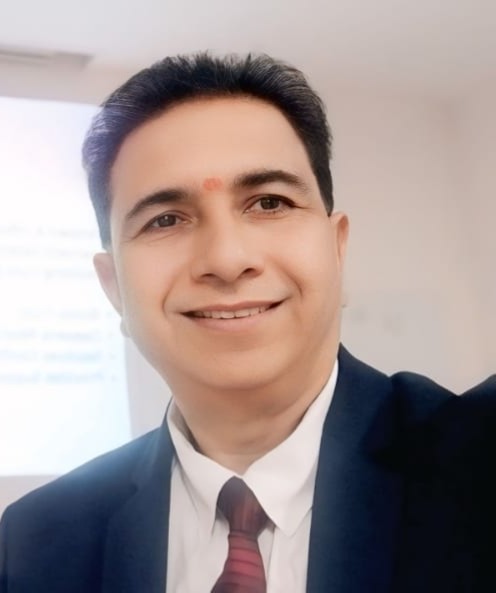
ANUPAM SHARMA
PSYCHOTECH™ STRATEGIST
COACH I MENTOR I TRAINER
COUNCELLOR I CONSULTANT