
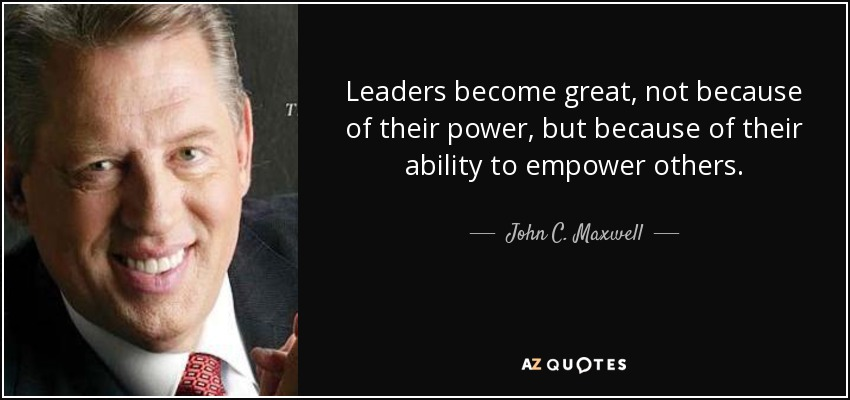
Great Leadership is Mastering the Art & Science of Empowerment (Self & Others
Why This Statement Is a Universal Truth
Across civilizations, cultures, organizations, and eras, leadership has never been about position, power, or authority. It has always been about capacity creation—within oneself first, and then within others.
That is why the statement
“Great leadership is mastering the art & science of empowerment (self & others)”
is not a motivational slogan—it is a universal law of leadership.
Every lasting leader—from Krishna guiding Arjuna, Chanakya shaping emperors, Lincoln preserving a nation, to modern visionary CEOs—shared one core capability:
they expanded human potential instead of controlling human behavior.
Empowerment is not soft leadership.
It is the most strategic, scalable, and sustainable form of power.
What is Empowerment: A 360° Understanding
Empowerment is often misunderstood as delegation, motivation, or encouragement. In reality, it is far deeper and more structural.
At its core, empowerment means:
Creating conditions where individuals can think, decide, act, and grow at their highest capability—without dependency.
Empowerment operates at 5 interconnected levels:
- Psychological Empowerment – belief, confidence, self-trust
- Cognitive Empowerment – clarity, understanding, perspective
- Emotional Empowerment – ownership, meaning, resilience
- Skill Empowerment – competence, capability, mastery
- Authority Empowerment – autonomy, accountability, decision rights
A leader who empowers only at one level creates imbalance.
A great leader orchestrates all five simultaneously.
Why Empowerment is the Lifeline of Leadership
1. Empowerment Is the Oxygen of Execution
No strategy succeeds without empowered executors.
Disempowered people wait for instructions. Empowered people create solutions.
Execution velocity increases when:
- Decisions move closer to action
- Fear of failure reduces
- Ownership replaces compliance
2. Empowerment Converts Potential into Performance
Talent without empowerment becomes frustration.
Empowerment unlocks discretionary effort—the extra 40% people give only when they feel trusted and valued.
3. Empowerment Builds Leaders, Not Followers
Transactional leadership creates followers.
Empowering leadership creates multipliers of leadership.
This is why great leaders scale impact far beyond their physical presence.
The Art & Science of Self-Empowerment (Leadership Starts Within)
No leader can empower others beyond their own level of self-empowerment.
Self-Empowerment = Inner Sovereignty
In Sanātan wisdom, this is Swadharma + Swatantrata—self-mastery with freedom.
Core Pillars of Self-Empowerment:
- Clarity of Purpose – Why I lead
- Decision Authority – I choose, not drift
- Emotional Regulation – I respond, not react
- Cognitive Discipline – I think strategically, not impulsively
- Integrity of Action – I do what aligns, not what pleases
A disempowered leader:
- Seeks validation
- Avoids tough decisions
- Micromanages
- Blames circumstances
An empowered leader:
- Operates from inner certainty
- Takes full responsibility
- Creates psychological safety
- Inspires courage through example
Empowering Others: Leadership as a Force Multiplier
Empowering others is not about being nice.
It is about intentionally designing people systems.
Why Leaders Struggle to Empower Others (Brutal Truth)
- Fear of losing control
- Ego attachment to being needed
- Lack of trust in people
- Poor coaching capability
- Short-term pressure overriding long-term thinking
Average leaders hoard authority.
Great leaders circulate authority with accountability.
Strategic Empowerment Framework (Applied Leadership Model)
The E.M.P.O.W.E.R Framework
E – Expectation Clarity
People fail not due to incompetence, but due to unclear expectations.
Tool: Outcome-based role charters
M – Meaning Alignment
When work connects to purpose, energy multiplies.
Tool: Role-to-impact mapping
P – Permission to Decide
Empowerment dies when people need approval for everything.
Tool: Decision-rights matrix (RACI+)
O – Ownership Culture
Empowerment requires accountability, not entitlement.
Tool: One-owner rule
W – Wisdom Transfer
Empowerment without guidance becomes chaos.
Tool: Leader-as-coach model
E – Error Intelligence
Fear kills empowerment. Learning fuels it.
Tool: Failure debriefs, not blame sessions
R – Recognition of Growth
Growth must be seen to be sustained.
Tool: Progress-based recognition
Tools, Techniques & Methods to Master Empowerment
1. Psychological Empowerment Tools
- Confidence contracts (belief reinforcement)
- Strength-based feedback loops
- Identity reframing (“You are a problem-solver, not a task-doer”)
2. Cognitive Empowerment Tools
- First-principles thinking sessions
- Strategic questioning frameworks
- Mental model libraries
3. Emotional Empowerment Tools
- Psychological safety rituals
- Emotional check-ins before decisions
- Purpose storytelling
4. Skill Empowerment Tools
- 70–20–10 learning architecture
- Real-time coaching
- Stretch assignments with safety nets
5. Authority Empowerment Tools
- Delegation ladders
- Autonomy thresholds
- Decision escalation protocols
Empowerment as a Leadership Mindset (Not a Technique)
Empowerment is not something leaders do.
It is something leaders become.
Empowered leaders believe:
- People are capable by default
- Mistakes are data, not defects
- Control is a cost, not a strength
- Trust accelerates results
Chanakya taught:
“The king’s power lies not in command, but in the capability of his ministers.”
Modern neuroscience confirms this: autonomy activates motivation centers of the brain, while control activates threat responses.
Ancient wisdom and modern science converge on one truth:
Empowerment is biologically, psychologically, and strategically superior.
Challenges in Practicing Empowerment
- Short-term performance pressure
- Low maturity levels in teams
- Cultural conditioning of obedience
- Leader’s unresolved insecurity
- Fear of mistakes and accountability
Empowerment demands patience, courage, and long-term vision.
It is easier to control than to coach.
It is easier to command than to cultivate.
That is why empowered cultures are rare—and unbeatable.
Leadership Implications: From Boss to Builder
When leaders master empowerment:
- Engagement rises
- Innovation accelerates
- Attrition drops
- Execution becomes self-propelled
- Organizations become anti-fragile
Leadership then shifts from:
Managing people → Multiplying human potential
Final Call to Conscious Leadership Action
If you want obedience, use authority.
If you want excellence, build systems.
If you want legacy, empower humans.
Great leadership is not about how powerful you are.
It is about how powerful people become because of you.
Empower yourself to think clearly.
Empower others to act courageously.
That is leadership.
That is strategy.
That is legacy.

ANUPAM SHARMA
PSYCHOTECH STRATEGIST
COACH I MENTOR I TRAINER
COUNCELLOR I CONSULTANT