

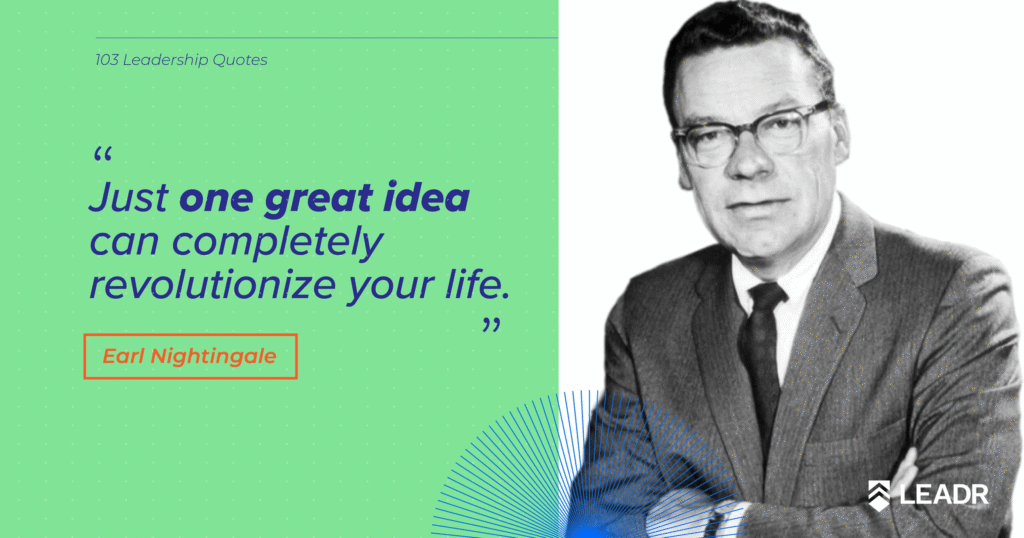
🔹 “GREAT IDEAS rest in GREAT PROBLEMS”
(Problem = Compressed Opportunity)
Average minds escape problems.
Strategic minds enter problems.
A great problem has these characteristics:
- It is high-impact
- It affects many stakeholders
- It has systemic roots, not surface symptoms
- It remains unsolved despite effort
👉 Great ideas do not emerge in comfort zones.
They emerge where:
- Complexity is high
- Clarity is missing
- Stakes are significant
Leaders don’t ask: “What idea should I build?”
They ask: “What problem deserves my best thinking?”
This is why wars create strategies, crises create leaders, and chaos creates innovation.
🔹 “GREAT SOLUTIONS APPEAR through GREAT VISUALISATION”
(Visualization = Strategic Seeing, not imagination)
Visualization is not dreaming.
It is high-definition thinking.
Core Truth:
You cannot solve what you cannot see clearly.
Great visualization means:
- Seeing patterns, not events
- Seeing systems, not silos
- Seeing cause–effect chains, not isolated actions
- Seeing future consequences in present actions
This is why:
- Einstein visualized spacetime
- Steve Jobs visualized the experience before the product
- Chanakya visualized kingdoms before battles
🔹 Why GREAT LEADERS use this approach
Great leaders:
- Don’t react → they reframe
- Don’t panic → they map
- Don’t rush → they visualize end states
Visualization allows leaders to:
- Slow down chaos
- Convert ambiguity into structure
- Test solutions mentally before execution
- Reduce failure cost
- Align people around a shared mental picture
People don’t follow logic.
They follow clarity.
Visualization creates clarity.
🔹 The CORE of Visualization in Reaching Absolute Solutions
The Core Has 4 Layers:
1️⃣ PROBLEM VISUALIZATION
- What is really broken?
- Where is the leakage?
- Who is affected?
- What remains unchanged if nothing is done?
➡️ This eliminates false problems.
2️⃣ SYSTEM VISUALIZATION
- How do parts interact?
- What triggers what?
- What is reinforcing the problem?
➡️ This exposes leverage points.
3️⃣ OUTCOME VISUALIZATION
- What does success look like?
- How will people behave differently?
- What metrics will shift?
➡️ This prevents directionless solutions.
4️⃣ EXECUTION VISUALIZATION
- What happens Day 1, Day 30, Day 90?
- Where will resistance appear?
- What must NOT fail?
➡️ This ensures practical viability.
🔹 Applying STRATEGIC FRAMEWORKS through VISUALISATION
Let’s integrate each framework as a visual thinking lens.
🔹 SWOT via Visualization
(Landscape Mapping)
Instead of listing SWOT, draw it:
- Strengths → What energy already exists?
- Weaknesses → Where is friction?
- Opportunities → Where can force be applied?
- Threats → What can derail momentum?
Visualization allows you to:
- See S–O bridges (strengths creating opportunities)
- Neutralize W–T risks
- Avoid over-investing in low-leverage areas
📌 Leaders see SWOT as a battlefield map, not a checklist.
🔹 80/20 via Visualization
(Leverage Detection)
Visualize:
- Which 20% causes create 80% pain
- Which 20% actions can unlock 80% results
Use:
- Heat maps
- Flow diagrams
- Impact grids
➡️ This reveals:
- Where to focus
- Where to ignore
- Where to double down
Execution becomes easy when focus is ruthless.
🔹 PDCA via Visualization
(Learning Loop)
Visualize PDCA as a spiral, not a cycle:
- Plan → Hypothesis
- Do → Controlled experiment
- Check → Visual metrics & feedback
- Act → Refinement or scaling
Visualization ensures:
- Learning is visible
- Failures become data
- Improvement becomes continuous
📌 Great leaders don’t seek perfection—they visualize progress.
🔹 PPF (Production Possibility Frontier) via Visualization
(Choice & Trade-off Awareness)
Visualize:
- Resource limits
- Trade-offs
- Opportunity cost
This answers:
- What must we give up to gain something else?
- Where is efficiency maximized?
- When does growth become unsustainable?
➡️ This prevents:
- Overextension
- Burnout
- Strategic dilution
🔹 Why Visualization is the BRIDGE between Problem & Solution
| Without Visualization | With Visualization |
|---|---|
| Confusion | Clarity |
| Noise | Patterns |
| Reaction | Strategy |
| Fear | Confidence |
| Complexity | Simplicity |
Visualization converts thinking into seeing,
and seeing into believing,
and believing into execution.
🔹 HOW TO MASTER THIS STRATEGIC PROCESS (Daily Practice)
1️⃣ Draw Problems, Don’t Describe Them
- Flowcharts
- Mind maps
- Cause–effect trees
2️⃣ Visualize Before You Decide
- 2–3 future scenarios
- Best / worst / most likely
3️⃣ Use Whiteboards More Than Words
- Great ideas emerge spatially, not verbally
4️⃣ Train “End-State Thinking”
- Start with the desired picture
- Reverse engineer steps
5️⃣ Teach Others to See What You See
- Leadership = shared visualization
🔹 Final Strategic Truth
Problems are the soil.
Visualization is the seed.
Solutions are the fruit.
Those who see deeply, solve decisively, and act strategically—
turn every challenge into a laboratory for greatness.

Anupam Sharma
Psychotech Strategist
Coach I Mentor I Trainer
Councelor I Consultant