
Failure is the Feedback to Re-Design the Strategic Focus– Guided bounce back
The Ultimate Leadership Weapon for Purposeful Victory
When we say:
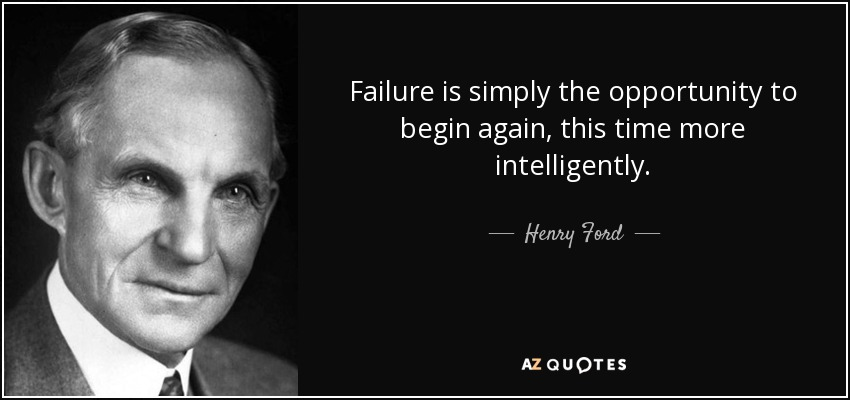
“Failure is the feedback to re-design the strategic focus”
We are shifting failure from emotional defeat to intelligent data.
Failure is not a full stop.
It is a dashboard alert.
It is not punishment.
It is precision correction.
It is not collapse.
It is course recalibration.
The difference between mediocrity and mastery lies here.
1️⃣ What Does This Statement Truly Mean?
Failure is a diagnostic tool. It reveals:
- Wrong assumptions
- Weak positioning
- Poor timing
- Execution gaps
- Misalignment between strategy and reality
In leadership terms:
Failure = Strategy–Reality Gap Indicator
Just as a lighthouse guides ships away from rocks, failure illuminates:
- What is not working
- Why it is not working
- What must evolve
Leaders who treat failure emotionally stagnate.
Leaders who treat failure analytically dominate.
2️⃣ Why This Is the Strongest Weapon to Win All Challenges
Because it transforms:
- Reaction → Reflection
- Reflection → Redesign
- Redesign → Reinvention
- Reinvention → Relevance
- Relevance → Results
Failure is a feedback loop for strategic evolution.
Let us break this down through powerful frameworks.
3️⃣ Failure Through 360° Strategic Frameworks
🔵 1. Blue Ocean Strategy Lens
Blue Ocean Strategy teaches that competition makes oceans red with blood. Innovation creates blue oceans.
When you fail:
- It often means you are competing in a red ocean.
- Your value curve is indistinct.
- You are not differentiated.
Failure asks:
- What can we eliminate?
- What can we reduce?
- What can we raise?
- What can we create?
Failure becomes a signal:
You are fighting in the wrong ocean.
Strategic Redesign:
- Move from competition to creation.
- From price war to value innovation.
- From imitation to imagination.
🟡 2. SWOT Analysis: Turning Weakness into Strategy
Failure exposes:
- Internal Weaknesses
- External Threats
But powerful leaders use failure to:
- Convert weakness into capability
- Convert threat into advantage
SWOT Reframe Model:
| Failure Insight | Strategic Conversion |
|---|---|
| Skill gap | Capability building |
| Market rejection | Repositioning |
| Revenue drop | Business model pivot |
| Team conflict | Culture redesign |
Failure is simply SWOT becoming visible.
🔴 3. OODA Loop – Speed of Strategic Adaptation
John Boyd created the OODA Loop:
- Observe
- Orient
- Decide
- Act
Failure is feedback at the “Observe” stage.
Weak leaders:
Observe → Panic → Blame
Strong leaders:
Observe → Orient (analyze deeply) → Decide → Act → Re-observe
Winning is not about being right initially.
Winning is about adapting faster than competitors.
Failure accelerates OODA cycles.
🟢 4. Design Thinking – Failure as Prototype Intelligence
Design thinking thrives on iteration.
Stages:
- Empathize
- Define
- Ideate
- Prototype
- Test
Failure means:
The prototype delivered learning.
No prototype → No progress.
Failure is not error.
It is experimentation data.
Strategic Lighthouse Insight:
The fastest learners become market leaders.
🟣 5. McKinsey 7-S Alignment Correction
McKinsey & Company proposed 7-S model:
- Strategy
- Structure
- Systems
- Shared Values
- Skills
- Style
- Staff
Failure often indicates misalignment.
Example:
Brilliant strategy + weak systems = collapse.
Failure becomes diagnostic:
Which “S” is misaligned?
Strategic redesign ensures:
All 7 elements move in one direction.
🟠 6. Strategy Map & Execution Oxygen
Strategy Map asks:
- What financial outcomes?
- What customer value?
- What internal processes?
- What learning capabilities?
Failure shows:
The chain is broken somewhere.
Without this analysis:
Leaders repeat the same mistake.
With it:
Failure becomes oxygen for execution.
Because execution improves only when clarity improves.
4️⃣ Why This Approach Is Oxygen to Execution
Execution dies in ego.
Execution breathes in feedback.
When failure is embraced:
- Teams innovate more
- Fear reduces
- Accountability improves
- Learning accelerates
Psychologically:
Failure accepted → Cortisol reduces → Creativity increases.
Strategically:
Failure analyzed → Focus sharpens → Energy aligns.
Like oxygen in fire,
Feedback fuels action.
Without it:
Execution suffocates.
5️⃣ Applying 5W1H to Failure
Whenever failure occurs, ask:
- What exactly failed?
- Why did it fail?
- Who was responsible for which part?
- Where did breakdown occur?
- When did early warning signs appear?
- How can we redesign systemically?
This converts emotion into intelligence.
6️⃣ AIDA Concept – Strategic Communication After Failure
American Marketing Association popularized AIDA:
- Attention
- Interest
- Desire
- Action
If product failed:
Where did AIDA break?
- No attention? Branding issue.
- No interest? Value mismatch.
- No desire? Emotional disconnect.
- No action? Call-to-action flaw.
Failure becomes marketing intelligence.
7️⃣ PPF Analysis – Strategic Reallocation
Production Possibility Frontier teaches trade-offs.
Failure often means:
Resources were inefficiently allocated.
Strategic redesign asks:
- Are we over-investing in low return areas?
- Under-investing in growth levers?
Failure shows the boundary.
8️⃣ PLC Analysis – Life Cycle Reality
Product Life Cycle explains:
- Introduction
- Growth
- Maturity
- Decline
If sales drop:
Maybe the product is in decline stage.
Failure is not incompetence.
It may be lifecycle reality.
Strategic move:
Innovation or diversification.
9️⃣ Kaizen – Micro Failure as Daily Refinement
Kaizen means continuous improvement.
Small daily corrections prevent large disasters.
Failure mastered early:
Becomes micro-adjustment.
Ignored:
Becomes crisis.
🔟 Strategic Mindset Mastery Model
To master this philosophy, develop:
1. Emotional Neutrality
Detach ego from outcome.
2. Analytical Depth
Use frameworks, not assumptions.
3. Iterative Courage
Act again after redesign.
4. Adaptive Intelligence
Shift strategy without losing vision.
5. Purpose Anchoring
Never change purpose.
Change path.
11️⃣ Every Challenge as Opportunity – The Reframing Algorithm
Challenge → Data
Data → Diagnosis
Diagnosis → Design
Design → Deployment
Deployment → Dominance
This is lighthouse thinking.
Storms don’t stop ships.
Poor navigation does.
Failure sharpens navigation.
12️⃣ Metaphors for Strategic Absorption
Failure is:
- A mirror that shows blind spots
- A GPS recalculating route
- A gym for resilience
- A compass correction
- A lighthouse in fog
- A forge that tempers steel
Gold is purified by fire.
Strategy is purified by failure.
13️⃣ Integrated 360° Action Plan
Whenever failure strikes, follow this 8-Step Strategic Reset:
- Pause (No emotional reaction)
- Capture data objectively
- Conduct SWOT + 5W1H
- Map to 7-S alignment
- Run OODA loop
- Reposition using Blue Ocean thinking
- Implement Kaizen micro-actions
- Review through Strategy Map metrics
Repeat.
Consistency in this process creates compounding advantage.
14️⃣ Why Leaders Who Master This Win Consistently
Because:
They do not waste pain.
They convert it into power.
They do not hide mistakes.
They harvest insights.
They do not fear uncertainty.
They design within it.
They do not chase success.
They engineer it.
15️⃣ The Deep Strategic Connection: Attitude + Action
Two attitudes define destiny:
- Defensive Ego Attitude
- Adaptive Learning Attitude
First leads to stagnation.
Second leads to evolution.
Action without feedback is blind.
Feedback without action is useless.
Together:
They create unstoppable execution.
16️⃣ The Lighthouse Leadership Model
Vision = Lighthouse
Failure = Fog Indicator
Feedback = Radar
Strategy = Navigation Map
Action = Engine
Adaptability = Steering Wheel
A lighthouse does not move.
But it guides movement.
Purpose stays constant.
Strategy evolves.
17️⃣ Final Strategic Insight for You
In ecosystem building — coaching, content, leadership frameworks — this philosophy is the backbone.
Every product launch.
Every workshop.
Every content experiment.
Should follow:
Test → Learn → Redesign → Scale.
Not:
Launch → Defend → Justify → Repeat mistake.
When failure becomes data,
Growth becomes inevitable.
Conclusion
Failure is not opposite of success.
It is the architect of it.
It is the most powerful leadership weapon because:
- It sharpens clarity
- It accelerates adaptation
- It builds resilience
- It drives innovation
- It prevents complacency
Leaders who master failure as feedback:
Turn storms into strategy.
Turn challenges into catalysts.
Turn setbacks into stepping stones.
And eventually—
They don’t avoid failure.
They design with it.
That is strategic supremacy.

ANUPAM SHARMA
PSYCHOTECH™ STRATEGIST
COACH I MENTOR I TRAINER
COUNSELLOR I CONSULTANT