

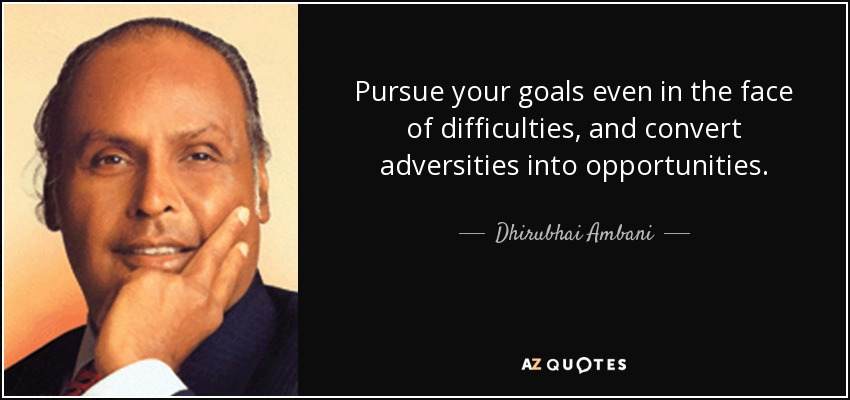
Consistency During Challenges is a Booster for Productivity
The Strategic Psychology of Resilient, Agile, and Psychotech Leadership
In the journey of human excellence, productivity is often misunderstood as speed, intensity, or hustle. But history, psychology, spirituality, and strategic leadership consistently point toward a deeper truth:
Productivity is not the result of intensity — it is the result of consistency under pressure.
Anyone can perform when conditions are favorable. True leaders, creators, and changemakers perform when circumstances are uncertain, chaotic, or even hostile.
Consistency during challenges is not merely discipline — it is a strategic weapon. It is the invisible engine that converts adversity into acceleration.
Let us decode this principle deeply through the lenses of resilience, bounce-back psychology, strategic agility, and psychotech leadership instinct.
1. The Psychological Foundation: Why Challenges Break Most People
When challenges arise, the human nervous system enters survival mode. The brain prioritizes safety over growth. Fear replaces clarity. Reaction replaces strategy.
Most individuals:
- Reduce effort.
- Seek comfort.
- Delay action.
- Blame external factors.
However, high-performing leaders do something radically different.
They maintain rhythm.
They protect their daily execution structure.
They adjust strategy — but not commitment.
This distinction changes everything.
Consistency during adversity signals to the subconscious mind:
“I am in control. The situation is unstable — but I am stable.”
That psychological signal stabilizes energy. And stabilized energy fuels productivity.
2. Resilience: The Spiritual and Strategic Core
Ancient wisdom repeatedly emphasizes equanimity under pressure.
In the Bhagavad Gita, Lord Krishna advises:
Samatvam Yoga Uchyate — Equanimity is Yoga.
Resilience is not emotional suppression. It is emotional mastery.
It means:
- Not over-celebrating success.
- Not collapsing in failure.
- Staying anchored in duty (Karma).
- Remaining steady in purpose (Dharma).
When a leader operates from resilience:
- Decisions are not impulsive.
- Productivity is not mood-dependent.
- Actions are value-driven, not emotion-driven.
This creates a compounding effect. Small, consistent actions during adversity become massive breakthroughs later.
3. Bounce Back Power: The Science of Recovery Velocity
Resilience is strength. Bounce back is speed.
In strategic leadership, the most important metric is not failure rate — it is recovery rate.
High performers fall.
Elite performers recover fast.
The productivity gap between average and exceptional leaders lies in recovery velocity.
How is this cultivated?
1. Emotional Reset Protocol
Instead of dwelling, analyze quickly:
- What failed?
- What is controllable?
- What needs redesign?
2. Micro-Consistency
When overwhelmed, reduce the task — do not eliminate it.
Instead of:
- 2 hours workout → Do 20 minutes.
- 1000-word writing → Write 200 words.
- Big sales target → Make 5 calls.
The brain learns:
“We do not stop. We adapt.”
This is the secret to sustainable productivity.
4. Strategic Agility: Consistency Does Not Mean Rigidity
Many misunderstand consistency as stubborn repetition.
True consistency is commitment to purpose — with flexibility in approach.
Agility means:
- Change the method.
- Improve the model.
- Upgrade the system.
- But never abandon the mission.
Consider how Steve Jobs rebuilt Apple Inc..
He did not stubbornly repeat past mistakes. He eliminated products, simplified focus, redesigned structure, and created clarity.
Consistency in vision.
Agility in execution.
This dual-force generates breakthrough productivity during crisis.
5. Psychotech Leadership: The AI-Era Evolution of Consistency
We now operate in a hybrid human-AI ecosystem. Productivity is no longer about manual effort — it is about cognitive design.
Psychotech Leadership integrates:
- Psychological mastery.
- Technological leverage.
- Strategic clarity.
- Energy alignment.
In this era:
- Distractions are infinite.
- Information overload is constant.
- Emotional instability spreads rapidly.
Therefore, consistency must be system-driven, not mood-driven.
A Psychotech Leader builds:
1. Digital Discipline Systems
- Structured calendar blocks.
- Automated workflows.
- AI-supported research & analytics.
- Performance tracking dashboards.
2. Mental Reprogramming Framework
- Daily intention setting.
- Controlled information intake.
- Reflection journaling.
- Neuro-emotional resets.
3. Strategic Review Loop
- Weekly correction.
- Monthly redesign.
- Quarterly innovation.
Technology amplifies productivity only when the human operator remains consistent under stress.
Without resilience, AI becomes distraction.
With resilience, AI becomes acceleration.
6. Why Consistency Multiplies Productivity During Challenges
Challenges create resistance.
Resistance builds focus.
Focused effort creates depth.
Depth creates mastery.
Mastery produces exponential output.
During stable times, growth is linear.
During adversity, growth can become exponential — if consistency is maintained.
Here’s why:
1. Fewer Competitors Stay Active
Most people quit during difficult phases. Those who continue gain space.
2. Clarity Increases
Challenges remove illusions and force strategic prioritization.
3. Internal Strength Expands
Mental stamina compounds faster under resistance.
4. Identity Transforms
Repeated disciplined action during difficulty reshapes self-image:
“I am someone who performs under pressure.”
This identity shift is the ultimate productivity booster.
7. The Leadership Blueprint for Consistency Under Fire
Let us design a practical execution roadmap.
Phase 1: Stabilize Internal State
- Control breathing.
- Reduce reactive communication.
- Maintain sleep discipline.
- Continue morning rituals.
No matter what happens externally — protect the first hour of your day.
Phase 2: Shrink But Sustain Action
Reduce scale, not frequency.
Daily action must continue — even if small.
Phase 3: Strategic Audit
Ask:
- What assumptions failed?
- Which system broke?
- What can be simplified?
- What must be eliminated?
Phase 4: Agile Recalibration
- Pivot.
- Redesign.
- Reallocate energy.
- Automate where possible.
Phase 5: Reflect & Reinforce Identity
Every night:
- What challenge did I face?
- How did I respond?
- What did I learn?
- How did I grow?
This reflection loop transforms stress into strategic intelligence.
8. Leadership Focus: Where Attention Must Be Centered
During challenges, leaders must focus on:
- Energy management over time management.
- Clarity over complexity.
- Action over analysis paralysis.
- Purpose over popularity.
- Long-term compounding over short-term comfort.
When attention is scattered, productivity collapses.
When attention is disciplined, adversity becomes training ground.
9. The Spiritual-Strategic Synthesis
Ancient philosophy and modern leadership converge on one principle:
Do your duty without attachment to immediate results.
Consistency builds character.
Character builds credibility.
Credibility builds influence.
Influence builds impact.
Productivity is not just output — it is aligned action toward meaningful goals.
A resilient, agile, psychotech leader understands:
- Challenges are inevitable.
- Emotional turbulence is temporary.
- Systems create stability.
- Identity drives endurance.
- Consistency wins.
10. The Lighthouse Principle
A lighthouse does not stop shining during storms.
In fact, storms are when its light matters most.
Similarly:
Your consistency during chaos becomes your leadership signal.
People observe:
- Do you panic?
- Do you disappear?
- Do you blame?
- Or do you adapt and continue?
True leadership is visible under pressure.
11. From Survival to Strategic Dominance
Let us elevate the perspective further.
Consistency during challenge does not merely protect productivity — it increases strategic dominance.
Why?
Because:
- Emotional control sharpens decision quality.
- Continuous action preserves momentum.
- Momentum builds confidence.
- Confidence fuels bold innovation.
Eventually, what began as survival transforms into competitive advantage.
12. The Deep Habit Installation Framework
To embed this as a lifelong trait:
1. Pre-Commitment Ritual
Before starting any major mission, declare:
“No matter what happens, I will maintain daily minimum action.”
2. Non-Negotiable Rule
Define 3 actions that must happen daily — regardless of situation.
3. Bounce Back Window
Never allow emotional recovery to exceed 24 hours.
4. Quarterly Resilience Challenge
Intentionally take on difficult projects to strengthen mental muscles.
5. Psychotech Integration
Use AI for:
- Performance tracking.
- Habit monitoring.
- Strategic forecasting.
- Idea generation.
Let technology support your consistency.
Final Reflection: The Real Productivity Secret
Productivity is not about doing more.
It is about stopping less.
Consistency during challenges:
- Builds mental immunity.
- Creates strategic clarity.
- Enhances emotional intelligence.
- Accelerates adaptive capacity.
- Strengthens identity.
- Multiplies long-term results.
In the AI era, where speed and disruption are constant, the rarest and most valuable trait is not intelligence — it is stable, adaptive consistency.
When resilience becomes instinct,
When agility becomes habit,
When technology becomes leverage,
When purpose becomes anchor —
Productivity stops being forced.
It becomes inevitable.
And that is the mark of a true Psychotech Strategic Leader.

ANUPAM SHARMA
PSYCHOTECH™ STRATEGIST
COACH I MENTOR I TRAINER
COUNSELLOR I CONSULTANT