

Communication Is the Best Exchange of Imagination –It becomes 100% Coding & Decoding in sync…
Why the Future of Influence, Leadership, and Human Growth Belongs to Those Who Can Transfer Inner Worlds into Shared Reality
Communication is not merely the transmission of information.
It is the exchange of imagination.
Every powerful conversation, movement, innovation, relationship, leadership act, or social transformation begins not with words—but with an inner image. Communication is the bridge that allows one human being to transfer an invisible inner world into another human being’s consciousness.
When communication works at its highest level, it does not inform—it transforms.
It does not convince—it awakens.
It does not control—it connects.
In an age overwhelmed by content, noise, and artificial amplification, the rarest skill is not speaking loudly, frequently, or fluently—but communicating imaginatively.
Because imagination is the birthplace of meaning.
Imagination: The First Language of Humanity
Before humans learned to write, they imagined.
Before they spoke, they sensed.
Before they built civilizations, they envisioned them.
Imagination is the original operating system of the human mind.
Every thought begins as an image.
Every emotion begins as a feeling-story.
Every belief begins as an internal narrative.
Communication, therefore, is not the exchange of words—it is the exchange of internal cinema.
When you speak, you are projecting mental images.
When someone listens, they reconstruct those images within their own mind.
The quality of communication depends on how clearly, vividly, and meaningfully those inner images are transferred.
This is why:
- A single sentence can inspire a revolution
- A story can change a life
- A speech can ignite courage
- A conversation can heal trauma
Because imagination bypasses resistance and speaks directly to the human core.
Why Information Alone No Longer Works
We live in the most informed generation in human history—and paradoxically, one of the most confused.
Why?
Because information without imagination is sterile.
Facts do not move people.
Data does not inspire action.
Logic alone does not create belief.
People act not on what they know—but on what they see, feel, and emotionally understand.
Modern communication fails when it:
- Overloads the mind
- Ignores emotions
- Neglects context
- Treats humans like machines
True communication succeeds when it:
- Activates imagination
- Aligns emotion with meaning
- Creates inner clarity
- Builds shared understanding
This is why the world remembers stories, not statistics.
This is why leaders are followed for vision, not vocabulary.
This is why movements are built on symbols, not spreadsheets.
Communication as a Shared Reality-Building Process
At its highest level, communication is co-creation.
Two minds meet.
Two realities interact.
A new shared meaning is formed.
This is why communication is never neutral.
It either expands or contracts human possibility.
When communication is poor:
- Misunderstandings grow
- Conflicts escalate
- Relationships weaken
- Organizations collapse
When communication is imaginative:
- Trust deepens
- Alignment increases
- Creativity multiplies
- Leadership emerges naturally
Great communicators don’t impose ideas.
They invite people into a shared vision.
They don’t argue.
They architect understanding.
The Leader as an Imagination Carrier
Leadership is fundamentally a communication function.
A leader’s primary role is not decision-making—it is meaning-making.
People don’t follow leaders because of authority.
They follow because the leader helps them see a better future.
The most influential leaders in history—across business, politics, spirituality, and social movements—shared one common trait:
They could translate imagination into collective belief.
They spoke in images.
They framed challenges as journeys.
They transformed fear into purpose.
A leader without imaginative communication becomes a manager.
A leader with imaginative communication becomes a movement-builder.
The Psychology Behind Imaginative Communication
Neuroscience confirms what ancient wisdom always knew:
The human brain is story-driven, not logic-driven.
- The brain remembers images faster than words
- Emotions anchor memory
- Metaphors activate multiple neural pathways
- Stories create empathy and trust
When communication engages imagination:
- The brain releases dopamine (attention)
- Oxytocin (trust)
- And serotonin (meaning)
This is why imaginative communication feels alive.
It is not heard—it is experienced.
From Transaction to Transformation
Most communication today is transactional:
- Sell this
- Convince them
- Win the argument
- Close the deal
Transformational communication asks different questions:
- What inner shift is needed?
- What fear must dissolve?
- What vision must become visible?
- What identity must evolve?
Transactional communication ends with agreement.
Transformational communication ends with changed perception.
And perception is destiny.
Imagination as the Ethical Core of Communication
With great imaginative power comes responsibility.
Because communication can:
- Heal or manipulate
- Liberate or control
- Elevate or deceive
True communicators use imagination ethically—to empower, not exploit.
They respect the listener’s autonomy.
They invite reflection, not blind obedience.
They seek clarity, not confusion.
The purpose of communication is not domination—it is mutual elevation.
The Future Belongs to Imaginative Communicators
As AI automates information delivery, human value will shift toward:
- Meaning creation
- Emotional intelligence
- Vision articulation
- Conscious communication
Machines will process data.
Humans must communicate wisdom.
The future communicator will not be:
- The loudest speaker
- The fastest talker
- The most frequent poster
But the one who can:
- See deeply
- Speak clearly
- Imagine boldly
- Connect authentically
Practical Principles for Imaginative Communication
To communicate at this higher level, cultivate these principles:
1. Think in Images Before Words
Ask: What do I want the listener to see?
2. Speak to Emotion Before Logic
Emotion opens the door; logic walks through it.
3. Use Metaphors as Bridges
Metaphors compress complexity into clarity.
4. Create Inner Participation
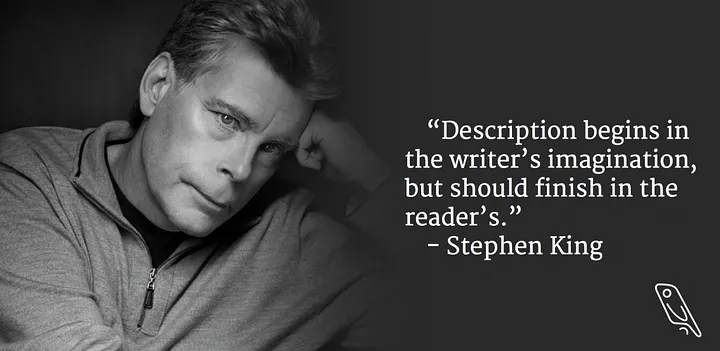
Let listeners complete the picture themselves.
5. Anchor Words in Purpose
Meaning amplifies memorability.
Communication as Conscious Exchange
At its essence, communication is a sacred human act.
It is the moment where inner worlds touch.
Where solitude meets connection.
Where imagination becomes shared reality.
When done consciously, communication:
- Builds leaders
- Shapes cultures
- Heals divisions
- Awakens potential
And this is why the statement holds profound truth:
Communication is the best exchange of imagination—because imagination is the source of all human progress.
Those who learn to communicate imaginatively do not just speak well.
They shape minds, influence futures, and elevate humanity.

Anupam Sharma
Psychotech Strategist
Coach I Mentor I Trainer
Councellor I Consultant