
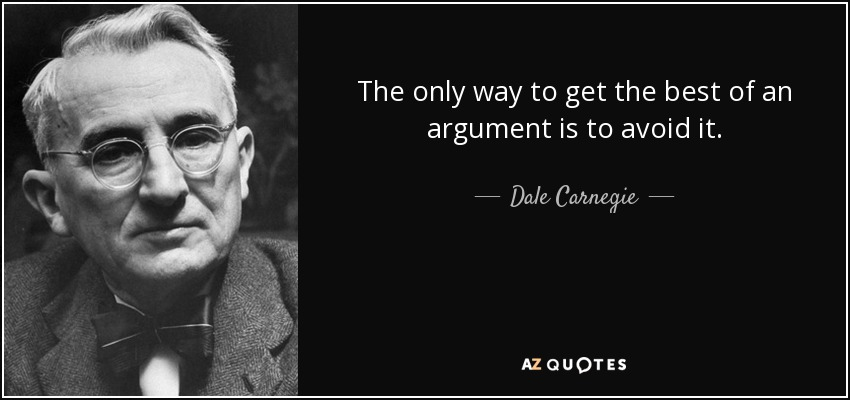
“AGREEMENT is always better than ARGUMENT” – Focus on OUTCOME !
A Strategic Leadership Lighthouse for Purpose, Power & Peak Execution
1. The Strategic Meaning Behind the Statement
At a surface level, this statement sounds like a moral or interpersonal advice. At a strategic leadership level, it is far deeper:
Agreement is a force-multiplier. Argument is an energy-drainer.
- Argument seeks to win a position
- Agreement seeks to advance a purpose
Leaders are not appointed to prove they are right; they are entrusted to make things work.
From a strategic lens, argument consumes cognitive bandwidth, emotional capital, time, and trust, whereas agreement aligns energy, direction, and execution.
Think of it like this metaphor:
- Argument is friction in the engine
- Agreement is lubrication in the system
Both friction and lubrication exist—but only one enables sustained movement.
2. Why AGREEMENT Is the Strongest Weapon to Win All Challenges
Argument = Ego-Centered Intelligence
Agreement = Purpose-Centered Intelligence
Arguments arise from:
- Identity attachment
- Need for validation
- Fear of losing control
- Scarcity mindset
Agreements arise from:
- Shared outcomes
- Strategic empathy
- Systems thinking
- Abundance & long-term orientation
A leader who argues may win a debate, but loses speed, goodwill, and execution power.
A leader who builds agreement:
- Wins time
- Wins trust
- Wins voluntary commitment
- Wins scalable execution
Execution does not follow authority. It follows alignment.
3. Agreement as OXYGEN to Execution & Action
Execution dies in three conditions:
- Confusion
- Resistance
- Misalignment
Agreement neutralizes all three.
Why Agreement is Oxygen:
- It reduces internal resistance
- It simplifies decision-making
- It accelerates action
- It multiplies ownership
Metaphor:
You can shout commands at a team underwater, but without oxygen, no one can move.
Agreement oxygenates the system.
4. The Psychological & Strategic Failure of ARGUMENT
From neuroscience and leadership psychology:
- Arguments activate the amygdala (threat center)
- Agreements activate the prefrontal cortex (planning, reasoning, creativity)
So when leaders argue:
- People defend
- Creativity shuts down
- Compliance replaces commitment
When leaders create agreement:
- Minds open
- Innovation flows
- Discretionary effort increases
5. AGREEMENT AS A STRATEGIC FRAMEWORK (360°)
Let us decode this through powerful leadership & strategy tools.
A. BLUE OCEAN STRATEGY → Agreement Creates Uncontested Space
Argument lives in Red Oceans:
- Who is right?
- Who is superior?
- Who wins?
Agreement creates Blue Oceans:
- What outcome do we both want?
- What new value can be created?
- What problem are we jointly solving?
🔹 Strategic Shift:
From “Who is right?” → “What works best?”
Leader’s Lighthouse Question:
- What agreement creates a new value curve instead of fighting over old ones?
B. SWOT ANALYSIS → Agreement as Strength & Opportunity
Internal SWOT:
- Strength: High alignment, trust, speed
- Weakness: Ego-driven conflict reduces capacity
External SWOT:
- Opportunity: Stakeholder collaboration, alliances
- Threat: Fragmented execution due to internal friction
Strategic Insight:
Organizations don’t fail due to lack of intelligence—
They fail due to lack of agreement.
C. AIDA MODEL → Agreement Drives Influence & Action
| Stage | Argument Does | Agreement Does |
|---|---|---|
| Attention | Shocks | Engages |
| Interest | Provokes | Connects |
| Desire | Polarizes | Aligns |
| Action | Forces | Mobilizes |
Agreement is the bridge from Desire to Action.
D. DESIGN THINKING → Agreement Before Solution
Design Thinking starts with Empathy, not assertion.
Key Principle:
You cannot solve a problem you are arguing about.
Agreement answers:
- What is the real pain?
- Who is affected?
- What does success look like for all?
Agreement converts problem-solving into co-creation.
E. PPF ANALYSIS (Purpose–Process–Future)
Argument focuses on:
- Process disputes
- Control battles
Agreement aligns:
- Purpose: Why we exist
- Process: How we move together
- Future: What we are building
Leader’s Discipline:
Anchor agreement at PURPOSE, not PROCESS.
F. 5W + 1H → Structured Agreement
Before conflict escalates, a leader asks:
- Why are we doing this?
- What outcome matters?
- Who needs alignment?
- When is speed more important than perfection?
- Where is flexibility possible?
- How do we win together?
Argument skips these questions.
Agreement emerges from them.
G. PLC (Product / Project Life Cycle)
At different stages, agreement plays different roles:
| Stage | Role of Agreement |
|---|---|
| Introduction | Buy-in & vision |
| Growth | Alignment & speed |
| Maturity | Collaboration & optimization |
| Decline | Reinvention through consensus |
Without agreement, projects die prematurely.
H. STRATEGY MAP → Agreement Aligns All Perspectives
Balanced Scorecard View:
- Financial: Reduced friction = lower cost
- Customer: Consistent experience
- Internal Process: Faster execution
- Learning & Growth: Psychological safety
Agreement is the invisible connector of all four.
I. KAIZEN → Continuous Agreement, Not Occasional Consensus
Kaizen thrives on:
- Small improvements
- Daily alignment
- Collective intelligence
Argument disrupts Kaizen.
Agreement sustains Kaizen.
Continuous improvement is impossible in a culture of constant argument.
J. McKinsey 7-S → Agreement as the Hidden “8th S”
The classic 7-S:
- Strategy
- Structure
- Systems
- Skills
- Staff
- Style
- Shared Values
Agreement is the invisible glue binding all 7.
Without agreement:
- Strategy stays on slides
- Systems are bypassed
- Skills are underutilized
K. OODA LOOP → Agreement Accelerates Decision Cycles
Observe → Orient → Decide → Act
Argument slows:
- Orientation
- Decision
Agreement accelerates:
- Shared orientation
- Faster action
Strategic Insight:
Speed is a function of agreement, not authority.
6. THE STRATEGIC MINDSET TO MASTER AGREEMENT
1. Outcome > Opinion
Train yourself to ask:
- What outcome are we optimizing for?
2. Purpose > Position
Detach identity from viewpoint.
3. System > Self
See the whole, not the ego.
4. Long-Term > Short-Term Victory
Arguments give short wins, long losses.
5. Energy Economics
Protect emotional & cognitive energy.
7. PRACTICAL ACTION PLAN: MASTERING THE ART & SCIENCE OF AGREEMENT
DAILY DISCIPLINES
- Replace “but” with “and”
- Validate before proposing
- Ask before asserting
WEEKLY STRATEGIC PRACTICES
- Agreement audits in meetings
- Alignment checkpoints on goals
- Conflict reframing sessions
DECISION FILTER
Before speaking:
- Does this move us forward?
- Does this build alignment?
- Does this improve execution?
If not—pause.
8. WHEN EVERY CHALLENGE BECOMES AN OPPORTUNITY
Agreement reframes challenges as:
- Joint problems
- Shared missions
- Collective intelligence puzzles
Metaphor:
Argument is two people pulling opposite ends of a rope.
Agreement is both pulling the cart forward.
9. FINAL LEADERSHIP TRUTH (LIGHTHOUSE STATEMENT)
Argument proves intelligence.
Agreement proves leadership.
The greatest leaders in history didn’t win by argument—
They won by alignment, consent, meaning, and shared purpose.
If execution is the battlefield,
agreement is the supply line.
No supply line → no victory.

ANUPAM SHARMA
PSYCHOTECH STRATEGIST
COACH I MENTOR I TRAINER
COUNCELLOR I CONSULTANT