
“The Greatest Value Is the Ability to Make a Positive Difference in People’s Lives”
A Psychotech Strategist’s Blueprint for Authentic Leadership, Trust, and a Thriving Human Ecosystem
Introduction: Why This Statement Is Not a Quote, But a Civilization Principle
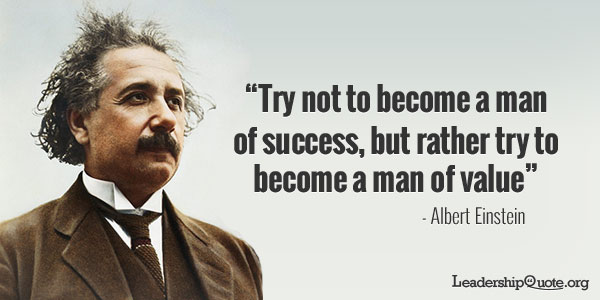
“The greatest value is if you can make a positive difference in people’s life.”
This statement is not motivational rhetoric.
It is not emotional idealism.
It is not philanthropy alone.
It is a strategic law of human existence, leadership, and long-term influence.
Across history, leaders remembered with respect, organizations that outlived generations, movements that transformed societies, and individuals who built unshakeable trust had one thing in common:
👉 Their success was a by-product of the value they created in others’ lives.
From a psychotech strategist’s perspective, this statement represents the highest integration of psychology (human behavior, trust, motivation) and technology (systems, processes, scalability, execution)—applied to leadership and life.
This blog answers critical questions:
- Is this the most meaningful contribution a human can make?
- Does it imply that all efforts must serve people’s interest and betterment?
- Why is this approach the most powerful way to lead masses and societies?
- Can authentic leadership be sustained long-term with respect and recognition?
- Does it require deep self-knowledge and understanding of others?
- Is this the strongest foundation for networks, ecosystems, trust, and even blind faith?
- How can one practically practice this philosophy using frameworks and tools?
1. The Deep Meaning: Value Is Not What You Gain, Value Is What You Leave Behind
From a strategic lens, value is not measured by:
- Titles
- Net worth
- Power
- Followers
- Visibility
Those are indicators, not outcomes.
True value = Net Positive Impact on Human Life
If after your actions:
- People become more capable
- More confident
- More aware
- More empowered
- More self-reliant
- More hopeful
- More conscious
👉 You have created value.
This aligns with:
- Indian wisdom: “Paropakāraḥ puṇyāya” (Service to others is the highest virtue)
- Modern leadership science: Servant leadership, stakeholder capitalism
- Psychology: Humans are wired to follow those who enhance survival, meaning, and growth
Meaningful contribution, therefore, is not activity—it is impact.
2. Does This Mean All Efforts Must Be in People’s Interest & Betterment? Yes—But Strategically
A common misunderstanding is that serving people means:
- Pleasing everyone
- Avoiding hard decisions
- Sacrificing standards
❌ That is not value creation.
That is weak leadership.
Value Creation vs People-Pleasing
| People-Pleasing | Value Creation |
|---|---|
| Short-term comfort | Long-term growth |
| Emotional appeasement | Capability building |
| Dependency | Self-reliance |
| Popularity | Respect |
| Noise | Outcomes |
A surgeon causes pain to heal.
A coach challenges comfort to build competence.
A leader may disrupt emotions to upgrade systems.
👉 True people-centric leadership focuses on outcomes, not applause.
This aligns with:
- 80/20 Principle: Focus on interventions that create maximum human upliftment
- PPF (Purpose–Process–People Fit): People grow when aligned with meaningful processes
- PDCA Cycle: Continuous improvement for people, not control over them
3. Why This Approach Is the Most Powerful Way to Lead the Masses & Society
From a psychotech strategy lens, mass leadership operates on three invisible forces:
A. Psychological Gravity (Why People Are Drawn to You)
People follow those who:
- Reduce uncertainty
- Increase clarity
- Enhance competence
- Protect dignity
When your actions consistently improve lives, trust compounds automatically.
B. Social Proof & Ripple Effect
Positive impact spreads faster than authority.
One empowered individual influences:
- Families
- Teams
- Communities
- Culture
This creates organic leadership, not forced control.
C. Systems Over Individuals
Leaders who focus on people don’t manage individuals—they design ecosystems:
- Learning systems
- Feedback systems
- Opportunity systems
- Safety & trust systems
This is psychotech leadership—human-centered systems powered by strategic intelligence.
4. Can Authentic Leadership Be Sustained Long-Term With Respect & Recognition?
Yes—and this is the only way it can be sustained.
Why Most Leaders Fail Long-Term
- Ego replaces purpose
- Control replaces trust
- Image replaces integrity
- Speed replaces wisdom
Eventually:
- People disengage
- Trust erodes
- Authority weakens
- Influence collapses
Why Value-Based Leadership Endures
Authentic leadership sustains because:
- Respect is earned, not demanded
- Recognition is given by society, not sought
- Authority emerges from credibility, not position
This mirrors Chanakya Neeti:
“A king is respected not by fear, but by welfare of his people.”
5. Does This Mean Knowing Thyself & Others Well? Absolutely—This Is the Core
You cannot improve lives without deep understanding.
Self-Knowledge (Inner Leadership)
Knowing:
- Your biases
- Your fears
- Your motivations
- Your blind spots
- Your values
Without self-awareness:
- Power corrupts
- Intent distorts
- Ego hijacks leadership
Understanding Others (Social Intelligence)
You must understand:
- Human needs (security, growth, belonging, meaning)
- Emotional triggers
- Competence gaps
- Aspirations & fears
This is where Psychology + Strategy = Influence without force.
Frameworks used:
- NEED Analysis
- Competence–Confidence Matrix
- SWOT (People, Team, Culture)
- Behavioral Economics
- Social Engineering (ethical influence)
6. Why This Is the Best Way to Build Strong Networks & Positive Ecosystems
Networks don’t survive on transactions.
They survive on trust memory.
Trust Memory Principle
People remember:
- Who helped them grow
- Who stood by them in uncertainty
- Who created opportunities
- Who acted without hidden agendas
Such leaders become:
- Connectors
- Anchors
- Multipliers
A positive ecosystem emerges where:
- Collaboration replaces competition
- Growth replaces insecurity
- Contribution replaces extraction
7. Does This Approach Create Trust, Support & Even Blind Faith? Yes—But Earned Blind Faith
Blind faith is dangerous when unearned.
But it becomes powerful when trust is proven repeatedly.
Blind faith emerges when:
- Intent is consistently benevolent
- Actions match words
- Decisions protect collective interest
- Leaders absorb pain before passing it on
This is why people:
- Stand with such leaders during crises
- Defend them instinctively
- Support them beyond logic
This is not manipulation—it is earned emotional capital.
8. Psychotech Strategist’s Practical Framework to Practice This Philosophy
The POSITIVE Impact Framework
P – Purpose Clarity
Are your actions aligned with human betterment?
O – Outcome Orientation
What tangible improvement occurs in people’s lives?
S – Systems Thinking
Are you building repeatable value systems?
I – Influence Ethics
Are you empowering, not exploiting?
T – Trust Compounding
Does trust increase after every interaction?
I – Introspection Loop
Are you reviewing intent, impact, and integrity?
V – Value Multiplication
Does your effort scale beyond you?
E – Ecosystem Growth
Are people better together because of you?
9. Tools & Techniques to Practice Daily
- Daily Impact Audit: Who benefited today because of me?
- Weekly Feedback Loop: What growth did I enable?
- Monthly Ecosystem Review: Who became stronger, independent, or capable?
- Decision Filter: Does this decision uplift or exploit?
- Leadership Journal: Track trust moments, not achievements
Conclusion: This Is Not Just Leadership—This Is Legacy
The greatest civilizations, leaders, and movements were not built on dominance—but on positive difference.
When you:
- Improve lives
- Expand consciousness
- Build capacity
- Create dignity
- Enable growth
👉 Success follows you automatically.
This philosophy is:
- Strategically superior
- Psychologically sustainable
- Socially powerful
- Spiritually aligned
- Economically scalable
In the end, your true worth is not what you accumulate—but what you awaken in others.

Anupam Sharma
Psychotech Strategist
Coach I Mentor I Trainer
Councelor I Consultant