

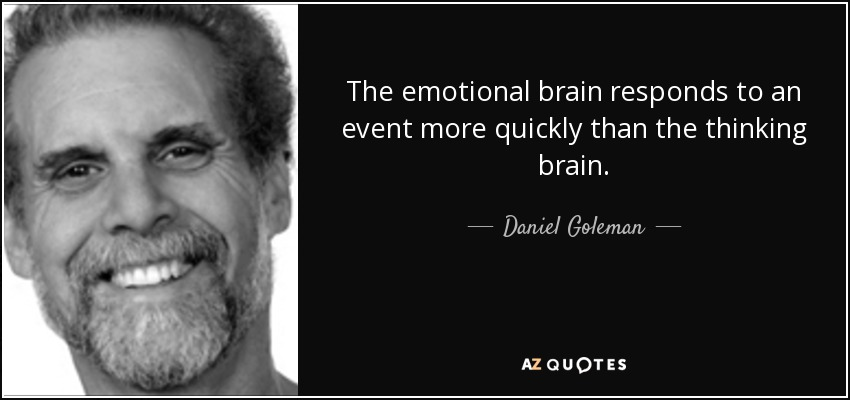
EMOTIONAL INTELLIGENCE is the Vehicle for Human Existence & Growth
Why Mastering Emotions is No Longer Optional—but Existential
In a world dominated by speed, complexity, volatility, and constant psychological pressure, knowledge alone no longer guarantees success, fulfillment, or even survival. Skills become obsolete. Technology evolves faster than human adaptability. Titles lose relevance. Authority is questioned. Certainty collapses.
Yet one capability continues to differentiate thriving humans from surviving ones:
Emotional Intelligence (EI)
Emotional Intelligence is not a soft skill.
It is not a personality trait.
It is not a luxury for leaders.
Emotional Intelligence is the vehicle through which human existence moves—and human growth accelerates.
Without it, intelligence becomes arrogance, ambition becomes anxiety, power becomes toxicity, and success becomes emptiness.
With it, ordinary humans achieve extraordinary impact, leaders inspire voluntary followership, relationships become regenerative, and life transforms from mere survival to meaningful evolution.
Understanding the Core Truth
IQ may help you get a seat at the table.
Emotional Intelligence decides whether you stay, grow, influence, and lead.
Emotional Intelligence governs:
- How you perceive reality
- How you respond to pressure
- How you manage yourself
- How you influence others
- How you recover from failure
- How you sustain growth over time
In essence, EI is the operating system of human behavior.
Why Emotional Intelligence is the Vehicle of Human Existence
Human life is not driven by logic alone. It is driven by:
- Emotions
- Interpretations
- Meaning
- Beliefs
- Identity
- Perception
Every decision—career, relationship, leadership, money, health—is emotionally filtered before it is rationally justified.
Consider this:
- Fear blocks action more than lack of knowledge
- Ego destroys opportunities more than lack of skill
- Anger ruins relationships faster than disagreement
- Anxiety paralyzes execution more than poor planning
This is why highly intelligent people still self-sabotage, and average people with emotional mastery rise to the top.
Emotional Intelligence allows humans to:
- Exist consciously, not reactively
- Choose response over impulse
- Create meaning over misery
- Sustain growth without burnout
Emotional Intelligence as a Growth Multiplier
Growth is not linear. It is emotional.
Every growth phase includes:
- Uncertainty
- Resistance
- Fear of failure
- Identity conflict
- Social pressure
- Internal doubt
Without EI, growth feels threatening.
With EI, growth feels challenging yet empowering.
EI enables growth by:
- Turning stress into signal
- Converting feedback into fuel
- Transforming failure into framework
- Channeling emotion into execution
That is why emotionally intelligent individuals:
- Learn faster
- Recover quicker
- Adapt better
- Lead stronger
- Live fuller
The 5 Core Pillars of Emotional Intelligence
1. Self-Awareness – The Root of All Mastery
You cannot manage what you do not understand.
Self-awareness is the ability to:
- Recognize emotions as they arise
- Understand emotional triggers
- Observe patterns without judgment
This is where most humans fail.
They say:
“That’s just how I am.”
Emotionally intelligent humans say:
“That’s how I’m reacting—and I can change it.”
Self-awareness converts unconscious reactions into conscious choices.
2. Self-Regulation – Emotional Discipline
Emotionally intelligent people do not suppress emotions—they direct them.
Self-regulation means:
- Pausing before reacting
- Choosing response over impulse
- Maintaining composure under pressure
In leadership and life:
- Anger destroys authority
- Anxiety erodes clarity
- Ego kills collaboration
Self-regulation transforms emotion into strategic energy.
3. Motivation – Purpose-Driven Emotion
Emotion fuels action.
But when emotion is unmanaged, motivation fluctuates.
When emotion is aligned with purpose, motivation becomes self-renewing.
Emotionally intelligent individuals:
- Act from values, not validation
- Persist beyond mood
- Stay committed beyond comfort
This is why purpose-driven leaders outperform pressure-driven achievers.
4. Empathy – The Currency of Influence
Empathy is not weakness—it is strategic intelligence.
Empathy allows you to:
- Read people accurately
- Build trust effortlessly
- Influence without authority
- Resolve conflict without dominance
In business, leadership, relationships, and society:
People don’t respond to logic first.
They respond to how you make them feel.
Empathy creates psychological safety—the foundation of high performance.
5. Social Skills – Emotional Engineering
Social intelligence is applied emotional intelligence.
It enables:
- Clear communication
- Conflict navigation
- Negotiation mastery
- Team alignment
- Leadership presence
Emotionally intelligent leaders do not control people.
They activate people.
Emotional Intelligence Through Strategic Frameworks
EI + SWOT Analysis
- Strengths: Emotional resilience, empathy, composure
- Weaknesses: Emotional triggers, reactivity, insecurity
- Opportunities: Leadership trust, influence, collaboration
- Threats: Burnout, conflict, ego-driven decisions
High EI converts internal weaknesses into strategic strengths.
EI + 80/20 Principle
80% of human problems are emotional.
Only 20% are technical.
Yet most people spend:
- 80% time on strategy
- 20% time on emotional mastery
Emotionally intelligent individuals reverse this—and outperform consistently.
EI + PDCA (Plan–Do–Check–Act)
- Plan with emotional clarity
- Do with emotional discipline
- Check emotional responses to outcomes
- Act with emotional learning
This loop accelerates continuous human evolution.
EI + Competence Analysis
True competence = Skill × Emotional Stability
High skill with low EI = volatility
Moderate skill with high EI = sustainability
That’s why emotionally intelligent professionals rise faster and last longer.
EI as the Foundation of Leadership
Leadership today is not about command.
It is about conscious influence.
Emotionally intelligent leaders:
- Inspire trust, not fear
- Create engagement, not compliance
- Build cultures, not silos
- Multiply capability, not dependency
They understand:
“People don’t leave organizations.
They leave emotional environments.”
EI and Human Fulfillment
Without emotional intelligence:
- Success feels empty
- Relationships feel transactional
- Growth feels exhausting
With emotional intelligence:
- Work becomes meaningful
- Relationships become nourishing
- Life becomes integrated
Emotional Intelligence aligns:
- Mind with heart
- Action with values
- Success with fulfillment
The Ripple Effect of Emotional Intelligence
Emotionally intelligent individuals:
- Raise emotionally secure families
- Build resilient organizations
- Create humane societies
- Lead transformational movements
EI is contagious.
So is emotional dysfunction.
Leaders, educators, parents, coaches—you don’t just manage emotions, you model them.
The Ultimate Truth
Emotional Intelligence is not about being emotional.
It is about being emotionally sovereign.
It is the bridge between:
- Knowledge and wisdom
- Power and responsibility
- Success and fulfillment
- Existence and evolution
Final Reflection
In the future:
- AI will outperform humans in intelligence
- Automation will replace skills
- Data will dominate decisions
But no machine can replace emotional mastery, meaning-making, empathy, and conscious leadership.
That is why:
EmOTIONAL INTELLIGENCE is the Vehicle for Human Existence & Growth—
Without it, we stagnate.
With it, we evolve.

Anupam Sharma
Psychotech Strategist
Coach I Mentor I Trainer
Councelor I Consultant