

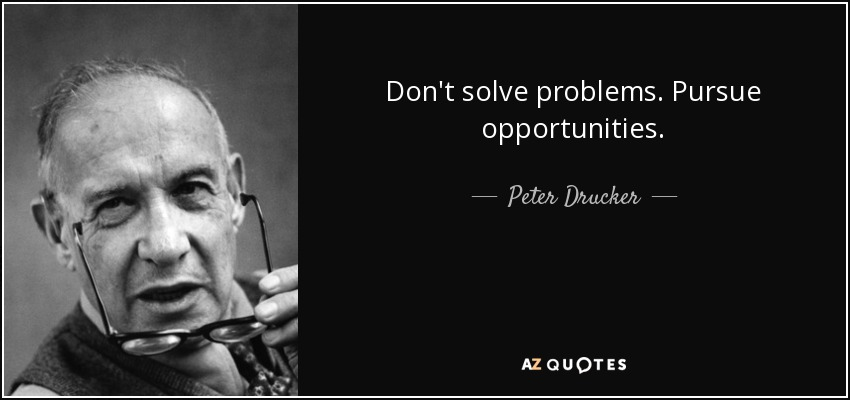
Why “LEADERS Create & Pursue Opportunities” as Solutions to Challenges
Leadership is not defined by how well one avoids challenges, but by how effectively one transforms challenges into opportunities. Great leaders—from Chanakya to Churchill, Steve Jobs to Elon Musk—have shown that opportunities are not accidental gifts of fate; they are strategic constructs, born from perspective, critical thinking, and an unyielding optimism that fuels resource creation and innovation.
Let us explore why leaders create & pursue opportunities, what strategies they adopt, and how the art and science of opportunity-building become the oxygen of sustainable success.
1. Leadership Perspective: Seeing Challenges as Opportunity Incubators
A leader’s first differentiator is perspective.
- Average mindset: sees problems as obstacles.
- Leader’s mindset: sees problems as raw materials for innovation.
🔹 Ancient Wisdom: The Bhagavad Gita teaches that “Yogasthaḥ kuru karmāṇi”—act with equanimity in success or failure. Leaders anchored in calmness see crises not as threats but as contexts for possibility.
🔹 Modern View: Harvard Business Review emphasizes “Reframing Problems as Possibilities” as the core of design thinking.
👉 Thus, the lens of leadership is opportunity-oriented, enabling them to build paths where none exist.
2. Strategy Leaders Play with to Create & Pursue Opportunities
Leaders consciously apply strategic problem-solving frameworks to carve opportunities:
- SWOT + TOWS Analysis
- Problem → Weakness/Threat
- Opportunity creation → Reframe into strengths or external openings.
- Blue Ocean Strategy (Kim & Mauborgne)
- Instead of fighting competition (Red Ocean), leaders invent new markets.
- Example: Apple didn’t just solve “music piracy”; it created iTunes → turning chaos into trillion-dollar opportunity.
- Root Cause Analysis (5 Whys / Fishbone Diagram)
- Leaders dive deep into why problems occur.
- Each root cause becomes a potential lever for innovation.
- Scenario Planning (Shell Model)
- Challenges are stress-tested against multiple possible futures.
- Leaders identify which scenario holds the biggest opportunity edge.
- Risk-Opportunity Matrix
- Every risk carries an embedded opportunity. Leaders analyze impact vs. probability and build an “opportunity catalyst” strategy.
3. The Opportunity Creation Process: Critical Thinking & Long-Term Implications
Leaders don’t just see opportunities—they evaluate, test, and pursue them strategically.
The process typically involves:
- Opportunity Identification
- Pattern recognition (trends, weak signals, unmet needs).
- Cognitive reframing (turning pain points into gain points).
- Feasibility Testing
- Does the opportunity align with resources, values, and vision?
- Example: Toyota used lean principles not only to solve waste problems but to create global efficiency advantage.
- Long-Term Implications Analysis
- System Thinking (Peter Senge): how does today’s decision ripple 10–20 years ahead?
- Second-Order Thinking (Farnam Street principle): beyond immediate results, what unintended consequences may occur?
- Execution with Iteration
- Agile methodology: pilot small → test → scale.
- Leaders see opportunities as evolving organisms, not fixed events.
4. Why Opportunities Are “Oxygen” for Leaders
Opportunities act as oxygen because they:
- Sustain growth in adversity.
- Fuel motivation—teams rally behind the possibility of gain rather than fear of loss.
- Empower resilience—leaders thrive by constantly regenerating pathways.
📌 Example: During COVID-19, Zoom didn’t just see a “global crisis”—it became the oxygen provider of digital communication, turning problem into massive opportunity.
5. Is Opportunity-Orientation a Mindset or a Strategy?
It’s both art & science.
- Mindset (Art):
- Positive psychology (Martin Seligman): optimism broadens cognition and builds resilience.
- Leaders choose to believe every problem contains seeds of growth.
- Strategy (Science):
- Feasible resource-based view (Barney, RBV Theory): leaders maximize what they have.
- Resource generation (innovation, partnerships, technology) extends opportunities beyond current limits.
👉 True leadership is the alchemy of optimism + strategic execution.
6. The Strategic Evaluation Process of Leaders
When leaders encounter problems, they go through a structured evaluation cycle to identify opportunity catalysts:
- Situation Appraisal – (Kepner-Tregoe Method)
- What is happening? What are the facts vs. assumptions?
- Cause-Effect Mapping
- Systems mapping to see dependencies & hidden levers.
- Risk Appetite Calibration
- Leaders balance between risk-aversion and risk-taking.
- Nassim Taleb’s Barbell Strategy: keep 80% safe, use 20% for high-risk opportunity bets.
- Laws of Opportunity Creation (Leadership Practice Laws):
- Law of Scarcity → Scarcity drives innovation.
- Law of Leverage → Small shifts (technology, partnerships) create exponential impact.
- Law of Compounding → Long-term consistency makes small opportunities massive.
- Frameworks in Practice
- McKinsey’s 7-S Model → align opportunity with systems, structure, skills.
- Porter’s Five Forces → evaluate how an opportunity changes industry dynamics.
- Balanced Scorecard (Kaplan & Norton) → test if opportunity adds strategic value across financial, customer, internal process, learning dimensions.
7. Opportunity as a Leadership Art & Science
- Art: Vision, intuition, storytelling, emotional intelligence. Leaders inspire people to see “a door where there is a wall.”
- Science: Frameworks, data analysis, strategic modeling, risk optimization. Leaders ensure opportunity is viable, scalable, and sustainable.
👉 The fusion of both makes opportunity leadership a 360-degree discipline.
8. Conclusion: Opportunity as the Catalyst of Transformation
Challenges are inevitable; opportunities are optional—until leaders create them.
The true mark of leadership is the ability to:
- See beyond the problem,
- Shape context into possibility,
- Inspire people to act,
- Build systems that turn opportunity into lasting transformation.
Whether it is Alexander turning setbacks into conquests, Gandhi converting oppression into a freedom movement, or modern CEOs transforming crises into billion-dollar innovations—leaders thrive because they breathe opportunity like oxygen.
As Drucker said: “The entrepreneur always searches for change, responds to it, and exploits it as an opportunity.”
👉 Leadership is the continuous act of searching, shaping, and scaling opportunities—the most powerful solution to all challenges.

Anupam Sharma
Psychotech Evangelist
Coach I Mentor I Trainer
Counselor I Consultant