
Leadership is Self-Mastery: The Inner Path to Outer Greatness
Introduction
Great leaders are not remembered merely for their titles or positions, but for their ability to rise above challenges, inspire others, and create lasting impact. What separates extraordinary leaders from average ones is not external power, but internal mastery.
Leadership, at its core, is Self-Mastery—the discipline of knowing, managing, and elevating oneself before influencing others. As the ancient Greeks carved into the walls of Delphi: “Know Thyself.” Without self-mastery, even the most skilled strategist or charismatic speaker will falter under pressure. With it, leaders become unshakable, adaptive, and transformative.
Why Leadership is Self-Mastery
- Foundation of Authentic Power
A leader without self-control is like a ship without a rudder. Self-mastery builds inner stability, ensuring decisions come from clarity, not chaos. - Resilience in Challenges
Business crises, personal setbacks, or global uncertainty test leadership. Self-mastery transforms fear into courage, confusion into clarity, and pressure into opportunity. - Alignment of Values and Actions
People follow leaders who walk their talk. Self-mastery ensures congruence between what leaders believe, say, and do. - Infinite Growth
Self-mastery is not an endpoint; it is a lifelong process of refining mind, body, and spirit. Leaders who embrace this stay relevant, adaptive, and inspiring.
The 7 Dimensions of Self-Mastery in Leadership
- Mind Mastery
- Control over thoughts and beliefs.
- Focus on growth mindset instead of fixed mindset.
- Practices: Journaling, strategic thinking, visualization.
- Emotional Mastery
- EQ: recognizing, regulating, and channeling emotions.
- Resilience during setbacks, empathy in relationships.
- Tools: Emotional intelligence training, mindfulness, CBT.
- Behavioral Mastery
- Habits, discipline, and consistency.
- Leaders are judged not by intentions, but by patterns of action.
- Tools: Habit stacking (James Clear), Kaizen, accountability partners.
- Spiritual Mastery
- Knowing your higher purpose, dharma, or mission.
- Drawing strength from values, faith, and meaning.
- Practices: Meditation, prayer, Gita’s “Nishkama Karma” (selfless action).
- Physical Mastery
- Energy, vitality, and health as leadership fuel.
- Sleep, fitness, and nutrition affect decision-making.
- Tools: Morning rituals, yoga, exercise.
- Social Mastery
- Building authentic relationships and networks.
- Communication, influence, trust-building.
- Tools: Active listening, storytelling, servant leadership.
- Strategic Mastery
- Decision-making under uncertainty.
- Ability to see patterns, anticipate trends, and act decisively.
- Tools: SWOT, 80/20, Systems Thinking, Scenario Planning.
Ancient Wisdom & Modern Science in Self-Mastery
- Bhagavad Gita (India): Krishna tells Arjuna, “The self-controlled one remains steadfast, unaffected by pleasure and pain—such a person is fit for leadership.”
- Stoicism (Rome): Marcus Aurelius taught, “You have power over your mind—not outside events. Realize this, and you will find strength.”
- Confucius (China): “He who conquers himself is the mightiest warrior.”
- Modern Psychology: Daniel Goleman’s Emotional Intelligence (EQ) shows 90% of leadership success is rooted in self-awareness and regulation.
Self-mastery is thus the bridge between timeless wisdom and cutting-edge leadership research.
Case Studies of Leaders with Self-Mastery
- Mahatma Gandhi
Gandhi mastered simplicity, discipline, and moral courage. His leadership of India’s freedom struggle came not from external power but inner mastery. - Nelson Mandela
27 years in prison didn’t break Mandela. Instead, he mastered forgiveness, patience, and resilience—transforming into a unifying leader. - Steve Jobs
Jobs blended creative vision with obsessive discipline. His self-mastery in focus and design-thinking redefined industries. - Bill Gates & Warren Buffett
Both credit lifelong learning and disciplined habits as keys to sustained leadership and impact.
Frameworks for Self-Mastery in Leadership
- Johari Window (Self-Awareness Tool)
- Expands personal and social awareness.
- Leaders must reduce blind spots and increase open knowledge.
- Emotional Intelligence (Daniel Goleman)
- Self-awareness, self-regulation, empathy, motivation, social skills.
- Maslow’s Self-Actualization
- Leadership at peak means serving beyond personal gains.
- Atomic Habits (James Clear)
- 1% improvements daily → exponential mastery.
- Bhagavad Gita Framework
- Discipline (Tapasya), Detachment (Nishkama Karma), Devotion (Bhakti), and Wisdom (Jnana) as leadership anchors.
Daily Practices for Leaders to Cultivate Self-Mastery
✅ Morning Rituals → meditation, journaling, gratitude.
✅ Learning Habit → read 30–60 minutes daily.
✅ Health Discipline → exercise, yoga, nutrition.
✅ Reflection Practice → nightly journaling on what went well, what could improve.
✅ Mindset Reset → affirmations, visualization of goals.
✅ Silence & Solitude → digital detox, stillness for clarity.
✅ Contribution → mentoring, giving back, serving others.
Why Leaders Must “Know Thyself Before Facing Challenges”
- Inner clarity creates outer strategy.
- Leaders who understand their triggers, values, and boundaries respond better under stress.
- Self-ignorance leads to impulsive decisions, burnout, and distrust.
- Great victories begin inside—before the battlefield is faced outside.
Conclusion
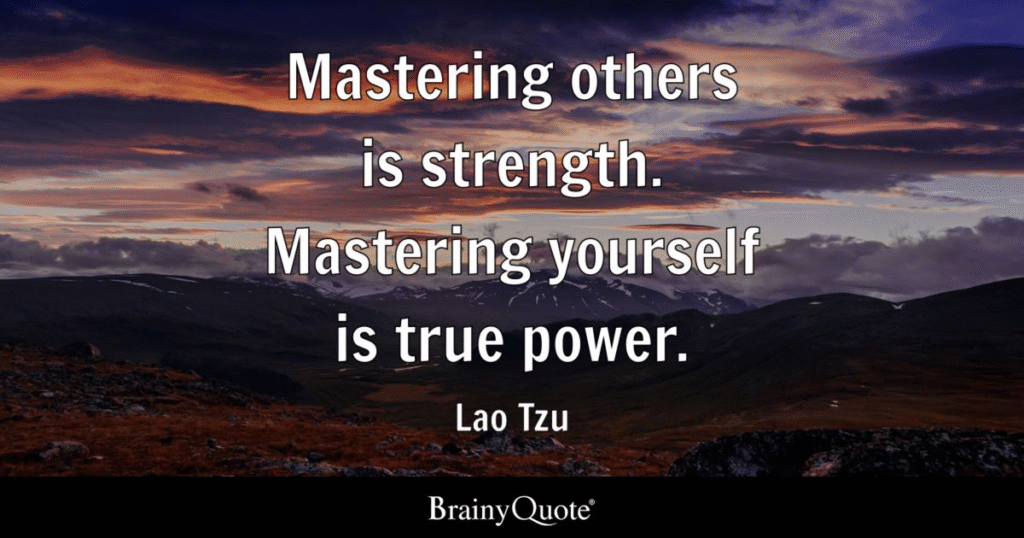
Leadership is not about controlling others; it is about controlling oneself. Self-Mastery is the ultimate leadership strategy—the inner fuel that powers vision, resilience, and influence.
When leaders master their minds, emotions, habits, and purpose, they don’t just overcome challenges—they transform challenges into opportunities. And when they “know themselves,” they not only lead organizations but inspire humanity.
As the Bhagavad Gita teaches: “The one who has conquered himself, is higher than the conqueror of a thousand battles.”
Leadership, therefore, is not external domination. It is inner liberation.
Leadership is Self-Mastery.
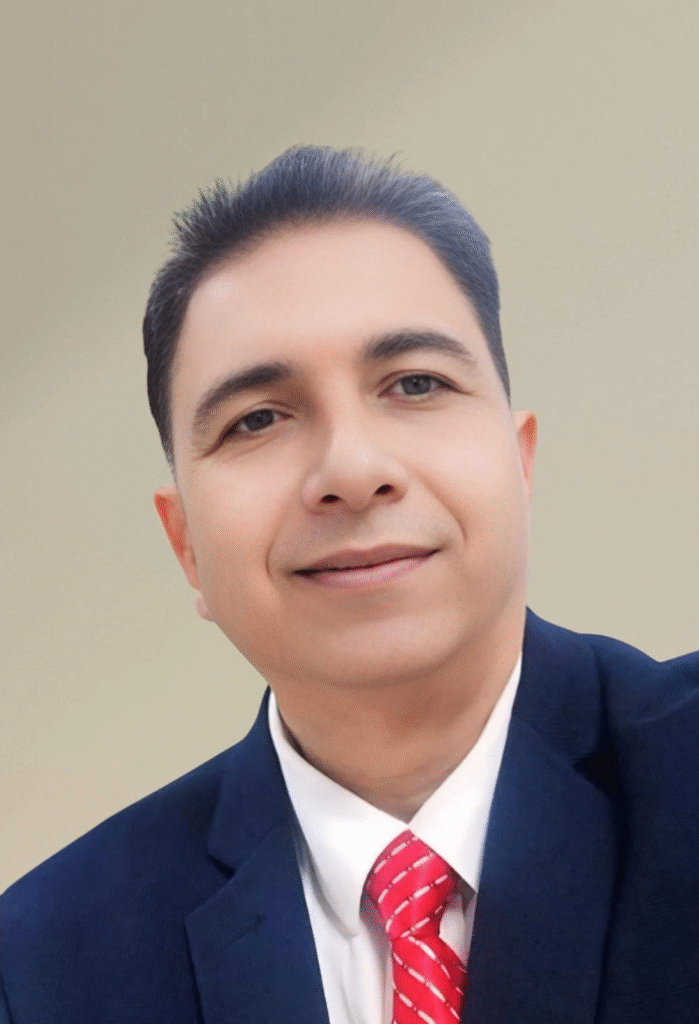
Anupam Sharma
Psychotech Evangelist
Coach I Mentor I Trainer
Counselor I Consultant