
1. Why Leadership = The Right Delegation
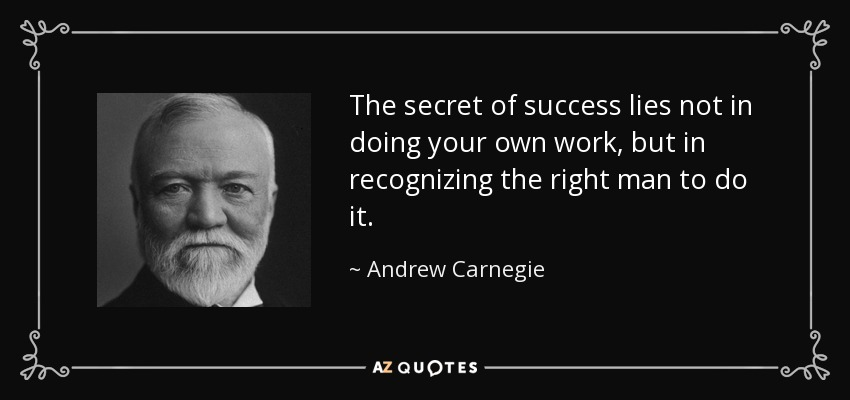
The heart of leadership isn’t doing everything yourself — it’s orchestrating people, processes, and resources so that the collective output surpasses what any one person could achieve.
Delegation is the spinal cord of:
- People Management – It distributes authority, responsibility, and accountability to grow ownership in the team.
- Teamwork – It creates interdependence, collaboration, and mutual trust.
- Resource Optimization – It ensures the right people, tools, and time are applied to the right tasks.
Without delegation, leaders become bottlenecks. With right delegation, leaders become multipliers.
2. Why Delegation is the Spinal Cord
Think of an organization as a human body:
- Brain = Strategic leadership vision.
- Spinal Cord = Delegation system, transmitting the brain’s intent to the limbs (teams).
- Limbs = Teams executing actions.
If the spinal cord (delegation) fails, the limbs (teams) can’t act with coordination, regardless of how brilliant the brain’s vision is.
3. Delegation in Human Peak Productivity & Performance
3.1 Impact on Productivity
- Cognitive Load Management – Leaders focus on high-leverage thinking while operational tasks are handled by capable members.
- Skill Matching – Tasks are assigned to those with the best skill-resource match.
- Scalable Execution – Multiple tasks progress in parallel instead of sequentially.
- Empowerment – Employees feel trusted, boosting motivation & performance.
3.2 Impact on Peak Performance
- Flow State Activation – People work in their expertise zone, increasing engagement.
- Competence Building – Delegation gives room for others to grow in capability.
- Decision Velocity – With authority delegated, teams respond faster to changes.
4. Strategic Applicability Under Key Frameworks
4.1 SWOT Analysis
Delegation Linkage:
- Strengths – Delegate tasks that align with team’s strengths to maximize output.
- Weaknesses – Delegate to those who are stronger in areas where you or others are weak.
- Opportunities – Delegate exploratory tasks to uncover new markets/ideas while core work continues.
- Threats – Delegate rapid-response functions to specialized sub-teams.
4.2 80/20 Rule (Pareto Principle)
- 20% of activities deliver 80% of results.
- Delegation Strategy: Leader focuses on the high-impact 20%, delegating the remaining 80% that, while necessary, aren’t the leader’s highest leverage.
4.3 PPF Analysis (Past-Present-Future)
- Past – Delegate review/audit tasks to team historians/analysts.
- Present – Delegate operational execution to functional experts.
- Future – Retain future-vision planning while assigning exploratory R\&D to innovation teams.
4.4 PDCA Model (Plan-Do-Check-Act)
Delegation integrated at each stage:
- Plan – Leader sets goals; teams help with tactical planning.
- Do – Execution largely delegated.
- Check – Delegate performance monitoring with clear metrics.
- Act – Leader intervenes for strategic pivots.
4.5 PLC Analysis (Product Life Cycle)
Delegation evolves by stage:
- Introduction – Delegate market research & pilot execution.
- Growth – Delegate scaling operations & customer engagement.
- Maturity – Delegate process optimization & cost control.
- Decline – Delegate exit/transition strategies while leader focuses on next innovation.
4.6 Behavioral Matrix (Hersey-Blanchard Situational Leadership)
- Telling (Low competence, high direction) – Minimal delegation; more guidance.
- Selling (Some competence) – Delegate small but challenging tasks.
- Participating (High competence, low commitment) – Delegate critical work to re-engage.
- Delegating (High competence, high commitment) – Full task ownership.
5. Factors Defining Delegation Demand & Execution Needs
- Complexity of Task – More complex → closer oversight, less complex → more autonomy.
- Criticality to Strategy – High strategic importance → selective delegation with reporting.
- Team Member Capability – Match based on skill, experience, and learning curve.
- Time Constraints – Short deadlines may require delegation to multiple people in parallel.
- Resource Availability – Tools, budget, access.
- Risk Level – High-risk tasks require clear checkpoints and escalation protocols.
- Cultural Factors – Some teams thrive under autonomy, others under structure.
- Digital Infrastructure – Collaboration platforms, AI tools, cloud workflows.
6. Digital Era Delegation Blueprint
In today’s digital-first leadership, delegation must be tech-enabled, transparent, and trackable.
6.1 Core Principles
- Clarity over Control – Use digital tools to provide clear objectives, not micromanagement.
- Asynchronous Collaboration – Leverage time zone diversity for 24/7 productivity.
- Data-Driven Decision Making – Assign tasks based on performance analytics.
6.2 Tools & Technologies
| Function | Digital Tools | Benefit |
|---|---|---|
| Task Assignment | Asana, Trello, Jira | Clear accountability |
| Communication | Slack, MS Teams | Real-time updates |
| Documentation | Notion, Confluence | Central knowledge hub |
| Monitoring | ClickUp, Monday.com | Progress tracking |
| Automation | Zapier, Make.com | Remove repetitive work |
| AI Delegation Assist | ChatGPT, Claude, Gemini | Drafting, research, decision support |
6.3 Digital Delegation Workflow
- Define – Objective, success criteria, deadlines.
- Select – Match skill & bandwidth using analytics.
- Brief – Record video/audio briefs for clarity.
- Enable – Provide all needed resources upfront.
- Track – Use dashboards with automated reminders.
- Review – Give feedback digitally with clear next steps.
- Document – Archive learnings for future reuse.
7. Comprehensive Delegation Blueprint
Stage 1 – Leadership Mindset
- Think of yourself as a conductor, not a soloist.
- Focus on outcome ownership, not task ownership.
Stage 2 – Delegation Preparation
- Perform Task Audit – List everything you do, mark what only you can do vs. what can be delegated.
- Apply 80/20 filter – Retain the 20% most impactful tasks.
Stage 3 – Delegation Execution
- Select right person (Skill, Will, Time, Tools).
- Set SMART goals for the task.
- Share context + purpose, not just instructions.
- Establish checkpoints, not constant oversight.
Stage 4 – Delegation in Strategic Frameworks
- Align each delegated task with SWOT, PDCA, PLC stages.
- Maintain balanced workload mapping to avoid overloading top performers.
Stage 5 – Digital Integration
- Use AI + automation for repetitive parts.
- Maintain transparency with dashboards.
- Encourage asynchronous reporting.
Stage 6 – Review & Learning
- Post-project review for both output & process.
- Document insights to improve future delegation.
8. Final Leadership Law of Delegation
“Delegation is not giving away work — it’s giving away opportunity for others to grow, and for leaders to lead.”
When delegation is done right, it creates a multiplier effect:
- Leader’s bandwidth increases.
- Team competence expands.
- Organizational performance scales.
In the digital era, right delegation is no longer optional — it’s the only sustainable way to lead high-performing, adaptive, and resilient teams.

Anupam Sharma
Psychotech Evangelist
Coach I Mentor I Trainer
Councelor I Consultant