
The Fusion of Two Forces
The statement “LEADERS are STRATEGIC TEACHERS in ACTION” is not just a philosophical observation—it is a timeless strategic truth that underpins personal, organizational, social, and national transformation. Leaders and teachers are two of the most influential archetypes in human civilization. When merged, they represent the ultimate change agents—visionaries who inspire, instruct, empower, and act.
This synergy is crucial because leadership without teaching leads to dependency, while teaching without leadership leads to stagnation. A true leader does not just give directions but educates and enlightens others to think, act, and transform. Hence, the leader becomes a strategic teacher—someone who does not merely deliver knowledge, but crafts it into actionable wisdom, ensuring that teams, organizations, and societies thrive.
II. Deep Connectivity Between a Leader & a Teacher
| Attributes | Leaders | Teachers |
|---|---|---|
| Purpose | Drive change, vision, transformation | Impart knowledge, develop potential |
| Influence | Inspire and mobilize | Educate and empower |
| Role | Strategic direction, problem-solving | Knowledge dissemination, value building |
| Impact | Societal progress, organizational growth | Cultural and intellectual foundation |
| Approach | Results + Relationships | Knowledge + Values |
At their core, both aim to bring out the best in others—be it a team member, student, citizen, or community. A leader teaches through demonstration, delegation, and direction, while a teacher leads through guidance, mentorship, and modeling behavior.
In today’s knowledge-driven, VUCA (Volatile, Uncertain, Complex, Ambiguous) world, leaders must possess the ability to coach, counsel, and teach strategically to remain relevant and impactful.
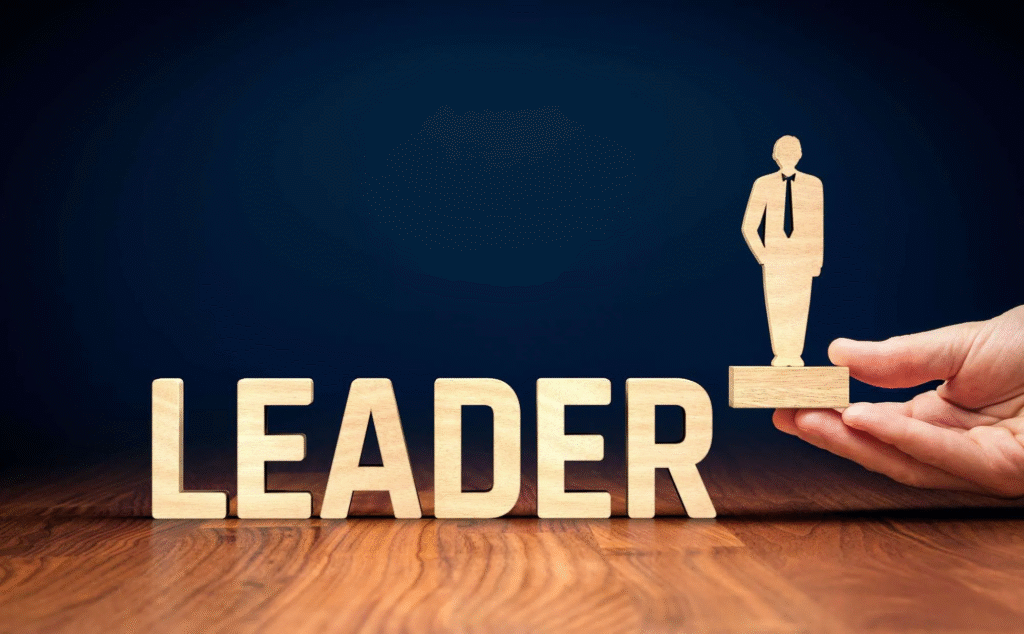
III. Shared Characteristics of Leaders and Teachers
- Clarity of Vision – They see the big picture and help others align with it.
- Empathy & Emotional Intelligence – Understand human needs and behaviors.
- Communication Mastery – Deliver thoughts in compelling and relatable ways.
- Lifelong Learning – Evolve continuously through reflection and feedback.
- Adaptability – Shift styles as per audience, context, and challenge.
- Integrity & Ethics – Rooted in values, they walk the talk.
- Inspiration – They energize others to exceed their limitations.
IV. Contribution to Social & National Transformation
When leaders and teachers collaborate—or when leaders take on the teacher’s mantle—they become the engines of sustainable change. Their roles ripple across every level of the society:
| Area | Contribution |
|---|---|
| Education | Reforming systems, promoting critical thinking, NEP 2020 implementation |
| Youth Development | Role modeling, skill-building, mentoring future leaders |
| Community Upliftment | Spreading awareness, enabling grassroots movements |
| Nation Building | Framing policies, setting visions (e.g., APJ Abdul Kalam’s Vision 2020) |
| Cultural Continuity | Preserving traditional wisdom while fostering innovation |
Historical examples—Chanakya, Mahatma Gandhi, Swami Vivekananda, Dr. Kalam—all show that strategic teachers in leadership roles have changed the destiny of nations.
V. Comparative Analysis Using Strategic Tools
1. SWOT Analysis
| Factor | Leader | Teacher |
|---|---|---|
| Strengths | Strategic thinking, influence, decision-making | Deep knowledge, pedagogy, emotional connection |
| Weaknesses | Risk of ego, burnout, political manipulation | Resistance to change, limited exposure to ground realities |
| Opportunities | Global impact, innovation, societal reform | Policy shaping, digital education, leadership training |
| Threats | Misinterpretation, miscommunication | Obsolescence, lack of respect in society |
When leaders teach and teachers lead, they mutually reinforce their strengths and mitigate weaknesses.
2. 80/20 Pareto Principle
- Top 20% of leaders who act as teachers create 80% of meaningful mentorship, cultural values, and team performance.
- Top 20% of teachers with leadership mindset drive 80% of student success and systemic improvements.
Hence, nurturing a small pool of leader-teachers can multiply outcomes in education, governance, entrepreneurship, and innovation.
3. Soft Skills Synergy
| Soft Skill | Role in Leaders | Role in Teachers |
|---|---|---|
| Communication | Persuasion, direction | Clarification, engagement |
| Active Listening | Conflict resolution, feedback | Student-centered teaching |
| Time Management | Execution, prioritization | Curriculum delivery, performance evaluation |
| Creativity | Problem-solving | Conceptual explanation |
| Emotional Intelligence | Team cohesion | Student wellbeing |
| Strategic Thinking | Vision to action | Learning outcomes planning |
Leaders and teachers equipped with soft skills create emotionally safe, productive, and inspiring environments for everyone.
VI. Teachers as Think Tanks & Action-Takers
Teachers are not just content deliverers; they are knowledge engineers and thought architects. When empowered with a strategic mindset, they evolve into think tanks and societal designers.
How Teachers Can Lead Through Action:
- Curriculum Innovation – Aligning content with future competencies.
- Community Outreach – Social awareness drives, adult education.
- EdTech Integration – Leveraging tools like AI, AR/VR, LMS systems.
- Mentoring & Counseling – Supporting student and peer development.
- Policy Advocacy – Influencing education reforms and social policies.
- Research and Thought Leadership – Publishing whitepapers, leading dialogues.
In this light, every great teacher becomes a social leader, and every leader becomes an institutional teacher.
VII. Suggestions to Cultivate Strategic Teacher-Leaders
For Educational Institutions:
- Introduce Leadership Development Programs for teachers.
- Encourage cross-sector exposure—industry visits, policy engagements.
- Set up Think Labs and Action-Research Cells for real-time problem solving.
For Government & Policymakers:
- Identify and promote “Teacher-Leaders” as national icons.
- Integrate teacher feedback into governance, policy-making, and rural development programs.
- Launch national missions like “Leadership Through Teaching” under NEP.
For Corporates & NGOs:
- Partner with educators to drive CSR goals.
- Involve teachers in corporate training, innovation programs, and product design (EdTech, HealthTech, etc.).
For Individuals:
- Practice self-leadership through teaching others (peer learning, volunteering).
- Create content, blogs, YouTube channels to share wisdom with wider communities.
- Join leadership circles, teacherpreneur programs, and national fellowships.
VIII. Conclusion: The Strategic Teacher is the Future Leader
How Does A Great Teacher/Leader Solve A Problem?
A great teacher/Leader is someone who helps you feel empowered rather than stupid, creative rather than restricted, and validated rather than unskilled. They accept and share, with the student,professionals and with the community they focus & support. Consequently , they take the person from where they currently are and find a method that fits that person for a purpose. Leaders LOVE questions to drive people for peak potential & performance.
The world doesn’t need just managers, bosses, or instructors—it needs Strategic Teachers in Action: visionary thinkers, empathetic guides, and purposeful doers.
Whether in classrooms, boardrooms, startups, or Parliament—those who lead by teaching and teach by leading are shaping the 21st-century destiny of individuals, organizations, and nations.
By recognizing this truth and nurturing such archetypes, we create a new India—and a better world—driven by wisdom, compassion, innovation, and execution.

Anupam Sharma
Psychotech Evangelist
Coach I Mentor I Trainer
Counselor I Consultant