
Why Finishing Is the Ultimate Mark of Leadership
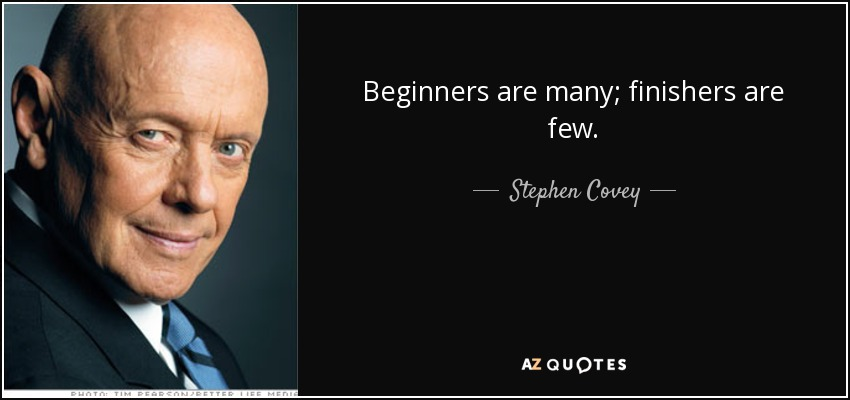
Starting a project or a mission is easy. Inspiration flows in the beginning. But completion demands courage, stamina, and a mindset that refuses to surrender. Leaders who consistently finish what they start create:
- Credibility: They build trust because their word leads to action.
- Compounding Impact: Each completed mission fuels the next level.
- Organizational Momentum: Teams mirror the energy of the leader’s consistency.
Finishing is not a personality gift—it is a habit built with intentional design.
Personality Traits That Pull Leaders Toward Completion
- Grit & Perseverance
Angela Duckworth’s research proves that grit—not IQ—is the key predictor of success. Gritty leaders don’t quit when it gets tough. - Clarity of Purpose
Leaders who finish well have mission clarity. They define the “why” so powerfully that it becomes impossible to give up. - Self-Discipline & Delay of Gratification
Leaders delay short-term temptations for long-term rewards. They develop atomic habits aligned with their mission. - Optimistic Realism
They don’t fantasize success—they plan for it with realistic assessments while keeping a positive bias toward action. - Internal Locus of Control
They believe they create their outcomes. They are not victims of circumstances—they are creators of conditions.
From Obstacles to Opportunities: The Strategic Mindset Shift
Great leaders don’t run away from adversity. They reframe obstacles as raw material for growth. Here’s how they do it:
1. SWOT Analysis (Strengths, Weaknesses, Opportunities, Threats)
This classic framework isn’t just a planning tool—it’s a mindset weapon.
| Dimension | Leadership Reframe |
|---|---|
| Strengths | Focus energy where they can dominate |
| Weaknesses | Delegate, train, or innovate around it |
| Opportunities | Spot and exploit gaps others overlook |
| Threats | Design proactive mitigation plans |
Example: When Satya Nadella took over Microsoft, he identified a stagnating culture (weakness/threat) but saw an opportunity to lead cloud innovation—now Azure is a global giant.
2. 80/20 Principle (Pareto Law)
Leaders master execution not by doing more—but by doing what matters most. 20% of their efforts bring 80% of results.
Strategic Application:
- Focus on high-leverage tasks daily.
- Identify the 20% of customers or team members that produce 80% of the impact.
- Drop or delegate the rest.
Leaders conserve energy, eliminate noise, and use their time as a force multiplier.
3. PPF Analysis (Past-Present-Future)
Leaders zoom out using time horizons.
| Timeframe | Strategic Focus |
|---|---|
| Past | Learn from past patterns (without dwelling) |
| Present | Act decisively with current data |
| Future | Project outcomes and reverse-engineer plans |
By balancing lessons from the past, action in the now, and a clear vision for the future, leaders stay aligned and motivated.
4. Decision-Making Frameworks (OODA Loop + Eisenhower Matrix)
OODA Loop (Observe-Orient-Decide-Act)—adopted by military and business leaders—helps in:
- Rapid situational awareness
- Adjusting to new information
- Fast execution with minimal regret
Eisenhower Matrix (Urgent vs Important):
- Leaders finish key projects by avoiding urgency traps.
- They invest most time in important but non-urgent tasks—like strategy, planning, and development.
5. RCA (Root Cause Analysis)
Leaders don’t treat symptoms—they solve problems at the core. RCA allows them to:
- Diagnose failures without blame
- Learn from breakdowns
- Build anti-fragile systems
Consulting firms use 5 Whys or Fishbone Diagrams to peel layers and drive systemic correction.
⚡ How Leaders Sustain Energy, Passion & Momentum
Even with all the frameworks, execution isn’t linear. Leaders face fatigue, doubts, and chaos. But those who finish:

1. Protect Their Energy Ecosystem
- Daily rituals: Meditation, exercise, solitude
- Digital minimalism: Avoid energy leakage through notifications
- Delegation: Focus on genius zone, not busywork
❤️ 2. Align Work With Passion + Purpose
- Leaders finish what they love.
- They say “no” to good things to say “yes” to the right thing.
3. Mental Models & Strategic Renewal
- Mental rehearsal: Visualize the outcome daily
- Mid-project reviews: Evaluate what’s working and pivot
- Self-coaching: Ask tough questions like “What’s the real reason I’m procrastinating?”
4. Create Accountability Loops
- Mentors, boards, or peer masterminds
- Public commitment to stakeholders
- Deadlines that drive decisions
Leadership in Action: Strategic Execution Case Study
Elon Musk: From Chaos to Completion
Whether launching rockets or electric cars, Musk embraces:
- SWOT: Building around strengths (engineering genius) while mitigating weaknesses (PR & overpromising).
- 80/20: Focused on key innovations—like battery tech.
- Decision Loops: Makes fast, iterative decisions, and pivots quickly.
- Root Cause Obsession: Solves fundamental issues like lithium sourcing or AI bottlenecks.
Despite delays and failures, he finishes. Not perfectly, but powerfully.
Final Thoughts: From Starter to Finisher
Anyone can start.
Only leaders with strategic focus, disciplined follow-through, and relentless execution finish. They understand that every obstacle is feedback, every delay is data, and every step matters.
They build teams, systems, mindsets, and habits that outlast motivation. They use strategy not just to plan, but to push.
“Finishing is not the end—it is the beginning of legacy.”
Let the world know you were here—not because you started something… but because you saw it through.
✍️ Reflection Questions for Leaders
- What are the top 3 unfinished tasks that are draining your energy?
- Which 20% of tasks are truly moving you forward?
- How can you apply PPF and RCA to a current leadership challenge?
- Who keeps you accountable to your promises?
- What will be the result if you finish what you’ve started?

Anupam Sharma
Psychotech Evangelist
Coach I Mentor I Trainer
Counselor I Consultant