

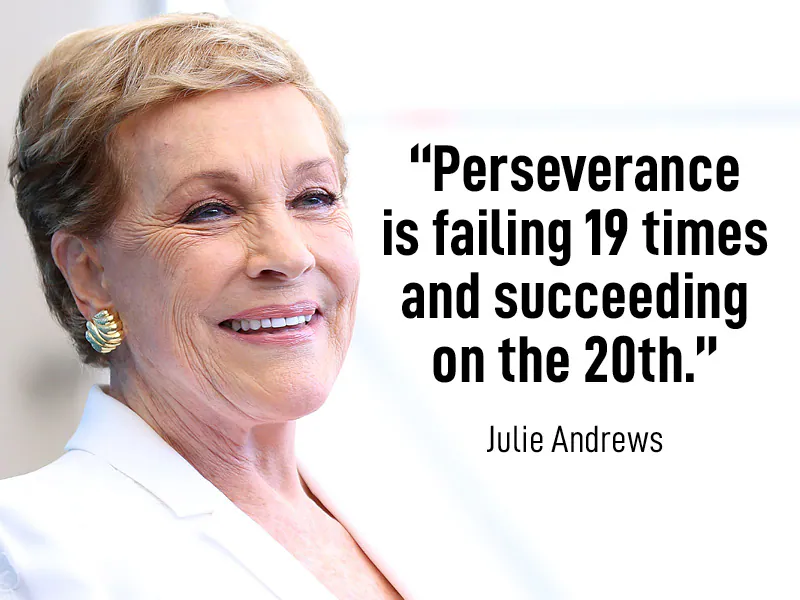
Leadership is not just about vision—it is about the relentless execution of that vision despite failures, obstacles, and setbacks.
- Persistence is the unwavering continuation of action despite difficulty or opposition.
- Perseverance is the sustained effort over a long period despite repeated failure, resistance, or discouragement.
A true leader doesn’t quit. They recalibrate, restart, and re-energize—again and again.
Why This Is the Driving Force Behind a Leader’s Attitude
1. Mental Fortitude
- Leaders encounter ambiguity, complexity, and crisis. Without persistence, they retreat.
- Perseverance fuels resilience, which is the key to long-term influence and innovation.
2. Credibility Builder
- People follow leaders who “walk the talk” consistently.
- Perseverance builds trust, character, and emotional gravity.
3. Strategic Patience
- Real transformations (in business, policy, people) take years.
- Leaders must keep people motivated while enduring long feedback loops.
Personality Traits That Complement “Bounce Back” Mindset
| Trait | Role in Persistence & Perseverance |
|---|---|
| Grit (Angela Duckworth) | Combines passion + persistence for long-term goals |
| Resilience | Ability to recover from failure quickly |
| Optimism | Interprets setbacks as temporary, not permanent |
| Self-Efficacy | Belief in one’s capability to overcome challenges |
| Emotional Regulation | Controls stress and negative emotions |
| Growth Mindset (Carol Dweck) | Sees effort as path to mastery |
Cognitive & Behavioral Psychology Insights
1. Self-Determination Theory (SDT) – Deci & Ryan
- Humans are most persistent when they are autonomously motivated.
- Leaders must align goals with purpose, mastery, and relatedness.
2. Cognitive Behavioral Model
- Thought → Emotion → Action
- Persistent leaders reframe failure as feedback, not finality.
3. Hope Theory – C.R. Snyder
- Persistence increases when leaders have:
- Clear goals
- Pathways to achieve them
- Belief in personal agency
Strategic Blueprint to Learn & Apply Persistence as a Leadership Habit
A. The “GRIT” Strategic Framework (by Angela Duckworth)
Goal Setting → Resilience Building → Incremental Progress → Tenacity Training
B. Atomic Habit Loop – James Clear Inspired
| Phase | Action |
|---|---|
| Cue | Create routines that trigger action (e.g., daily journaling of failures & next actions) |
| Craving | Link progress with reward (celebrate micro-wins) |
| Response | Take small, consistent steps (2-minute rule) |
| Reward | Reinforce behavior with public reflection & feedback |
C. 5-Level Roadmap for Perseverance Habit
- Clarity – Define WHY (purpose)
- Commitment – Define WHAT (goals)
- Consistency – Define HOW (routines)
- Correction – Learn from failures (reflection & feedback loop)
- Celebration – Recognize persistence milestones
Toolkits, Models, and Matrices
1. Resilience Toolkit for Leaders
- Reframing worksheet (ABC Model)
- Stress-coping plan (Self-care wheel)
- “Fail Forward” logbook (weekly review of setbacks + learning)
2. GRIT Assessment Tool (Angela Duckworth Scale)
- Identify your baseline to track growth.
3. Perseverance Feedback Map (PFM)
| Zone | Behavior | Course Correction |
|---|---|---|
| Panic | Overwhelm | Pause, Prioritize |
| Plateau | Stagnation | Innovate, Re-align |
| Progress | Small wins | Celebrate, Scale |
| Power | Momentum | Delegate, Sustain |
4. Purpose-Driven Leadership Canvas
| Element | Description |
|---|---|
| Vision | Long-term why |
| Mission | Daily how |
| Metrics | What success looks like |
| Motivation | What fuels it |
| Mindset | Belief system that supports it |
Research & Evidence
- Angela Duckworth (University of Pennsylvania):
GRIT is a better predictor of success than IQ or talent. - Carol Dweck (Stanford University):
Growth mindset fosters resilience and perseverance in high performers. - Harvard Business Review:
Persistent leaders build cultures of innovation and adaptability, critical to long-term success. - Harvard Kennedy School Case Study:
Leaders in crisis who showed perseverance (e.g., Churchill, Lincoln) had higher follower trust scores.
Challenges in Practicing Persistence Consistently
| Challenge | Strategic Solution |
|---|---|
| Emotional Burnout | Regular recharge rituals; emotional intelligence training |
| Lack of Clarity | Weekly goal alignment sessions |
| Fear of Failure | Normalize failure stories in team culture |
| Peer Pressure / Social Comparison | Anchor to personal purpose, not public validation |
| Cognitive Fatigue | Time-blocking, decision detox, and mindfulness breaks |
The Leadership Habit Loop of Persistence
- Set Purpose-Driven Goals
- Break Them into Daily Actions
- Reflect, Review, Reset Weekly
- Visualize the Long-Term Impact
- Create a Support Ecosystem
- Track Failures as Progress
- Celebrate Small Wins Religiously
5-Minute Daily Practice to Build Perseverance
“The 3R Journal” (Reflect, Reframe, Recommit)
- Reflect on a recent failure
- Reframe what it taught you
- Recommit to a small action today

Anupam Sharma
Psychotech Evangelist
Coach I Mentor I Trainer
Counselor I Consultant