
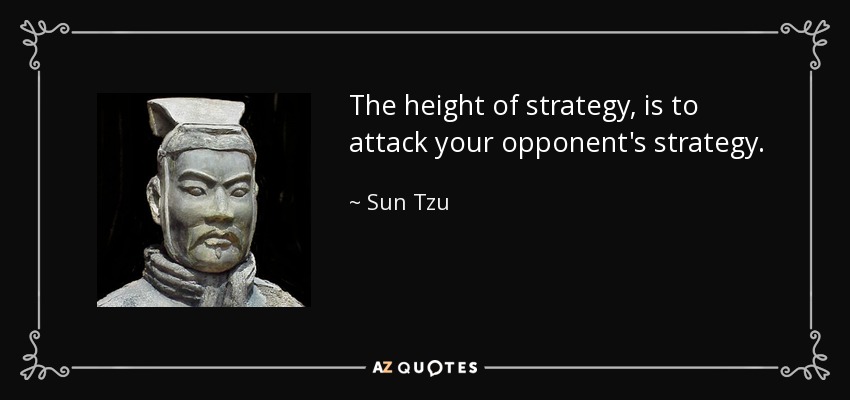
Your central idea contains two profound strategic principles:
“Powerful strategy disrupts the opponent’s strategy and leads your purpose.”
and
“Strategic Thinking is Diversity in Perspective Mix.”
These statements go beyond business strategy. They describe a philosophy of leadership, decision-making, execution, innovation, warfare, negotiation, entrepreneurship, governance, and life itself.
Strategy is not merely planning. It is the intelligent orchestration of perspectives, resources, timing, psychology, and execution toward a meaningful purpose.
Purpose determines where you want to go.
Strategy determines how you reach there.
Execution determines whether you actually arrive.
Without purpose, strategy becomes movement without direction.
Without strategy, purpose becomes a dream.
Without execution, both remain imagination.
STRATEGY:
The Invisible Architecture Behind Every Extraordinary Achievement
Think about an iceberg.
Only 10% is visible.
The remaining 90% stays hidden beneath water.
Great strategy works exactly the same way.
People admire
- successful companies
- legendary leaders
- championship teams
- military victories
- breakthrough innovations
They see only the visible success.
They rarely see
- months of observation
- years of preparation
- scenario planning
- psychological understanding
- risk management
- resource optimization
- strategic positioning
Victory is usually won long before the first action begins.
Execution merely reveals preparation.
Strategic Thinking:
Diversity in Perspective Mix
Most people see problems.
Strategic thinkers see systems.
Most people ask
“What happened?”
Strategic thinkers ask
- Why?
- Why now?
- Why here?
- What if?
- What next?
- Who benefits?
- What remains unseen?
Strategic intelligence is the ability to observe reality from multiple dimensions simultaneously.
Imagine looking at a mountain.
One person sees beauty.
A geologist sees minerals.
A soldier sees defense.
A photographer sees light.
An entrepreneur sees tourism.
A monk sees silence.
The mountain never changed.
The perspective changed.
Strategy is perspective engineering.
The greater the diversity of perspectives,
the greater the quality of strategic decisions.
The Lighthouse Strategy Model
A lighthouse never chases ships.
It stands firm.
It illuminates direction.
Ships change their path.
Great leaders operate similarly.
They
- clarify purpose
- illuminate possibilities
- reduce uncertainty
- provide strategic direction
- enable confident execution
Leadership is not controlling people.
Leadership is reducing ambiguity.
The 360° Strategic Intelligence Framework
Imagine strategy as a compass with twelve directions.
1 Purpose
Why do we exist?
Mission
Vision
Legacy
Values
2 Perspective
Multiple viewpoints
Systems thinking
Future thinking
Reverse thinking
Contrarian thinking
Global thinking
3 People
Strengths
Culture
Capabilities
Relationships
Influence
Motivation
4 Process
Optimization
Automation
Continuous improvement
5 Position
Competitive advantage
Brand
Differentiation
Blue Ocean opportunities
6 Performance
KPIs
Execution rhythm
Measurement
Learning loops
7 Psychology
Behavior
Decision biases
Motivation
Negotiation
Emotional intelligence
8 Possibilities
Innovation
Experimentation
Creativity
Design thinking
9 Problems
Risk
Contingencies
Scenario planning
Crisis management
10 Partnerships
Networks
Alliances
Stakeholders
11 Progress
Learning
Adaptability
Kaizen
Reflection
12 Purpose Again
Every strategic cycle returns to purpose.
Purpose becomes the North Star.
Why Strategy Defeats Strength
History repeatedly proves
The stronger army doesn’t always win.
The smarter strategy often does.
Small startups defeat giant corporations.
Tiny countries defeat larger armies.
Unknown authors become global bestsellers.
Why?
Because they change the rules of competition.
This is the essence of Blue Ocean Strategy.
Instead of fighting stronger opponents,
create a new ocean.
Compete differently.
Blue Ocean Strategy
Don’t become
better.
Become
different.
Instead of asking
“How do I beat competitors?”
Ask
“How do I eliminate competition?”
Examples
Netflix
Uber
Airbnb
Tesla
Apple
Each changed the battlefield.
They didn’t simply improve.
They redefined.
SWOT Analysis:
Looking in the Strategic Mirror
Strengths
“What powers us?”
Weaknesses
“What limits us?”
Opportunities
“What is emerging?”
Threats
“What can destroy us?”
Strategic leaders revisit SWOT continuously because reality constantly changes.
McKinsey 7-S:
Strategic Alignment
Purpose alone never creates success.
Alignment does.
The seven strategic pillars include:
- Strategy
- Structure
- Systems
- Shared Values
- Skills
- Style
- Staff
When these are aligned, organizations move with coherence rather than friction.
Misalignment creates hidden resistance.
Alignment multiplies execution speed.
Design Thinking:
Solving the Right Problem
Most people solve symptoms.
Strategic thinkers solve root causes.
The Design Thinking cycle:
Empathize → Define → Ideate → Prototype → Test
It teaches leaders to begin with people rather than assumptions.
Innovation emerges from understanding unmet needs, not from guessing solutions.
OODA Loop:
Winning Through Speed of Adaptation
Observe
Orient
Decide
Act
The OODA Loop emphasizes that victory often belongs not to the strongest, but to those who adapt fastest.
Each cycle should shorten over time through experience, feedback, and learning.
AIDA:
Strategy for Influence
Whether you’re leading a team, selling an idea, or inspiring change, communication follows four stages:
- Attention – Capture interest.
- Interest – Build curiosity.
- Desire – Connect to needs and aspirations.
- Action – Prompt commitment and execution.
A strategic leader doesn’t merely communicate information—they guide attention toward purposeful action.
5W1H:
Strategic Clarity Framework
Every important decision should answer:
- What are we trying to achieve?
- Why does it matter?
- Who is involved or affected?
- Where will it happen?
- When is the right time?
- How will it be executed?
If any one of these questions is unclear, execution usually weakens.
PPF Analysis:
Prioritize, Protect, Focus
An effective way to interpret PPF in strategic execution is:
- Prioritize the few actions that create the greatest impact.
- Protect critical resources, relationships, and competitive advantages.
- Focus relentlessly on execution instead of chasing distractions.
This transforms strategy into disciplined progress.
PLC (Product Life Cycle):
Thinking Beyond the Present
Every initiative moves through stages:
- Introduction
- Growth
- Maturity
- Decline
- Renewal or Reinvention
Strategic leaders anticipate transitions instead of reacting to them. They reinvent before decline becomes irreversible.
Strategy Map:
Connecting Vision to Daily Work
A strategy map links:
- Vision
- Strategic objectives
- Customer value
- Internal processes
- Learning and growth
- Financial outcomes
When every team understands this chain, daily actions become aligned with long-term purpose.
Kaizen:
Small Improvements, Extraordinary Results
Grand strategies often fail because people wait for dramatic breakthroughs.
Kaizen teaches another lesson:
Improve by 1% every day.
Tiny, consistent refinements compound into remarkable transformation over months and years.
How to Master Strategic Leadership
Develop strategic leadership as a daily discipline rather than an occasional activity.
- Read broadly across business, psychology, economics, history, technology, philosophy, and science to expand perspective.
- Practice systems thinking by mapping causes, effects, feedback loops, and interdependencies.
- Challenge your own assumptions and deliberately seek opposing viewpoints.
- Conduct regular scenario planning: best case, expected case, worst case, and wildcard events.
- Build rapid learning cycles using observation, experimentation, reflection, and adaptation.
- Strengthen execution discipline through measurable goals, review mechanisms, and accountability.
- Reflect after every major decision: What worked? What failed? What did reality teach?
The Strategic Execution Engine
Purpose → Perspective → Position → Plan → Prioritize → Prepare → Perform → Measure → Learn → Improve → Scale → Repeat
This continuous cycle transforms isolated victories into sustained excellence.
Why Strategy Is the Oxygen of Execution
Execution without strategy resembles running quickly in the wrong direction.
Strategy without execution resembles possessing a perfect map but never beginning the journey.
Purpose without either resembles staring at a distant lighthouse without ever leaving the shore.
Strategy supplies execution with:
- Direction
- Priorities
- Timing
- Resource allocation
- Risk awareness
- Decision criteria
- Adaptability
- Momentum
It enables action to produce meaningful outcomes instead of mere activity.
The Grand Strategic Formula
Purpose provides direction. Perspective creates insight. Strategy designs the path. Leadership inspires commitment. Execution converts plans into reality. Learning refines the system. Kaizen sustains momentum. Innovation renews relevance. Together they transform every challenge into an opportunity for growth.
A leader who consistently cultivates diverse perspectives, aligns people and systems, adapts through the OODA loop, innovates with design thinking, differentiates through Blue Ocean Strategy, improves continuously through Kaizen, and executes with disciplined focus becomes more than a manager of tasks—they become a strategic architect of the future.
The ultimate goal of strategic leadership is not simply to defeat competitors. It is to create conditions where your purpose advances regardless of changing circumstances. When purpose is clear, perspectives are diverse, systems are aligned, and execution is disciplined, obstacles cease to be barriers. They become information. Competition becomes a catalyst. Uncertainty becomes a source of innovation. Every challenge becomes an opportunity to redesign the path toward a higher purpose. That is the essence of mastering the art and science of strategic thinking—a lighthouse that illuminates direction, empowers decisive action, and enables enduring success across every dimension of life and leadership.

ANUPAM SHARMA
PSYCHOTECH™ STRATEGIST
COACH I MENTOR I TRAINER
COUNSELLOR I CONSULTANT