

HABIT is the Architect of Every Human Outcome
( The Art & Science of Habit Formation for Peak Performance )
Introduction: The Invisible Architect of Human Life
“Habit is the architect of every human outcome.”
This statement captures one of the deepest truths of human psychology and behavioral science. Every success, failure, identity, or destiny of a person is largely the result of repeated behaviors performed consistently over time.
Our lives are not shaped primarily by occasional decisions, but by daily habits.
A single workout does not create fitness.
A single study session does not create expertise.
A single meditation does not create peace.
But repeated habits compound into destiny.
Aristotle expressed this idea centuries ago:
“We are what we repeatedly do. Excellence, then, is not an act but a habit.”
Modern neuroscience confirms the same principle. Habits operate largely through automatic neural patterns that allow our brain to conserve energy and execute behaviors efficiently. (addcue.com)
Thus, habits become the architectural blueprint of human outcomes.
Understanding Habit Through Human Psychology
What is a Habit?
A habit is a learned behavior that becomes automatic through repetition.
Psychologically, a habit is a subconscious program that runs without conscious decision-making.
For example:
- Brushing teeth
- Checking phone notifications
- Drinking coffee in the morning
- Exercising daily
Once habits are formed, the brain executes them automatically.
Neuroscience shows that habitual behaviors shift control from the conscious decision-making region of the brain (prefrontal cortex) to the basal ganglia, which governs automatic routines. (educashop.com)
This shift explains why habits feel effortless.
The brain essentially says:
“This pattern works. Let me automate it.”
The Science of Habit Formation
The Habit Loop: Cue → Routine → Reward
Modern behavioral science explains habit formation through the Habit Loop, consisting of three key components.
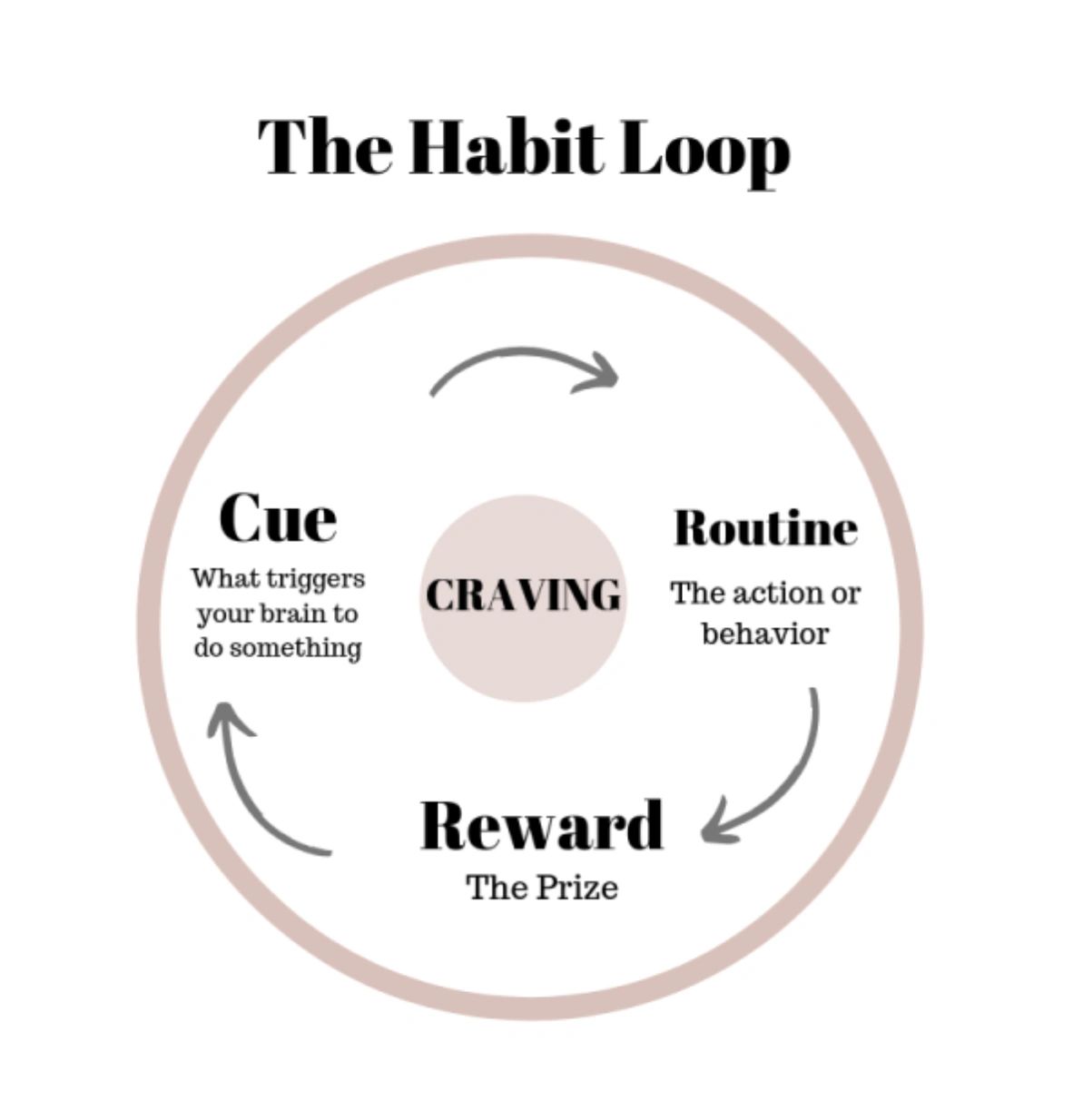
1. Cue (Trigger)
The cue tells your brain to start the behavior.
Examples:
- Time of day
- Emotional state
- Location
- Social environment
- Previous action
For example:
- Alarm clock → wake up
- Stress → check phone
- Evening → watch TV
2. Routine (Behavior)
This is the habit itself.
Examples:
- Exercising
- Eating snacks
- Meditation
- Checking social media
3. Reward (Reinforcement)
The reward reinforces the behavior.
Rewards may include:
- Pleasure
- Relief
- Satisfaction
- Social connection
Over time, the brain begins anticipating the reward when it sees the cue, which strengthens the habit loop. (Science News Today)
This anticipation is powered by dopamine, the brain’s motivation chemical.
Habit as Subconscious Conditioning
Habits are essentially conditioning of the subconscious mind.
Every repetition strengthens neural pathways.
This phenomenon is known as neural chunking.
Once the habit is repeated enough:
- The brain “chunks” the behavior
- The sequence becomes automatic
- Conscious effort decreases
Studies show that when habits become automatic, brain activity dramatically reduces during the routine phase, demonstrating efficiency. (educashop.com)
This is why you can:
- Drive while thinking
- Walk while talking
- Brush teeth without thinking
Habits become subconscious scripts running on autopilot.
Habit: Choice or Default Indulgence?
This is one of the most important questions in behavioral psychology.
Habits Begin as Choices
Initially, every habit begins as a conscious decision.
Examples:
- Deciding to start exercising
- Deciding to read daily
- Deciding to smoke
- Deciding to check social media
Habits Become Default Behavior
Once repeated, they become automatic behavior patterns.
Therefore:
Habits start with choice but end as automatic conditioning.
This explains why bad habits are difficult to break.
The brain does not judge whether habits are good or bad.
It simply reinforces behaviors that produce rewards. (Science News Today)
Habit and Decision-Making
Habits significantly influence decision-making efficiency.
Without habits, every small action would require conscious thought.
For example:
Imagine deciding every day:
- How to brush teeth
- How to tie shoes
- How to walk
Your brain would be overwhelmed.
Habits reduce cognitive load.
They allow the brain to conserve mental energy for:
- Creativity
- Strategy
- Problem-solving
Thus, habits are mental shortcuts.
However, this also means bad habits can sabotage decision-making.
For example:
Habit → checking phone every 10 minutes
Outcome → distraction → poor productivity
Thus habits either accelerate success or automate failure.
Ancient Wisdom on Habits
Ancient Indian wisdom deeply understood the power of habit.
Bhagavad Gita Insight
Krishna explains that human behavior is driven by repeated tendencies (Samskaras).
Samskaras are essentially habitual impressions in the subconscious mind.
Repeated actions create mental grooves.
These grooves shape:
- character
- destiny
- behavior patterns
Yoga Philosophy
Patanjali’s Yoga Sutra emphasizes Abhyasa (consistent practice).
Abhyasa means:
“Sustained effort over a long time.”
It is essentially habitual discipline.
Thus, ancient wisdom recognized thousands of years ago that:
Habits shape consciousness and destiny.
How Habits Influence Performance and Productivity
High performers rely on structured habits.
Success is rarely accidental.
Elite performers build performance rituals.
Examples:
Athletes
- Daily training routines
- Mental rehearsal
- Recovery habits
Entrepreneurs
- Strategic planning routines
- Deep work sessions
- Continuous learning
Spiritual masters
- Meditation
- Self-reflection
- Discipline
These habits create compounding advantages.
Productivity researchers emphasize that repeated behaviors strengthen neural pathways through dopamine reinforcement, making the behavior easier to repeat over time. (Sacibo)
Thus:
Habits reduce friction and increase consistency.
Consistency leads to mastery.
Transforming Habit Challenges into Opportunities
Many people struggle with habits such as:
- procrastination
- distraction
- social media addiction
- unhealthy lifestyle
However, the same mechanism that creates bad habits can create powerful ones.
The key is habit redesign.
Behavioral science suggests keeping the same cue and reward but replacing the routine with a better behavior. (The Behavioral Scientist)
Example:
Cue → stress
Old Routine → smoking
New Routine → deep breathing
Reward → relaxation
This strategy is known as habit substitution.
Strategic Blueprint for Mastering Habits
To master habits strategically, follow this structured framework.
1. Habit Awareness
Track behaviors for one week.
Identify:
- triggers
- patterns
- emotional states
Awareness is the first step to change.
2. Design Powerful Cues
Create triggers that activate good habits.
Examples:
Morning coffee → reading
Work desk → deep work
Gym bag near door → exercise
Environment shapes behavior.
3. Start Micro Habits
Large goals fail.
Small habits succeed.
Examples:
- 5 minutes meditation
- 10 pushups
- 1 page reading
Small wins build momentum.
4. Use Habit Stacking
Attach new habits to existing habits.
Example:
After brushing teeth → meditate
After lunch → walk 5 minutes
5. Reward Consistency
Your brain loves rewards.
Celebrate small wins.
This strengthens neural reinforcement.
6. Build Identity-Based Habits
Instead of focusing on goals, focus on identity.
Example:
Not:
“I want to exercise.”
But:
“I am a disciplined person.”
Identity-based habits are powerful.
Strategic Habits for a Winning Edge
For leaders, professionals, and achievers, the following habits create a competitive advantage.
Daily Strategic Habits:
- Early morning reflection
- Physical exercise
- Deep work sessions
- Continuous learning
- Gratitude journaling
- Strategic planning
- Digital discipline
- Meditation
These habits compound over years.
They create extraordinary results from ordinary actions.
Final Insight: Habits Shape Destiny
Ultimately, habits are the architects of human destiny.
Your future is hidden in your daily routine.
If you want to change your life:
Change your habits.
Because:
Habits → Actions
Actions → Character
Character → Destiny
Thus the real question is not:
“What are your goals?”
The real question is:
“What are your daily habits?”
Because your habits are quietly building the life you will live tomorrow.

ANUPAM SHARMA
PSYCHOTECH™ STRATEGIST
COACH I MENTOR I TRAINER
COUNSELLOR I CONSULTANT