
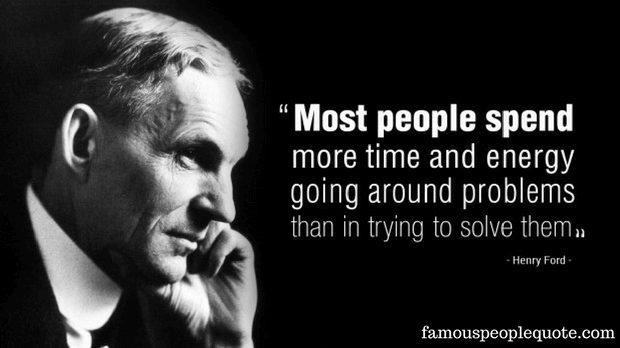
“80% Is Identifying the Right Problem, 20% Is Being Resourceful in Execution”-Solution is within Problem…
— The Strategic Leadership Code for Extraordinary Outcomes
Introduction: Why Most Efforts Fail Despite Hard Work
In today’s hyperactive world, people and organizations are busy but not productive. Leaders are executing relentlessly, teams are burning hours, and systems are overloaded—yet results remain average. Why?
Because most humans spend 80% of their energy executing the wrong problem.
The powerful truth hidden in the statement
“80% is identifying the right problem, 20% is being resourceful in execution”
is not a motivational quote—it is a strategic law of peak performance, leadership excellence, and human potential realization.
Execution is visible.
Problem identification is invisible—but decisive.
Great leaders, visionary entrepreneurs, and transformational change-makers win not because they work harder, but because they think deeper, wider, and earlier.
The Core Philosophy: Problems Decide Performance
Every outcome in life—success or failure—is a symptom.
The cause lies in the problem we choose to solve.
The Leadership Reality:
- Solve the wrong problem brilliantly → You still lose
- Solve the right problem imperfectly → You still win
That is why thinking precedes action, and clarity precedes speed.
Execution multiplies clarity.
Execution amplifies confusion too.
Why 80% of Leadership Is Problem Identification
1. Problems Are Multi-Layered, Not Surface-Level
Most people react to symptoms, not root causes.
| Symptom | Real Problem |
|---|---|
| Low productivity | Lack of clarity, energy misalignment |
| Employee disengagement | Absence of meaning & psychological safety |
| Sales drop | Misaligned value proposition |
| Stress & burnout | Poor priority architecture |
This is where Root Cause Analysis (RCA) becomes a leadership superpower.
RCA Leadership Question:
“What problem, if solved, makes all other problems irrelevant?”
Strategic Framework 1: 80/20 Principle (Pareto Law)
The statement itself is an extension of Pareto Thinking.
- 20% of problems create 80% of pain
- 20% of clarity creates 80% of momentum
Leaders ask:
- What is the vital problem, not the trivial many?
- Which challenge unlocks multiple solutions simultaneously?
🔹 Strategic Insight:
Execution excellence without problem clarity leads to burnout.
Problem clarity with average execution leads to breakthroughs.
Why Leaders Are Passionate Thinkers Before Massive Actors
Great leaders are not impulsive doers—they are obsessive thinkers with multi-perspective intelligence.
Leaders Think in:
- Systems, not silos
- Second-order consequences, not instant reactions
- Human psychology, not just logic
They pause not because they are slow, but because they are strategic.
Thinking Is Not Inaction
Thinking is prevention of wasteful action.
Strategic Framework 2: SWOT Analysis (Reimagined for Problem Identification)
Most people use SWOT for planning.
Elite leaders use SWOT for problem clarity.
Strategic SWOT Questions:
- Strengths: What hidden strengths are underutilized?
- Weaknesses: What internal friction is draining energy?
- Opportunities: What problem is the market begging to be solved?
- Threats: What ignored problem can destroy future relevance?
🔹 Leadership Shift:
SWOT is not a checklist—it’s a lens for diagnosing the right problem.
Strategic Framework 3: PPF (Production Possibility Frontier) – The Energy Lens
PPF teaches a brutal leadership truth:
Resources are limited. Choices define destiny.
Every wrong problem consumes:
- Time
- Energy
- Emotional bandwidth
- Cognitive focus
Leaders ask:
- Are we operating inside the PPF (inefficiency) or pushing the frontier (innovation)?
- Which problem gives maximum output per unit of effort?
🔹 High-Performance Rule:
The right problem expands capacity.
The wrong problem shrinks potential.
Why Perspective Mix Is the Leadership Multiplier
Average thinkers see one angle.
Leaders see 360° realities.
Perspective Mix Includes:
- Logical perspective
- Emotional intelligence
- Human behavior
- Market dynamics
- Long-term vision
- Ethical & dharmic lens
This is why leaders ask:
- “Why is this happening?”
- “For whom is this a problem?”
- “What happens if we do nothing?”
- “What unintended consequences may emerge?”
🔹 Perspective creates power.
Strategic Framework 4: Need Analysis & Competence Analysis
Need Analysis:
- What is the real need, not the expressed want?
- Is this a survival problem, growth problem, or identity problem?
Competence Analysis:
- Do we have the capability to solve this?
- Or do we need partnerships, learning, or reinvention?
Many failures occur because:
- People attack problems beyond their competence
- Or ignore problems within their unique strength zone
🔹 Strategic Alignment = Need × Competence
The Execution Truth: Why 20% Is Enough
Once the right problem is identified:
- Execution becomes simpler
- Resistance reduces
- Teams align faster
- Energy flows naturally
This is why PDCA (Plan–Do–Check–Act) works beautifully after clarity.
PDCA Without Problem Clarity = Mechanical Movement
PDCA With Clarity = Strategic Momentum
Strategic Framework 5: PDCA as an Action Engine
- Plan: Based on root cause, not assumption
- Do: Focused, minimal, high-impact actions
- Check: Measure outcomes, not effort
- Act: Optimize or pivot intelligently
🔹 Leaders don’t execute blindly.
They execute iteratively with awareness.
Blue Ocean Strategy: Problems Create New Worlds
Blue Oceans are not created by:
- More competition
- More hustle
They are created by asking a different question.
Blue Ocean Question:
“What problem has everyone accepted but no one redefined?”
When leaders identify unarticulated problems, innovation is inevitable.
🔹 Innovation = Problem Reframing
Emotional Intelligence: The Invisible Problem Solver
Many problems are not technical—they are psychological:
- Fear
- Ego
- Limiting beliefs
- Identity conflicts
- Resistance to change
Leaders master self-management before people management.
They ask:
- What belief is blocking action?
- What emotion is driving resistance?
- What fear is disguised as logic?
🔹 Limiting belief is the biggest hidden problem.
Out-of-the-Box Productivity: Why This Focus Changes Everything
When leaders invest 80% energy in problem clarity:
- Work becomes meaningful
- Priorities become obvious
- Creativity activates
- Stress reduces
- Flow increases
Productivity Shifts From:
- Doing more → Doing what matters
- Speed → Direction
- Pressure → Purpose
This is dharmic productivity—aligned, conscious, and powerful.
From Goals to Fulfillment: The Ultimate Payoff
Goals fail not due to lack of discipline, but due to:
- Wrong goals
- Wrong problems
- Borrowed priorities
When the right problem is solved:
- Goals become natural outcomes
- Fulfillment replaces fatigue
- Success aligns with inner purpose
Action Blueprint for Leaders (Immediate Application)
Step 1: Pause & Diagnose
Ask:
👉 “What problem, if solved, changes everything?”
Step 2: Apply RCA + 80/20
Identify the vital few causes.
Step 3: Validate via SWOT & Need Analysis
Ensure alignment with reality.
Step 4: Check PPF
Is this the highest ROI problem?
Step 5: Execute via PDCA
Small, smart, strategic actions.
Conclusion: The Leadership Law
Execution amplifies thinking.
Thinking defines destiny.
Great leaders don’t chase problems.
They choose problems consciously.
They are passionate thinkers because:
- Thought saves time
- Clarity saves energy
- Perspective saves failure
And once clarity is achieved, 20% resourceful execution is more than enough to change lives, organizations, and the world.

ANUPAM SHARMA
PSYCHOTECH STRATEGIST
COACH I MENTOR I TRAINER
COUNCELLOR I CONSULTANT